Phil Ivey has spent more than a quarter of a century being the player other professionals measure themselves against. His record is built on tournament titles, televised cash games and an ability to look comfortable in formats that leave most elite players looking lost.
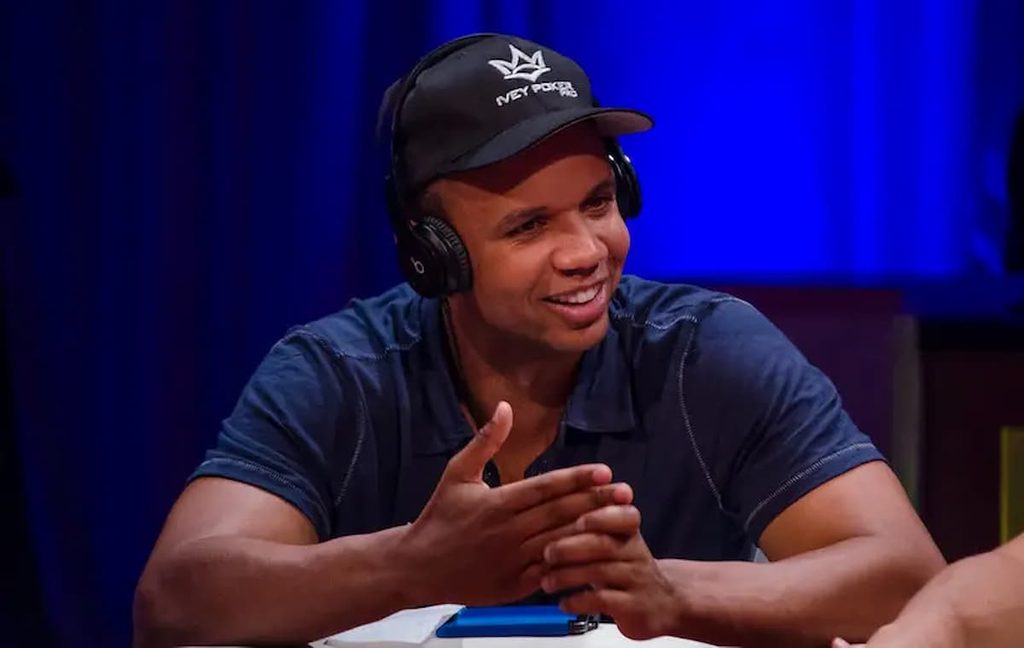
Eleven World Series of Poker bracelets and a 2017 Poker Hall of Fame induction give Ivey a permanent place in the game’s history. The larger reason he matters is simpler: when the stakes rise and the line-up becomes difficult, Ivey is still one of the names viewers expect to see.
Who Is Phil Ivey?
Phil Ivey is an American professional poker player, born in Riverside, California, on February 1, 1977. He grew up in New Jersey, learned around Atlantic City and quickly developed a reputation for treating poker as a profession rather than a pastime.
His early live reputation came from Seven Card Stud and other mixed games, at a time when success required far more than mastering No-Limit Hold’em. That breadth is still visible in his bracelet record, which includes Omaha, Stud, draw games and mixed formats.
Ivey is often called “The Phenom,” a nickname that has survived because his results were never confined to one short boom period. He was winning major events before hole-card cameras changed poker television and remains active in the high-roller era.
Phil Ivey’s First WSOP Bracelet
Ivey won his first WSOP bracelet in 2000, taking down a $2,500 Pot-Limit Omaha event. It was an early sign that he had the range to compete with established mixed-game specialists rather than simply another young Hold’em player finding a run of cards.
His breakthrough years followed quickly. In 2002, he won three bracelets in the same summer across Seven Card Stud Hi-Lo, Seven Card Stud and S.H.O.E., placing him among the most feared all-round players of his generation.
That versatility became the defining feature of his tournament career. The official WSOP record now lists Ivey second on the all-time bracelet table, behind only Phil Hellmuth, with 11 titles and nearly $23 million in WSOP earnings.
Eleven Bracelets Across Multiple Games
Ivey’s bracelet collection is unusual because it does not rely on one event type or one era. He has won in Pot-Limit Omaha, Limit Hold’em, Stud, Stud Hi-Lo, S.H.O.E., H.O.R.S.E., No-Limit Deuce-to-Seven and Eight-Game.
His 2013 WSOP Asia-Pacific Eight-Game title and 2014 $1,500 Eight-Game win reinforced the same point. Ivey’s reputation was built in high-stakes cash games, but he has repeatedly proved he can close tournaments across the full mixed-game rotation.
Bracelet number 11 arrived in 2024 when he won the $10,000 Limit 2-7 Triple Draw Championship. It was his first bracelet in a decade and showed that the long gaps between titles had not changed the quality of his game.
Poker Type’s profile of Daniel Negreanu shows the scale of the company Ivey keeps near the top of the bracelet list. Their careers ran through the same television boom, although their table personalities could hardly be more different.
Phil Ivey and High-Stakes Cash Games
Tournament databases record only one part of Ivey’s career. His status was made in private and televised cash games, where players could sit with far deeper stacks and where one pot could matter more than a whole week of tournament results.
During the original run of High Stakes Poker, Ivey became one of the show’s central figures. He rarely needed to dominate the conversation because his willingness to play enormous pots, paired with a calm, economical presence, did the work for him.
In 2006, Ivey played as part of “The Corporation,” a group of professionals who took turns playing billionaire banker Andy Beal heads-up. The WSOP credits Ivey with winning more than $16 million from Beal across three days at stakes as high as $50,000/$100,000.
That period helped turn Ivey into a symbol of the game’s highest level. Poker fans did not need a detailed hand history to recognize that he was usually sitting in the toughest available game.
The Triton Era
Ivey has remained visible as high-stakes poker moved from edited television to livestreams and Triton Super High Roller events. He continues to enter fields where $100,000 and $200,000 buy-ins are routine, against players who have spent their careers studying tournament poker full time.
In September 2026, he returned to Jeju for the Triton Jeju II opening event, one of several recent appearances that keep him connected to the modern super-high-roller scene. Results matter, but so does the fact that Ivey remains a draw in line-ups full of newer stars.
That long-term relevance is why he belongs in any discussion of poker’s most famous high-stakes players. He has seen the game move from Atlantic City card rooms to online training sites and global livestreams without becoming a nostalgia act.
The Baccarat Cases: What the Courts Decided
Ivey’s career also includes the widely reported edge-sorting disputes with casinos over baccarat winnings. The most important point is precision: these were civil disputes about whether winnings had to be paid, not criminal convictions.
At Crockfords Club in London, Ivey and Cheung Yin “Kelly” Sun won about £7.7 million in 2012 using a process that involved identifying manufacturing differences on card backs and asking for particular dealing arrangements. The casino paid the stake back but withheld the winnings.
In Ivey v Genting Casinos (UK) Ltd, the UK Supreme Court dismissed Ivey’s claim in 2017. The judgment held that the conduct amounted to cheating for the purposes of the relevant gambling law, meaning Crockfords was not required to pay the disputed winnings.
The ruling did not erase Ivey’s poker achievements or turn a civil judgment into a criminal case. It did, however, make edge sorting an unavoidable part of any complete account of his gambling career and prompted wider debate about the line between advantage play and cheating.
Phil Ivey’s Playing Style
Ivey’s game has always been difficult to reduce to one trait. He is aggressive when a situation invites pressure, but the more enduring quality is his ability to appear unhurried while other players are forced into difficult decisions.
In mixed games, that means technical fluency across rules, draw structures and hand values. In cash games, it means a willingness to put opponents into uncomfortable spots for huge amounts without advertising exactly what he is trying to do.
His approach has influenced a generation of players who first saw him on television. The difference is that Ivey developed in an environment where the game was discussed across poker rooms and private study groups, long before every marginal spot could be checked against a solver.
Why Phil Ivey Still Matters
Ivey’s legacy is not only about the 11 bracelets. It is about excellence across games, a public record of playing the largest available cash stakes, and the ability to remain compelling even when he says very little at the table.
He also remains part of poker’s wider culture. His appearance at Russell Westbrook’s Las Vegas charity event, covered in Poker Type’s report on the $912,500 fundraiser, was a reminder that his name still reaches well beyond the tournament circuit.
There are players with more bracelets and players with more visible online audiences. Few have combined technical respect, cash-game mythology and mainstream recognition as completely as Phil Ivey.
Quick Facts About Phil Ivey
- Full name: Phillip Dennis Ivey Jr.
- Known as: Phil Ivey and “The Phenom”
- Nationality: American
- Born: February 1, 1977, in Riverside, California
- WSOP bracelets: 11
- Poker Hall of Fame: Inducted in 2017
- Career WSOP earnings: More than $22.8 million
- Known for: Mixed games, high-stakes cash games and televised poker
Phil Ivey FAQ
How many WSOP bracelets does Phil Ivey have?
Phil Ivey has 11 World Series of Poker bracelets. His victories span several poker variants, including Omaha, Seven Card Stud, H.O.R.S.E., Eight-Game and No-Limit Deuce-to-Seven.
Is Phil Ivey in the Poker Hall of Fame?
Yes. Phil Ivey was inducted into the Poker Hall of Fame in 2017, recognizing both his tournament achievements and his long-standing reputation in high-stakes cash games.
Was Phil Ivey convicted over the baccarat disputes?
No. The Crockfords dispute was a civil case about whether the casino had to pay baccarat winnings. The UK Supreme Court dismissed Ivey’s claim in 2017, but the case was not a criminal conviction.
Phil Ivey News
- Phil Ivey
- Russell Westbrook Poker Night Raises $912,500 With Ivey at the Table
- Poker’s 10 Most Famous High-Stakes Players in 2026 and How They Reached the Top
- Freeroll Qualifier Reda Achnit Turns Dream Ticket Into Top-10 Stack at Triton Jeju
- Triton Jeju II Begins as Phil Ivey and High-Stakes Poker’s Biggest Names Return to South Korea
- WPT Global Climbs to Fourth in Online Poker Traffic Rankings