Most poker players remember their first win, although not many can say it eventually led to plans for travelling the world and playing tournaments in retirement. For Nicki Kelsall, a deputy headteacher from Nuneaton, that is precisely how things are shaping up.
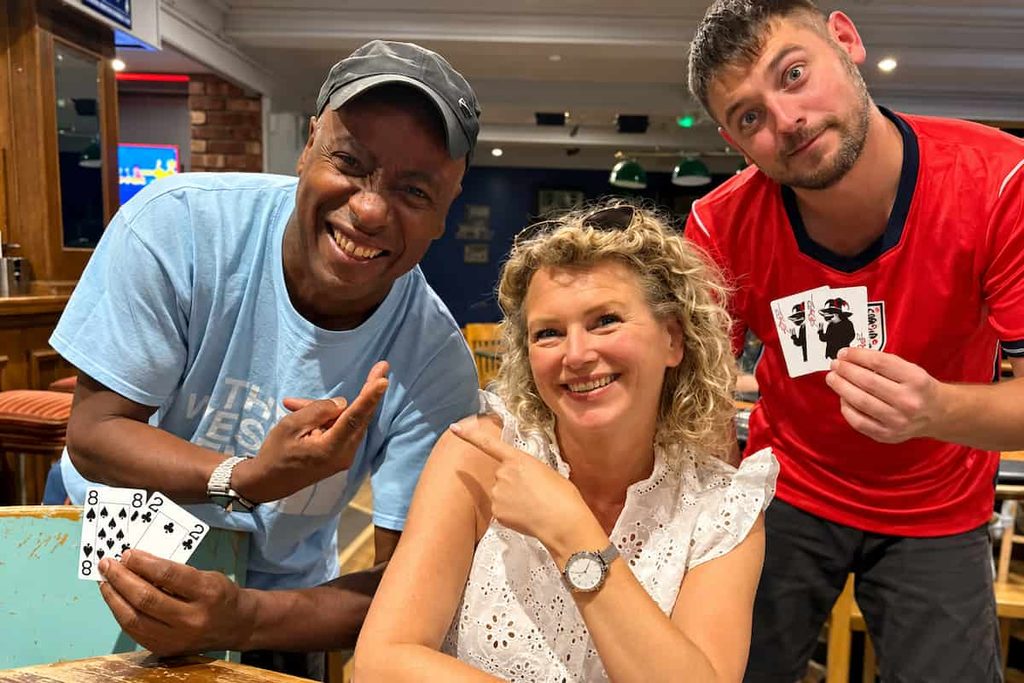
Kelsall discovered poker just three years ago after accepting an invitation to a beginners’ game organised by her brother. She had never played before, knew little about the rules and somehow managed to win the whole thing. That was enough to get her hooked. Now she runs her own Monday night poker league, works at a school in Coventry and has an ambitious plan for when she eventually puts down the marking pen: travel the international poker circuit and, hopefully, add something to her pension.
Speaking to BBC Coventry & Warwickshire, Kelsall explained how an unlikely first victory developed into a passion for a game she believes offers considerably more than the chance to win money.
From Complete Beginner to Running Her Own Poker League
There is something appealing about Kelsall’s introduction to poker. No expensive coaching, endless hours studying solvers or watching professionals fire six-figure bluffs on television. Just a beginners’ tournament, a little luck and a winning finish.
Anyone who has played poker for long enough knows how dangerous winning your first tournament can be. Suddenly, you’re convinced you’ve got the game cracked, right up until someone cracks your aces or calls your river bluff with bottom pair.
Kelsall didn’t let the inevitable learning curve put her off. Instead, she embraced the game, learned more about its strategy and eventually started organising her own regular tournaments.
Her Monday night league features £5 buy-ins, with limits on re-entries. According to Kelsall, players can spend a maximum of £15 in games that allow two additional entries.
That is a very different prospect from sitting down in a £1,000 Main Event, but it represents an important part of British poker. Small local games allow people to learn the rules, understand tournament pressure and discover whether they actually enjoy competing without committing hundreds of pounds.
Poker Offers Something Beyond Prize Money
Kelsall believes one of poker’s greatest strengths is its social side, particularly for people who have lost partners, experienced isolation or simply want to meet new friends.
“You can walk into a room full of strangers and by the end of it, they’re all friends,” she told the BBC.
That is something regular live players will recognise. You can spend an evening trying to take someone’s chips, disagree over a river call and still end up chatting at the bar afterwards. Unlike many competitive activities, poker also allows people of very different ages and backgrounds to sit at the same table. A complete beginner approaching retirement can play against somebody who has been studying tournament strategy since their teenage years.
Poker Type has previously covered 100-year-old Ivor Ward and his advice on staying sharp at the tables. The veteran played at the 2026 Goliath festival in Coventry, demonstrating that a competitive interest in poker can last well beyond conventional retirement age.
We also reported on a centenarian poker ambassador announcement ahead of Goliath 2026, another example of older players attracting attention in a game often associated with much younger online professionals.
For Kelsall, however, the journey is only just beginning.
Another British Woman Finding Her Place in Poker
Kelsall’s story also arrives during an interesting period for women in British poker.
In September, Renee Xie became the first woman to win a Grosvenor UK Poker Tour Main Event, taking down the £560 tournament in Luton for £35,435. It was a major result for a player who had previously finished runner-up on the tour.
Xie subsequently told the BBC that she regarded poker as a hobby rather than a dependable career. Her comments are particularly relevant to Kelsall’s ambition of supplementing her retirement income through tournament winnings.
There is also the example of Victoria Coren Mitchell, who built a successful career in writing and broadcasting while establishing herself as one of Britain’s most accomplished tournament players. She became the first woman to win a European Poker Tour Main Event in 2006 and the first player to win two EPT Main Events in 2014.
But progress is not simply about major tournament titles.
Earlier this month, London’s Hippodrome Casino hosted events as part of Women’s Poker Weekend, an international initiative spanning 14 countries. The London programme included coaching, cash games and a £20,000 guaranteed ladies tournament.
Initiatives like these provide opportunities for women who might be interested in poker but feel less comfortable walking into an unfamiliar cardroom.
Kelsall’s community league represents another route into the game, one that starts with a small buy-in and a welcoming table rather than a major casino festival.
Can Poker Really Supplement a Pension?
There is one part of Kelsall’s retirement plan that deserves a little examination.
Winning tournament prize money is certainly possible, but turning poker into regular retirement income is much more difficult. Even highly accomplished players can go months without a significant result, while buy-ins, accommodation, travel and other expenses quickly add up.
That distinction matters when comparing a weekly £5 league with playing tournaments around the world.
A player entering an occasional local competition can set a small budget and treat the money as entertainment. Someone travelling to multiple international events faces much greater costs before the first hand is even dealt.
It does not make Kelsall’s ambition unrealistic as a personal goal. Plenty of recreational players organise holidays around poker festivals, enjoy competing against unfamiliar opponents and occasionally return home with a profit.
The important part is treating any winnings as a bonus rather than money that must be won to cover essential expenses.
Interestingly, Poker Type has also explored how women are using skills learned at the poker table in business. Risk assessment, emotional control, negotiation and patience all have applications away from the felt.
For Kelsall, whose working life revolves around education, there is another obvious parallel: both teaching and poker require an understanding of people, patience and the ability to deal with situations that don’t always go to plan.
From the Classroom to the International Poker Circuit
Kelsall already has her eye on tournaments overseas, mentioning Malta as somewhere she would love to play.
The prospect of swapping a Coventry classroom for a seat in an international Main Event is certainly attractive, although she still has some years of teaching ahead of her.
In the meantime, she has a Monday night league, a growing appreciation of the game and a community of players who share her enthusiasm.
Poker has produced plenty of stories about teenagers winning millions, professionals travelling between high-stakes festivals and online grinders playing thousands of hands every day.
Kelsall’s story is different. She discovered the game approaching 50, won her first tournament by her own admission through beginner’s luck and now wants poker to remain part of her life long after she retires.
Whether she ever wins enough to supplement her pension remains to be seen. But if poker takes her around the world, introduces her to new friends and provides a reason to keep competing, that first £5 tournament will have turned out to be quite an investment.