The World Series of Poker is breaking new ground in Mexico as the first WSOP Circuit series ever held in Mexico City gets underway today.
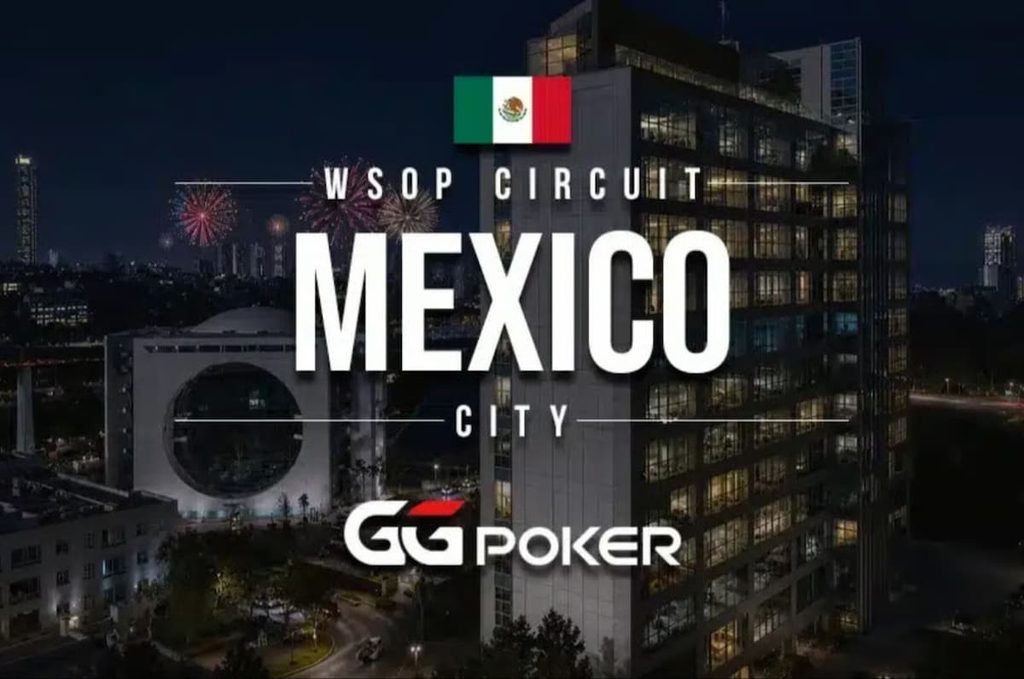
Cards are in the air from August 31 at the Barcelo México Santa Fe Hotel, where Big Bola Casinos will host 12 days of WSOP Circuit action through September 11.
The arrival of the Circuit in the Mexican capital adds another major city to the WSOP’s increasingly international schedule.
It also brings WSOP rings to a country with a poker history stretching from underground card rooms to bracelet winners and players who have accumulated millions of dollars on the international tournament circuit.
WSOP Circuit Mexico City Begins With Mystery Bounty
The inaugural Mexico City stop starts today with an MX$8,000 No-Limit Hold’em Mystery Bounty.
Two opening flights are scheduled for Monday at noon and 6 p.m., followed by another two on Tuesday.
The schedule then moves into an MX$8,000 Mini Main Event, Pot-Limit Omaha and an eight-handed No-Limit Hold’em tournament as the series builds towards its Main Event.
For Mexican players, it represents another opportunity to compete for official WSOP hardware without making the traditional journey north to Las Vegas.
The Mexico City festival also arrives during a particularly busy period of international expansion for the Circuit.
The first WSOP Super Circuit Canada is already underway at Playground near Montreal, while the WSOP Circuit Paris begins on September 1.
Mexico City now joins them on a WSOP calendar increasingly extending beyond the Circuit’s traditional American casino stops.
Mexico Has Been Producing Poker Champions for Decades
Mexico City might be new territory for the WSOP Circuit, but Mexican players are certainly not new to the World Series.
The country’s first WSOP bracelet arrived two decades ago.
Victoriano Perches made history at the 2006 World Series of Poker when he won the $1,500 Limit Hold’em Shootout.
Three years later, Mexico produced another champion.
Mexico City native Angel Guillen enjoyed an extraordinary 2009 WSOP. He first finished runner-up in a $2,500 No-Limit Hold’em event for $312,800 before returning less than two weeks later and winning the $2,000 No-Limit Hold’em event.
Guillen defeated Mika Paasonen heads-up to collect $530,548 and Mexico’s second WSOP bracelet.
His breakthrough came at a time when Mexican poker players had considerably fewer opportunities to play major live tournaments at home.
Back in 2009, Guillen and fellow Mexican professional JC Alvarado were already talking about the possibility of a Latin American poker boom.
Seventeen years later, an official WSOP Circuit festival arriving in their country’s capital is another indication of how much has changed.
JC Alvarado Leads Mexico’s All-Time Money List
JC Alvarado remains one of the most successful tournament players Mexico has produced.
The Mexico City professional has recorded more than $4.5 million in live tournament cashes and currently sits at the top of Mexico’s all-time money list.
Alvarado emerged during the online poker boom and became a regular at major tournaments around the world, building a résumé that includes appearances at the WSOP, European Poker Tour and World Poker Tour.
Angel Guillen sits second on Mexico’s current all-time list with more than $3 million.
Another bracelet winner, Luis Velador, is third with more than $2.7 million.
Velador won his first WSOP bracelet in 2008, taking down a $1,500 No-Limit Hold’em event for $574,734. He added a second bracelet two years later in the $2,500 Pot-Limit Hold’em/Omaha event.
That made Velador the first Mexican player to win multiple WSOP bracelets.
Santiago Nadal is another familiar name from Mexican tournament poker. His recorded live earnings have climbed beyond $2.7 million following a career featuring results across the WSOP, EPT and numerous international festivals.
Mexico’s leading players are no longer isolated successes. The country’s current all-time money list includes four players above $2.7 million and seven with more than $1 million in recorded tournament cashes.
From Underground Poker to an Official WSOP Circuit
The contrast with the early careers of Mexico’s first internationally successful professionals is considerable.
When Guillen was emerging, he described learning the game through home games and underground card rooms before using online poker to develop against a wider range of opponents.
Mexico’s strongest players generally had to travel internationally to pursue major tournament careers.
Las Vegas was the obvious destination, while events elsewhere in the United States, Europe and Latin America provided other opportunities.
The arrival of established international tours has gradually changed that landscape.
Now the WSOP itself is planting its flag in Mexico City.
The significance is not the same as hosting the summer World Series or awarding bracelets on Mexican soil. Circuit champions receive rings rather than bracelets, and Las Vegas remains the center of the WSOP calendar.
But the Circuit has developed its own history and prestige.
Players regularly use Circuit events as an entry point into serious tournament poker, while established professionals continue to compete for rings alongside emerging local players.
The recent story of Curtis King’s first WSOP Circuit ring showed how significant one of those victories can become in a player’s career.
For someone in Mexico City, that opportunity is now arriving considerably closer to home.
Who Will Become Mexico City’s First WSOP Circuit Champion?
By the time the festival ends on September 11, a new collection of WSOP Circuit ring winners will have been crowned.
One of them will also leave with a unique place in Mexican poker history as the winner of the first WSOP Circuit Main Event held in the capital.
Whether that player is an established Mexican professional, an international visitor or someone making their first significant tournament breakthrough remains to be seen.
What is already certain is that the WSOP has arrived in Mexico City.
For a country that produced its first bracelet winner 20 years ago and has since developed a generation of internationally successful professionals, it feels less like the beginning of Mexican poker than recognition of a poker scene that has been there all along.