Australia has been competing in Eurovision for more than a decade, so perhaps we should have seen this coming.
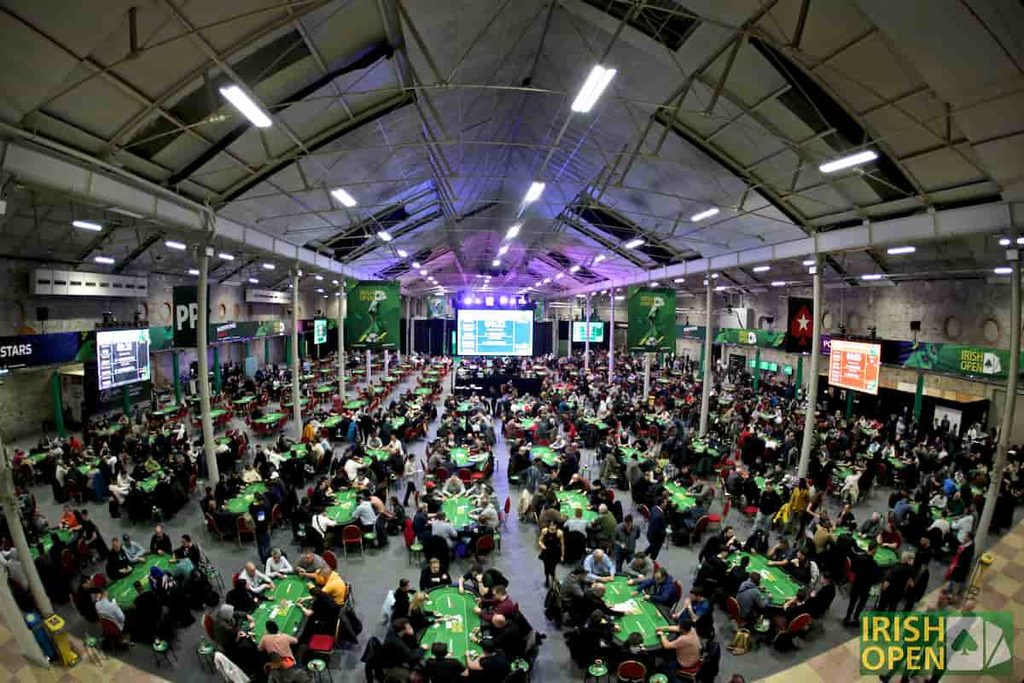
Now the country has another European institution to call its own. The Irish Open has arrived in Sydney, marking the first time in its 46-year history that the famous poker festival has staged an event outside Europe.
If that sounds geographically confusing, there is a much bigger story behind it.
The Irish Open is no longer simply trying to attract international poker players to Dublin. It is taking Ireland to them.
The Irish Open Heads Down Under
The inaugural Irish Open Sydney began on August 31 at Poker Palace at Club Marconi, with the festival running until September 14.
More than 40 tournaments are scheduled across the 15 days, with close to A$2 million in guaranteed prize pools. The centrepiece is the A$2,000 Main Event, which carries a A$1 million guarantee and begins on September 6.
There is also a A$360 Mini Irish Open with A$500,000 guaranteed, the A$880 Lucky 8s carrying a A$250,000 guarantee and an A$10,000 Super High Roller.
Sydney is not being treated as a small satellite festival carrying a familiar logo. The organisers are attempting to export the Irish Open experience itself.
That includes the Craic Den, the festival’s off-table entertainment area featuring live music, games and competitions. It has become an important part of the Dublin event’s identity, and the concept has now travelled more than 10,000 miles to Australia.
Irish Open Sydney 2026 Full Schedule
The Irish Open Sydney schedule offers considerably more than No-Limit Hold’em. Mixed games, PLO, high rollers and dedicated championships are spread throughout the festival, alongside the Main Event and Mini Irish Open.
Here is the schedule of principal events:
| Dates | Tournament | Buy-in | Guarantee |
|---|---|---|---|
| Aug. 31 – Sep. 11 | Mini Irish Open | A$360 | A$500,000 |
| Sep. 2 – Sep. 6 | Lucky 8s | A$880 | A$250,000 |
| Sep. 5 | Deaf Championship Main Event | A$360 | — |
| Sep. 6 – Sep. 14 | Irish Open Main Event | A$2,000 | A$1,000,000 |
| Sep. 6 | Mixed 8-Game Championship | A$600 | — |
| Sep. 7 | NLH 6-Max Championship | A$600 | — |
| Sep. 7 | Big O Championship | A$600 | — |
| Sep. 7 – Sep. 8 | High Roller 8-Max | A$5,000 | — |
| Sep. 8 | The Hendon Mob Championship | A$600 | — |
| Sep. 8 | Sviten Special Championship | A$600 | — |
| Sep. 8 | NLH 8-Max Mystery Bounty | A$2,000 | — |
| Sep. 8 | PLO | A$600 | — |
| Sep. 9 | Asia-Pacific Cup | A$600 | — |
| Sep. 9 | 2-7 Triple Draw Championship | A$600 | — |
| Sep. 9 – Sep. 10 | Super High Roller 8-Max | A$10,000 | — |
| Sep. 10 | Mixed 8-Game High Roller Championship | A$2,000 | — |
| Sep. 10 | Ladies Championship | A$200 | — |
| Sep. 11 | PLO 4/5/6 | A$600 | — |
| Sep. 13 – Sep. 14 | Sydney Poker Open | A$880 | A$100,000 |
| Sep. 13 – Sep. 14 | High Roller 8-Max | A$3,000 | — |
| Sep. 14 | Seniors 50+ Championship | A$600 | — |
| Sep. 14 | PLO 6-Max | A$600 | — |
| Sep. 14 | The Irish Goodbye | A$460 | — |
The variety is important because the Sydney stop is being presented as a full Irish Open festival rather than a single Main Event transported overseas.
It also gives the organisers several different audiences to target. Alongside the major guarantees are lower buy-in championships, mixed games and specialist events, including the Deaf Championship.
Why Australia?
There is actually more logic to an Irish poker festival in Sydney than the name initially suggests.
Australia has deep historical and cultural connections with Ireland, while Sydney provides the Irish Open with access to a much wider Asia-Pacific poker audience. Irish Open co-owner JP McCann has identified connecting with the growing Asia-Pacific poker community as one of the attractions of taking the festival to Sydney.
Poker Palace co-owner Lauren Mooney also provides a fitting connection between the two countries. She grew up in Ireland before making Australia her home, giving the partnership another distinctly Irish connection.
Then there is the poker itself.
Australia has produced some of the game’s biggest players and has a long history of hosting major live tournaments. Daniel Negreanu, for example, won the 2013 WSOP Asia Pacific Main Event in Melbourne for more than A$1 million.
For the Irish Open, Sydney opens a market that would otherwise require players to make an enormous journey to Dublin.
Instead, Dublin has come to them.
Some of the Australian Tournament Was Already Played in Ireland
The geographical oddities do not end there.
Four players had already secured places in Day 2 of the Sydney Main Event before the Australian festival even began.
Oliver Hutchins, Matthias Shahine Ramdjee, Chris Dowling and Michal Stipsky qualified through a remote Day 1 held at the Royal Dublin Society during the Irish Open in April.
That means part of an Australian Irish Open Main Event was played in Dublin approximately five months before the rest of the tournament took place in Sydney.
Try explaining that one without a map.
It also demonstrates how the organisers are beginning to think differently about the Irish Open. Instead of treating each tournament as an isolated live event, qualifiers and international festivals can increasingly become part of the same ecosystem.
The Irish Open Is Becoming a Global Poker Brand
Sydney is really the first part of a much larger experiment.
The Irish Open will travel to Marrakech from November 10 to 15 for another international festival. That stop features a €1,150 Main Event with €500,000 guaranteed.
The United States comes next in 2027, although the location of the first American Irish Open has yet to be revealed.
The Irish Open is not alone in taking an established poker name into new territory. The WSOP Circuit made its first visit to Mexico City in 2026, another example of a major poker brand looking towards new international markets.
Meanwhile, WSOP Paradise has developed the WSOP name into a major destination festival in the Bahamas, with its 2026 edition carrying $120 million in guarantees.
That makes the Australian debut considerably more important than simply adding another poker tournament to the calendar.
For decades, the Irish Open’s greatest asset has been its identity. Plenty of poker festivals can offer large guarantees, satellites and side events. Far fewer are so closely associated with a country, atmosphere and particular style of live poker.
The challenge is working out whether that identity travels.
Can the Irish Open Still Be Irish Outside Ireland?
That may ultimately be the most interesting question raised by Sydney.
The Irish Open has traditionally worked the other way around. Players from across the world travelled to Ireland and became part of the festival.
The 2026 Dublin Main Event attracted a record 5,003 entries, while more than 32,000 entries were recorded across the wider festival. The Main Event alone generated a €4,852,910 prize pool.
Those numbers give the organisers something valuable to build upon. Rather than creating a new poker tour from scratch, they can take an established name into new markets.
But the Irish Open brand is not based solely on poker.
The atmosphere, entertainment and social side of the Dublin festival are a major part of its appeal. That explains why exporting the Craic Den and other recognisably Irish elements matters. If Sydney were simply another tournament series with an Irish Open badge attached, some of that identity would inevitably disappear.
Instead, the organisers appear to be testing whether the experience itself can become portable.
Poker’s Answer to Eurovision?
There was once something slightly strange about seeing Australia appear on the Eurovision Song Contest scoreboard.
Australia made its Eurovision debut in 2015 despite being rather conspicuously absent from the European continent. What started as a special invitation for the contest’s 60th anniversary developed into a much longer relationship with the competition.
The Irish Open may be attempting something similar.
An Irish Open in Australia sounds unusual precisely because the name has such a strong geographical identity. But if Sydney works, Marrakech follows and the US launch succeeds in 2027, the meaning of “Irish Open” could gradually change.
It would describe a style of poker festival rather than simply its location.
The Dublin event would remain the original and the centre of that identity. But the brand surrounding it could become considerably larger.
For Australian players, meanwhile, there is a much simpler explanation.
They no longer have to travel halfway around the world to experience the Irish Open.
For the first time in 46 years, the Irish Open has travelled to them.