If you’ve ever watched a major poker tournament, you’ve probably noticed players placing small objects on top of their cards. Sometimes it’s a custom coin, sometimes a lucky charm, and sometimes even a toy or collectible figure.
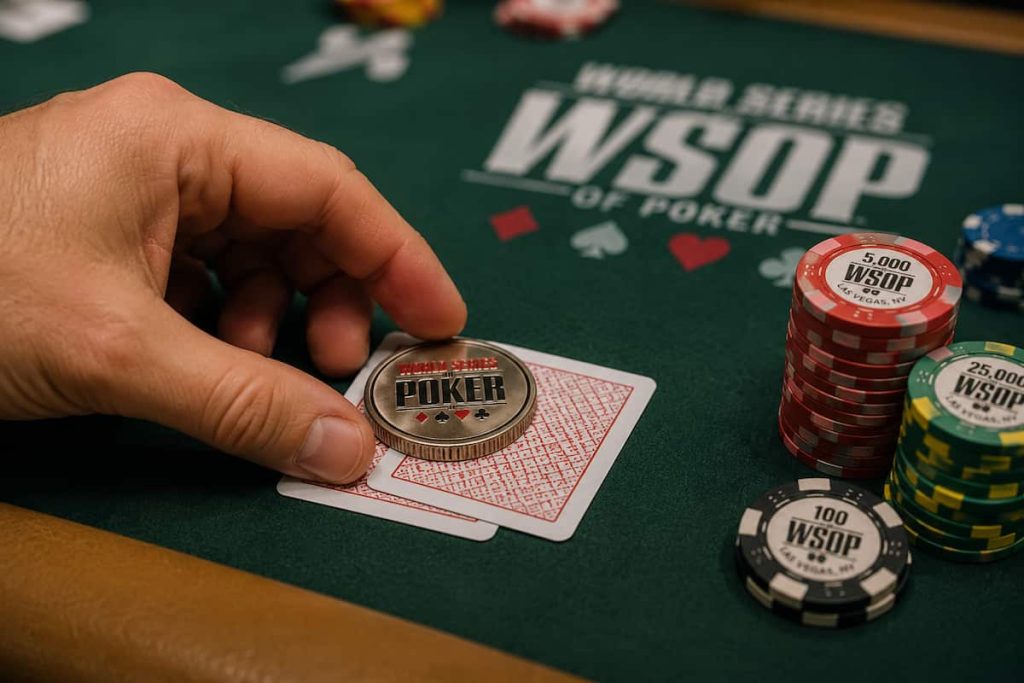
These objects are known as card protectors, and while they might seem like quirky personal items, they actually serve a practical purpose at the poker table.
Card protectors have become a common sight in live poker, from local card rooms to the World Series of Poker (WSOP). But do they really help, or are they simply part of poker culture?
What Is a Card Protector?
A card protector is any small object that a player places on top of their face-down hole cards.
Unlike poker chips, which represent money in play, a card protector has no official role in the game. It can be almost anything, including:
- Specially made poker card protector coins
- Casino commemorative chips
- Lucky charms
- Small toys or figurines
- Keyrings
- Personal keepsakes
Some professionals even have custom-made protectors featuring their logo or nickname.
Why Do Poker Players Use Them?
The biggest reason is surprisingly simple.
Card protectors help prevent a player’s cards from being accidentally folded by the dealer.
In live poker, dealers are constantly collecting folded hands while managing betting, side pots, and action around the table. If a player’s cards are sitting close to the muck and they momentarily look away or become distracted, there is a small risk that the dealer could mistake them for folded cards.
Placing a weighted object on top of the cards makes it immediately obvious that the hand is still live.
While experienced dealers rarely make this mistake, poker players prefer not to take the chance, especially in tournaments where a single error could cost thousands of pounds or even a championship.
They Can Prevent Costly Mistakes
Every year, stories emerge of players accidentally losing live hands because their cards were mucked before the action was complete.
Tournament rules generally state that once cards are mixed into the muck and cannot be clearly identified, the hand is dead.
A simple card protector significantly reduces the risk of that happening.
For many players, it’s inexpensive insurance.
Are Card Protectors Required?
No.
Most casinos and poker tournaments do not require players to use one.
Many players never use a card protector at all, particularly in cash games where the atmosphere is often more relaxed.
However, they are extremely common in larger tournaments, especially televised events where players may spend long periods waiting between hands.
Are They Good Luck Charms?
For some players, absolutely.
Poker is a game of mathematics, psychology and decision-making, but many players also develop personal routines and superstitions.
A favourite coin, a lucky poker chip or a small family keepsake can become part of a player’s tournament ritual.
Of course, there’s no evidence that a particular object improves your chances of winning.
Its real value is often psychological. Familiar routines can help players feel comfortable and focused during long sessions.
Can Anything Be Used as a Card Protector?
Usually, yes.
Most casinos simply require that the object:
- Doesn’t damage the cards
- Doesn’t interfere with the dealer
- Doesn’t obstruct other players’ view
- Isn’t excessively large
A small coin or figurine is generally acceptable.
Large electronic devices or anything that distracts the table may not be permitted.
Do Professional Poker Players Use Card Protectors?
Many do.
If you’ve watched the WSOP, European Poker Tour (EPT) or World Poker Tour (WPT), you’ve almost certainly seen professionals using them.
Some players use branded merchandise.
Others use lucky coins they’ve carried for years.
A few have become known almost as much for their card protectors as for their poker results.
Do They Actually Improve Your Game?
Not directly.
A card protector won’t make better decisions for you or increase your odds of winning a hand.
What it can do is eliminate one avoidable mistake.
In poker, protecting your cards is simply part of protecting your equity. If you’ve played a hand well, the last thing you want is to lose it because your cards were accidentally swept into the muck.
For many experienced players, using a card protector is just good table etiquette and sensible habit.
The Bottom Line
Card protectors may look like lucky charms, but their primary purpose is practical rather than magical.
They help keep your hand safe, reduce the risk of dealer errors, and give players peace of mind during long live sessions.
If you’re new to poker, you’ll probably notice plenty of unusual objects sitting on players’ cards. Now you’ll know they’re there for a reason.
If you’re curious about other live poker traditions, you might also enjoy reading our guide explaining why the WSOP Main Event pauses before the final table, a long-standing tradition that still surprises many new fans. You can also discover whether poker players really gain an advantage by wearing sunglasses, or if it’s mostly a matter of image rather than strategy.