Jason Koon has his place in poker history. The question now is who follows him.
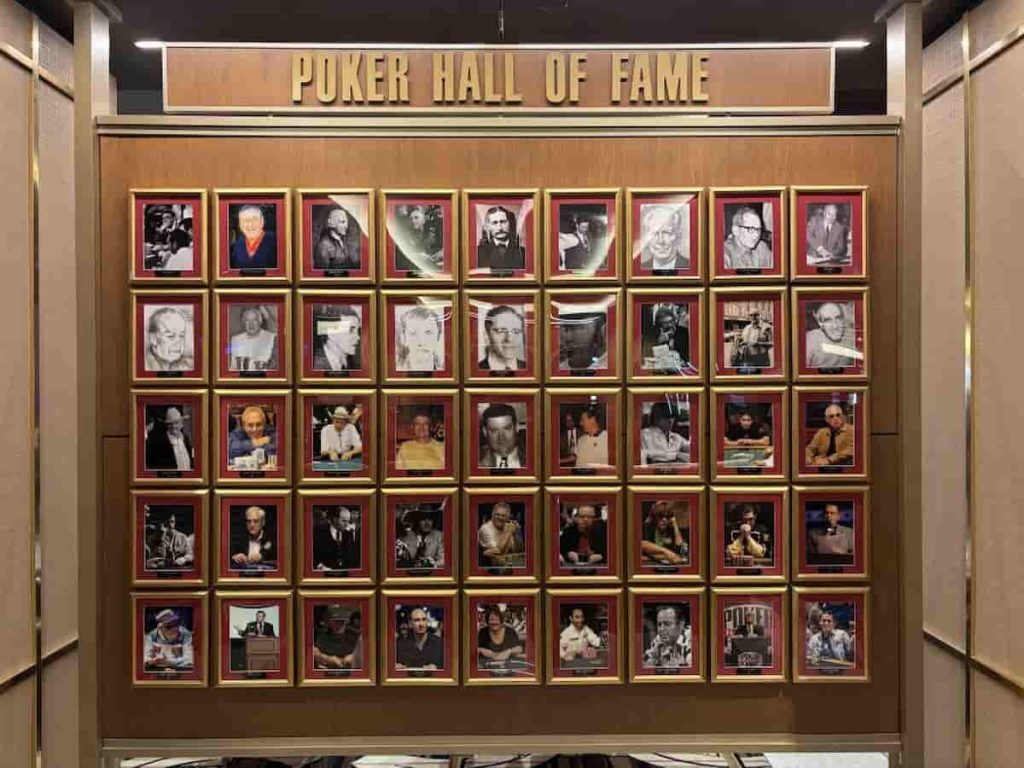
Koon became the newest member of the Poker Hall of Fame in 2026 after receiving the required support from living Hall of Fame members. But the vote also highlighted a growing problem: poker has far more Hall of Fame-caliber candidates than available places.
Scott Seiver finished immediately behind Koon in the voting, while PokerStars founder Isai Scheinberg and newly eligible Shaun Deeb also attracted significant support.
And the queue isn’t getting any shorter.
So, if we were ranking the strongest candidates to enter the Poker Hall of Fame next, who should be at the front of the line?
The official criteria provide a useful starting point. Players must be at least 40 years old, have competed against acknowledged top competition, played for high stakes, performed consistently well, earned the respect of their peers and stood the test of time. Non-players can qualify through significant and lasting contributions to poker.
Here are 10 names Poker Type believes deserve serious consideration.
10 Poker Hall of Fame Candidates Who Could Be Next
1. Scott Seiver
If the 2026 voting tells us anything, Scott Seiver has to begin as the obvious favorite.
Seiver was one of eight finalists this year and finished second to Koon in the Hall of Fame vote. He has already built the type of résumé that makes induction increasingly difficult to argue against.
The American has won multiple WSOP bracelets across different poker variants, competed successfully in some of the world’s toughest cash games and tournaments, and demonstrated precisely the longevity the Hall’s criteria demand.
What particularly strengthens Seiver’s case is versatility.
This isn’t a player whose reputation rests on one enormous No-Limit Hold’em score. His success across mixed games and high-stakes competition demonstrates a depth of poker ability that traditionally carries considerable weight with Hall of Fame voters.
Poker Type verdict: The player to beat in the next vote.
2. Shaun Deeb
There’s a strong argument that Shaun Deeb could already be in.
Deeb became eligible for the first time in 2026 and immediately reached the final eight.
His WSOP résumé alone makes a formidable case.
Deeb has accumulated multiple bracelets and twice won WSOP Player of the Year, including a remarkable 2025 campaign in which he won the $100,000 Pot-Limit Omaha High Roller for almost $3 million and secured his second POY title.
Perhaps more importantly, he’s a genuine all-round poker player.
Deeb has succeeded online, in live tournaments and across numerous variants. That matters when the Hall’s criteria specifically reward players who have demonstrated sustained excellence rather than simply accumulated winnings during the modern high-roller era.
Poker Type verdict: Almost impossible to keep out indefinitely.
3. Isai Scheinberg
The most compelling non-player candidate may also be one of the most important people in modern poker history.
Isai Scheinberg founded PokerStars.
That alone transformed the game.
PokerStars became one of the dominant forces behind the online poker boom and helped make international tournament poker accessible to millions of players.
Scheinberg was again among the eight Poker Hall of Fame finalists in 2026.
The debate isn’t really about whether he influenced poker. Few people have influenced the modern game more.
Instead, the question is how voters balance industry figures against players when they appear on the same ballot.
That’s a problem that could become increasingly difficult as more elite players reach the qualifying age.
Poker Type verdict: His impact on modern poker is Hall of Fame worthy.
4. Isaac Haxton
If we’re judging purely on ability against elite competition, Isaac Haxton has an extraordinary case.
Haxton has spent years competing at the very top of high-stakes tournament poker, facing many of the best players in the world in fields where there are very few soft spots.
He became eligible in 2026 and immediately reached the final ballot alongside Koon, Deeb and several other major names.
His résumé includes major high-roller victories, a WSOP bracelet and sustained success through an era in which tournament strategy has become increasingly sophisticated.
Haxton has also remained successful as solver-driven strategy transformed elite poker.
The only thing working against him may be the sheer quality of the players waiting alongside him.
Poker Type verdict: A Hall of Famer in waiting.
5. Chris Moorman
Chris Moorman’s case looks different from most of the players above him.
That’s precisely why it’s important.
Long before online tournament results were routinely celebrated alongside live achievements, Moorman was establishing himself as arguably the defining online tournament player of his generation.
For years, his online tournament record set a benchmark other grinders chased.
His success wasn’t confined to the internet either. Moorman later won a WSOP bracelet and major live titles, proving his game translated away from the screen.
The British professional was another member of the 2026 final eight.
For a Hall of Fame attempting to represent poker history accurately, the online era has to matter.
Few players represent it better.
Poker Type verdict: One of the strongest cases for online poker receiving greater Hall of Fame recognition.
6. Mike Matusow
Mike “The Mouth” Matusow presents a completely different Hall of Fame argument.
His peak results date largely from an earlier poker era, but his combination of WSOP success, high-stakes experience and visibility during poker’s television boom makes him historically significant.
Matusow has won multiple WSOP bracelets and became one of the game’s most recognizable personalities during the period when televised poker was exploding in popularity.
He’s also repeatedly reached the Hall of Fame shortlist, including again in 2026.
The question for voters is how heavily to weight his accomplishments and influence during poker’s boom years against the extraordinary modern résumés now appearing on the ballot.
Every year he remains outside the Hall also brings another group of newly eligible players into contention.
Poker Type verdict: A legitimate candidate increasingly threatened by poker’s Hall of Fame logjam.
7. Justin Bonomo
Few players can match Justin Bonomo’s tournament results.
Bonomo became eligible for the first time in 2026 and immediately made the final eight.
His career includes extraordinary success in high rollers and super high rollers, including victories against some of the strongest tournament fields ever assembled.
Purely from a results perspective, his credentials are enormous.
But Hall of Fame voting isn’t simply an all-time money list.
The criteria also incorporate longevity, reputation and respect from peers, meaning voters can assess a much broader career picture than tournament earnings alone.
With so many strong candidates competing for recognition, every part of that assessment matters.
Poker Type verdict: Results strong enough to keep him in the conversation every year.
8. Mike Gorodinsky
Here’s one name that shouldn’t be forgotten simply because he missed the final 2026 ballot.
Mike Gorodinsky possesses exactly the type of mixed-game résumé traditionally respected by the Poker Hall of Fame.
“Gordo” has won multiple WSOP bracelets and the prestigious $50,000 Poker Players Championship, an event frequently regarded as one of the best tests of complete poker ability.
He has also competed successfully in high-stakes cash games.
That combination matters.
As enormous No-Limit Hold’em and super high-roller prize pools inflate modern tournament earnings, players capable of succeeding across poker’s different disciplines can sometimes be overlooked by casual observers.
Hall of Fame voters are considerably less likely to make that mistake.
Poker Type verdict: The poker purist’s candidate.
9. Ted Forrest
Ted Forrest represents the opposite end of the waiting list.
He has been eligible for years.
Forrest is a six-time WSOP bracelet winner, an accomplished mixed-game player and a veteran of some of the most famous high-stakes cash games in poker history.
His career stretches across several eras of the game, satisfying the “stood the test of time” requirement about as literally as possible.
Forrest was a finalist again in 2025 but didn’t make the final eight in 2026.
The longer he waits, however, the harder induction could become as the poker-boom generation continues turning 40.
That’s one of the fundamental problems with the current Hall of Fame system.
Being worthy of induction doesn’t necessarily mean you’ll be the most compelling candidate in any particular year.
Poker Type verdict: One of the clearest examples of the Hall’s backlog problem.
10. Matt Savage
Should the Poker Hall of Fame do more to recognize the people who built the game away from the tables?
If the answer is yes, Matt Savage deserves serious consideration.
Savage has spent decades shaping modern tournament poker as a tournament director and industry figure.
Players today take standardized tournament procedures for granted, but poker didn’t always operate that way.
Savage’s work with the Tournament Directors Association helped establish greater consistency in rules and procedures across live poker.
Like Scheinberg, his candidacy exposes one of the biggest problems with the current system.
How do you compare a player with multiple bracelets to someone whose contribution affected how tournaments themselves are played?
They’re fundamentally different achievements.
Poker Type verdict: A strong argument for creating a separate contributor category.
The 2026 Poker Hall of Fame Vote Shows the Problem
The eight official 2026 finalists were:
| Candidate | 2026 Result |
|---|---|
| Jason Koon | Inducted |
| Scott Seiver | Finalist |
| Isai Scheinberg | Finalist |
| Shaun Deeb | Finalist |
| Mike Matusow | Finalist |
| Isaac Haxton | Finalist |
| Chris Moorman | Finalist |
| Justin Bonomo | Finalist |
This wasn’t a weak ballot waiting for an obvious standout.
It was stacked.
The voting system was changed for 2026 so that more than one candidate could theoretically be inducted. Living Hall of Fame members could support multiple finalists, with a candidate requiring support from at least two-thirds of voters to guarantee induction.
Koon cleared the threshold.
Nobody else did.
That means almost the entire 2026 class could potentially return to the conversation again.
Who Becomes Eligible for the Poker Hall of Fame in 2027?
The backlog isn’t about to disappear.
More great players continue turning 40, and another group of recognizable names will soon be competing with the candidates already waiting.
Jason Mercier is particularly interesting.
His combination of WSOP success, mixed-game ability, high-stakes experience and longevity could immediately make him a serious candidate once eligible.
Andrew Robl also presents an interesting case because tournament results tell only part of his story. Robl has spent years competing in some of the largest cash games in poker, an area of the game that can be difficult to quantify using publicly available results.
Then there’s Bryn Kenney.
Kenney’s tournament record places him among the biggest live tournament winners in poker history. His sheer volume of success at the highest buy-in levels makes his eventual candidacy impossible to ignore.
Add incoming candidates to Seiver, Deeb, Haxton, Moorman, Scheinberg and the existing backlog, and the problem becomes obvious.
There simply aren’t enough places.
Should the Poker Hall of Fame Induct More People?
This may ultimately be the more important question.
Poker is considerably bigger than it was when the Hall of Fame was established in 1979.
There are now distinct generations of live tournament professionals, online legends, high-stakes cash players, mixed-game specialists, tournament directors and industry figures worthy of recognition.
Yet they’re effectively competing for the same honor.
The revised 2026 voting system at least created the possibility of multiple inductees.
That’s significant because the list of deserving candidates isn’t getting shorter.
A separate contributor category could solve part of the problem too.
Comparing Isai Scheinberg or Matt Savage directly with Shaun Deeb or Scott Seiver doesn’t necessarily make sense when their contributions to poker are fundamentally different.
One group built extraordinary careers playing the game.
The other helped shape the game itself.
Both can be worthy of recognition without needing to compete directly against each other.
Who Should Enter the Poker Hall of Fame Next?
If Poker Type had one vote today, it would go to Scott Seiver.
He has the bracelets, versatility, high-stakes pedigree, longevity and peer recognition the Hall explicitly asks voters to consider. Coming so close in 2026 only strengthens his case.
Shaun Deeb would be immediately behind him. His combination of WSOP success, Player of the Year titles, online pedigree and mixed-game ability makes his eventual induction seem increasingly likely.
Meanwhile, Isai Scheinberg has perhaps the strongest case of anyone whose poker legacy was created primarily away from the felt.
The bigger problem is that all three can have compelling Hall of Fame cases at the same time.
Jason Koon’s induction hasn’t cleared the Poker Hall of Fame backlog.