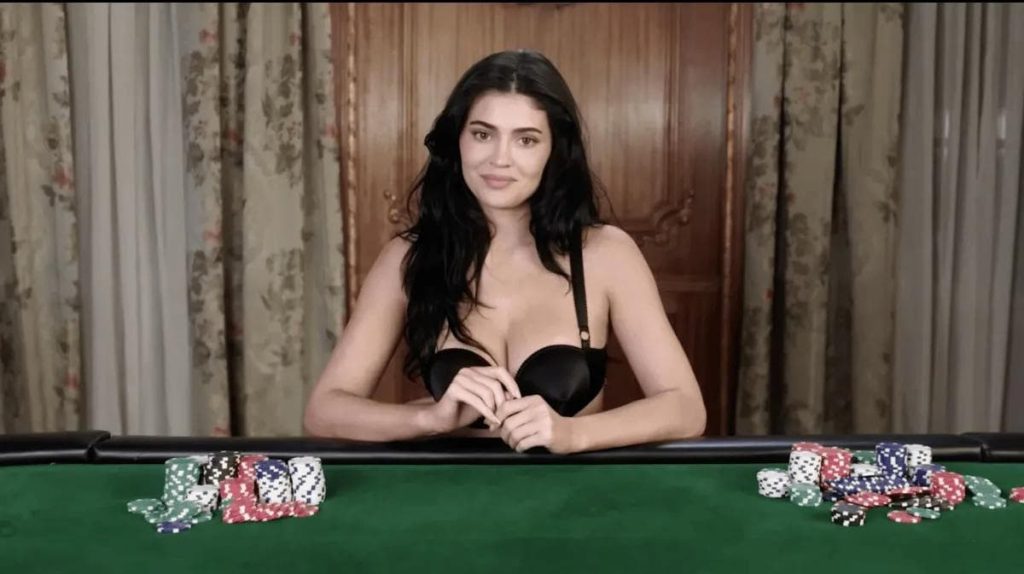
When Kylie Jenner sat down to explain poker hand rankings for Vanity Fair, few people in poker would have expected the video to become the starting point for one of the game’s stranger viral moments of 2026.
But that is exactly what happened.
Jenner’s poker lesson quickly escaped the usual poker audience. Parodies followed, poker brands joined in and even 2003 WSOP Main Event champion Chris Moneymaker decided that recreating the video was worth sacrificing a little dignity for.
Several months later, the numbers offer an interesting glimpse at something bigger than one celebrity poker video.
The next wave of new players may increasingly discover the game through poker creators who have little or nothing to do with poker.
Kylie Jenner’s Poker Video Wasn’t Completely Random
The original Vanity Fair video appeared in March 2026, with Jenner explaining poker hands while discussing her growing interest in the game.
This wasn’t simply a celebrity being handed a deck of cards for a promotional video.
Jenner said she had been playing for around two years and had become “obsessed” with poker. Her interest in the game had surfaced previously, including reports of playing with Timothée Chalamet, while Kris Jenner had given her a custom poker table for her birthday in 2025.
That matters because Jenner wasn’t introducing poker to an audience already searching for poker content.
She was doing the opposite.
Poker was being placed directly in front of an enormous mainstream audience that may ordinarily have little reason to watch a tournament stream, follow a professional player or search for poker strategy.
That crossover potential didn’t go unnoticed.
Nina Drama Takes the Joke to Millions
One of the biggest responses came from Nina Marie Daniele, better known online as Nina Drama.
Daniele has built a huge audience through UFC interviews, comedy and social media rather than poker. Working with Stake US, she recreated Jenner’s poker lesson with the suggestive presentation turned into part of the joke.
The parody exploded.
Within days, it had accumulated millions of views, reportedly passing five million on X alone.
For a video connected to a poker brand, those are enormous numbers.
More importantly, much of that audience wasn’t necessarily there for poker.
Daniele’s followers primarily know her through MMA and entertainment. Poker effectively borrowed her audience for a few minutes, putting the game in front of millions of people who might never encounter a conventional poker advertisement.
The timing also worked for Stake US, which had recently introduced its fast-fold poker game Next!.
Instead of trying to manufacture a poker trend from scratch, the brand inserted itself into one that already had mainstream momentum.
Chris Moneymaker Joins In
Then came Chris Moneymaker.
The former WSOP Main Event champion produced his own version for Americas Cardroom, complete with a bra and a deliberately less glamorous recreation of Jenner’s original presentation.
It didn’t come close to matching Nina Drama’s enormous viewing figures.
But there was something wonderfully appropriate about Moneymaker being involved.
More than two decades earlier, he had been at the centre of perhaps the most important mainstream crossover moment in modern poker history.
His victory in the 2003 WSOP Main Event helped convince a generation of recreational players that somebody sitting at home playing poker online could qualify for the biggest tournament in the world and beat the professionals.
The “Moneymaker Effect” became shorthand for the poker boom that followed.
In 2026, the mechanism for attracting new players looks very different.
The Moneymaker Effect vs the Influencer Effect
Poker once relied heavily on television to create stars.
The WSOP, World Poker Tour and shows such as Late Night Poker put hole cards on screen and transformed an otherwise difficult game to televise into entertainment.
People watched players such as Moneymaker, Phil Ivey, Daniel Negreanu and Phil Hellmuth and wanted to play themselves.
Online poker then made acting on that impulse remarkably easy.
Social media has changed the route into the game.
Someone doesn’t necessarily have to watch poker to discover poker anymore.
They might follow Kylie Jenner and see her explaining a flush. They might watch Nina Drama because they follow UFC. They might encounter King Bach producing poker content, or discover the game through a YouTuber whose audience was built somewhere completely different.
That distinction could become increasingly important.
Traditional poker creators are usually speaking to people who already have at least some interest in poker.
Mainstream creators can speak to everyone else.
Poker Brands Are Starting to Understand the Difference
The attraction for poker operators is obvious.
Advertising a poker product to somebody already watching poker content is valuable, but there is also intense competition for that person’s attention.
Reaching a mainstream creator’s audience is different.
Instead of fighting rival poker rooms and creators for the same existing players, brands potentially introduce the game to people who weren’t looking for poker at all.
The challenge is making that introduction feel natural.
Simply paying a celebrity to pose beside some poker chips isn’t particularly interesting. Content that actually fits the creator’s existing audience has a much greater chance of travelling beyond poker.
Nina Drama’s parody demonstrated that perfectly.
People didn’t need to care about poker to understand the joke.
Poker just happened to be at the centre of it.
Poker’s Creator Economy Is Already Changing
The Jenner trend also arrived during a period in which the distinction between “poker player” and “poker creator” is becoming increasingly blurred.
Professional players build YouTube channels. Streamers become tournament players. Entertainment creators enter poker events. Poker rooms increasingly value someone’s audience alongside their ability at the table.
Poker Type has previously examined the hidden cost of becoming a poker YouTuber and whether poker’s biggest YouTubers could compete against the world’s best professionals.
The next stage may be creators moving in the other direction.
Instead of poker players becoming influencers, established influencers may increasingly become poker players.
That potentially gives poker access to audiences far larger than those generated by conventional poker media.
Did Kylie Jenner Start Another Poker Boom?
Probably not.
There is an enormous difference between millions of people watching a funny poker-related video and millions of people actually starting to play.
The original Moneymaker Effect combined several unusually powerful ingredients: compelling television, the rapid expansion of online poker and the fantasy that an ordinary recreational player could qualify cheaply and become world champion.
A viral social media video isn’t comparable on its own.
But expecting another 2003-style poker boom may also miss what is actually changing.
Modern poker growth might not arrive as one gigantic moment.
It could instead come through thousands of smaller introductions to the game across TikTok, Instagram, YouTube and X.
One creator explains hand rankings. Another plays their first tournament. Someone else posts a huge bluff. Millions of followers who weren’t previously interested in poker encounter the game without deliberately looking for it.
Most will scroll past.
Some won’t.
The Kylie Jenner Poker Effect May Be Bigger Than Kylie Jenner
The most interesting part of the story isn’t that Kylie Jenner likes poker.
It isn’t even that Chris Moneymaker eventually ended up wearing a bra because of it.
It’s what happened between those two things.
A piece of mainstream celebrity content became a poker trend. Poker creators and operators reacted. A UFC personality turned it into branded entertainment watched millions of times. Poker briefly travelled well beyond its normal social media bubble.
That is the opportunity.
Poker has spent decades trying to persuade mainstream audiences to come and watch poker.
The creator era allows poker to go directly to them instead.
And if the game’s next generation of recreational players discovers a royal flush through Kylie Jenner rather than watching the WSOP on television, poker probably won’t mind very much.