Australian poker pioneer Gary Benson has lost a court battle over almost A$50,000 in gambling debts after a judge ruled that the arrangement behind the money amounted to unlicensed bookmaking.
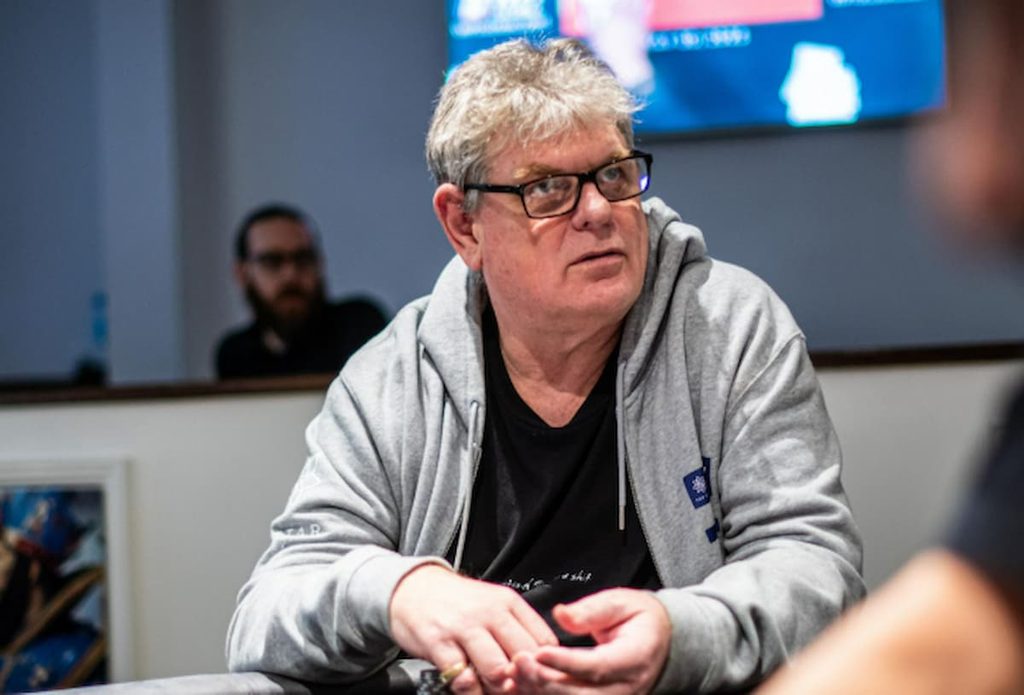
Benson, who became Australia’s first WSOP bracelet winner in 1996, had been trying to recover money from fellow poker player Michael O’Grady following hundreds of private sports bets.
The case is an unusual collision between poker, private betting and gambling law. The court did not simply decide that the wagers never happened. Instead, Judge Scott Nash found that the scale and structure of the betting arrangement meant Benson had effectively been operating as an unlicensed bookmaker, making the resulting debt unenforceable under New South Wales law.
211 Bets Turned a Private Arrangement Into Something Bigger
Evidence before the Downing Centre Local Court showed a ledger recording 211 betting transactions between May 2022 and February 2023. O’Grady would propose sports bets, including the stake and odds, and Benson would decide whether to accept them. On one day in August 2022, Benson’s records showed A$70,000 worth of wagers, while two bets worth a combined A$20,000 were accepted within roughly two minutes.
Rather than settling each wager separately, the pair carried wins and losses forward as an ongoing balance. Benson also extended credit. Those details proved crucial because the judge concluded this had moved beyond the sort of occasional private punt between mates and become a sustained betting operation.
That distinction left Benson in a nasty legal spot. A gambling debt can look perfectly real between the people involved, but if the underlying activity falls foul of licensing law, collecting it through the courts can become another matter entirely.
Benson Had Previously Won a Judgment
The story has another twist. Benson first began proceedings in 2023 seeking A$42,488.58 plus interest and costs, and judgment was initially entered in his favour. O’Grady was ordered to pay A$45,035.94.
The pair later reached a further agreement under which O’Grady would pay A$48,711.84, including accrued interest, using future poker tournament winnings. Benson surrendered enforcement rights connected with the original judgment as part of that deal, while another party joined the arrangement as guarantor.
When the agreement was not honoured, Benson returned to court. This time the legality of the betting operation became decisive. Judge Nash found that the repeated wagers, agreed odds and credit arrangement amounted to bookmaking without the required licence, so Benson’s claim was dismissed and he was ordered to pay legal costs.
A Landmark Name in Australian Poker
Benson is far from a random name dragged into a gambling dispute. He became the first Australian to win a World Series of Poker bracelet when he took down a $1,500 Seven Card Stud event in Las Vegas in 1996 for $148,200. His tournament career has since stretched across decades and produced more than $2.8 million in recorded live cashes.
He has also remained active in 2026. Benson recorded multiple cashes at this summer’s WSOP, including a fourth-place finish in a $1,500 Badugi event. His longevity makes him one of the most recognisable figures from the generation that helped establish Australian poker internationally.
Poker Type has covered plenty of action from Australia this month, including Ailen Ji’s Australian Poker Cup victory and Jarrod Thatcher winning the Irish Open Sydney Main Event. Benson’s story is very different, but it is another reminder that poker’s money stories do not always finish when the cards are in the muck.
Why the A$50K Debt Could Not Be Enforced
The key point is not that the court found O’Grady had never bet or never owed anything under the pair’s own accounting. The problem was the legal status of the arrangement itself. Under the New South Wales Unlawful Gambling Act 1998, a debt arising from unlawful gambling activity cannot simply be enforced like an ordinary commercial debt.
For poker players accustomed to settling swaps, staking balances and private bets on trust, the case is a sharp reminder that handshake agreements can become complicated once serious money and repeated wagering are involved. A casual side bet is one thing. Hundreds of accepted wagers, set odds and extended credit can look very different when a judge starts reading the ledger.
O’Grady is also an established tournament player with more than $1.6 million in recorded live cashes. Australian poker has produced plenty of memorable stories away from the felt, but this one may have players thinking twice before becoming the unofficial bookie in their group chat.