Brazil has dropped one of the biggest gambling stories of the year by effectively shutting down its regulated online betting market. For poker players, though, the obvious question has a much less dramatic answer: poker does not appear to be part of the ban.
President Luiz Inácio Lula da Silva signed Provisional Measure No. 1,394 on September 25, prohibiting the operation, offering, intermediation and advertising of fixed-odds betting across Brazil.
That covers sports betting and the regulated online casino-style games that had been brought inside Brazil’s licensing system. New deposits were stopped immediately, customers have been given time to withdraw existing balances, and betting websites and apps are scheduled to become unavailable from October 6.
It is an enormous reversal for a regulated market that only fully opened at the beginning of 2025.
Yet describing the move simply as “Brazil bans online gambling” creates a problem for poker. Under the rules Brazil has been using, poker is not treated as the same product.
Has Brazil Just Banned Online Poker?
On the wording currently available, no.
The new measure specifically prohibits “fixed-odds betting lotteries.” It defines those as wagers where money is risked for a prize determined by a multiplication factor, and its definition of an online game refers to outcomes determined by future random events generated by numbers, symbols, figures or objects.
That is essentially the regulatory structure used for sportsbooks, slots, roulette-style products and similar online casino games.
Poker has already been explicitly placed outside it.
Brazil’s Ministry of Finance guidance says games of skill do not qualify as virtual online fixed-odds betting events and specifically identifies poker as an example. It also excludes multiplayer games where one player’s decisions influence another player’s results and peer-to-peer games where the operator provides the platform and takes a commission.
That describes conventional online poker rather well.
A player sitting in a No-Limit Hold’em cash game is not betting at fixed odds against the house. Other players determine the size of the pot, make decisions against one another and win or lose money from the other players at the table.
A tournament works differently again. Players pay an entry fee and compete against one another for a prize pool rather than receiving a fixed return determined by the operator.
That distinction matters enormously this week.
Poker Already Had a Different Legal Position in Brazil
Poker’s unusual position in Brazil is not something invented in response to this week’s announcement.
The game has long been treated as predominantly skill-based rather than simply another casino game, and Brazil’s regulatory framework reinforced that distinction when the government created its licensed online betting market.
The Ministry of Finance subsequently made the exclusion unusually clear by actually naming poker when explaining what did not fall inside its fixed-odds online gaming rules.
PokerStars provides an interesting real-world example.
The company’s casino and sports products stopped being available in Brazil in December 2024, but PokerStars’ own current guidance specifically says its poker product remained unaffected.
That separation is now even more important.
Online Poker Could Still Feel the Effects
Being outside the ban does not mean Brazilian poker operates inside a protective bubble.
Some international gambling companies combine poker, sports betting and casino games under the same umbrella. Operators with Brazilian fixed-odds businesses will now have to dismantle those products, unwind customer balances and deal with new payment restrictions.
The provisional measure also gives Brazilian authorities significant tools to disrupt prohibited betting, including payment blocking and website restrictions. Banks and payment processors will therefore need to distinguish legitimate transactions from payments intended for banned fixed-odds operators.
For a pure poker platform, the legal distinction should be relatively straightforward. For a multi-product gambling company with poker sitting alongside casino and sportsbook operations, things could become more complicated.
There may also be a commercial impact.
Gambling companies have spent heavily on Brazilian advertising and sponsorship. A substantial reduction in that money could affect poker media, live events, ambassadors and promotions even if the poker games themselves remain permitted.
In other words, Brazil does not have to ban poker for the poker economy to notice what happened.
Brazil Is Too Important to Online Poker to Ignore
That matters because Brazil has developed into one of online poker’s most productive markets.
Brazilian grinders regularly appear deep in the largest international series. Renan Bruschi recently won his 11th WCOOP title, while Pablo Silva reached the final table of this year’s enormous WSOP Online Main Event.
They are hardly isolated examples.
Brazil has supplied major online champions, professional teams, streamers and enormous recreational player pools for years. Any restriction that genuinely removed Brazilian players from international poker sites would therefore have consequences far beyond Brazil itself.
At present, that is not what the new measure says.
What About Live Poker and the BSOP?
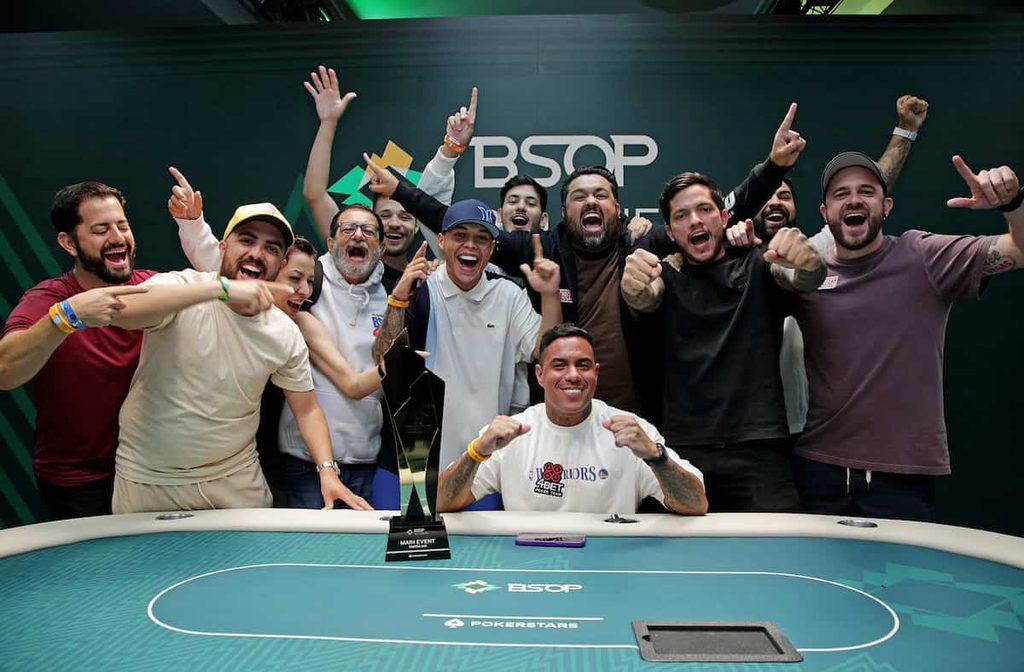
There is even less reason at this stage to suggest ordinary live tournament poker has been banned.
The new measure is aimed at fixed-odds betting rather than rewriting Brazil’s entire legal treatment of skill games.
The Brazilian Series of Poker is currently still advertising its next São Paulo festival for November 13 to 28, followed by another stop at Costa do Sauípe in January 2027. There has been no announced cancellation linked to the new measure.
That does not mean the wider legal environment around gambling in Brazil is settled forever.
The country’s Supreme Federal Court is separately considering the continued validity of Brazil’s old prohibition on games of chance, with proceedings suspended in August after Justice Flávio Dino requested more time to examine the issue alongside other gambling cases.
Again, however, that is different from saying live poker has suddenly become illegal.
One Important Catch: This Is a Provisional Measure
There is another reason this story is far from finished.
A Brazilian provisional measure has immediate force, but it still needs approval from Congress to become permanent law. Its initial validity is 60 days and it can be extended once for another 60 days if Congress has not completed consideration.
The betting industry is also expected to challenge aspects of the decision after companies paid substantial sums for multi-year Brazilian licenses.
So Brazil’s gambling landscape could move again quickly.
For poker players, the position on September 26 is nevertheless considerably clearer than some of the first headlines suggest.
Sportsbooks are being shut down. Brazil’s regulated fixed-odds online casino market is being shut down. Advertising for those products is being removed.
Poker, as Brazil has defined it, is something different.
Unless the government issues new guidance extending the crackdown beyond the wording of the provisional measure, ordinary peer-to-peer online poker and live poker appear to remain on the right side of that line.
For one of the world’s biggest poker nations, that distinction may turn out to be the most important part of the entire story.