Dave “Devilfish” Ulliott won a WSOP bracelet, beat Phil Ivey for a WPT title and helped make British television viewers care about poker. Before the online boom, he was already giving people a reason to stay up and watch somebody bet.
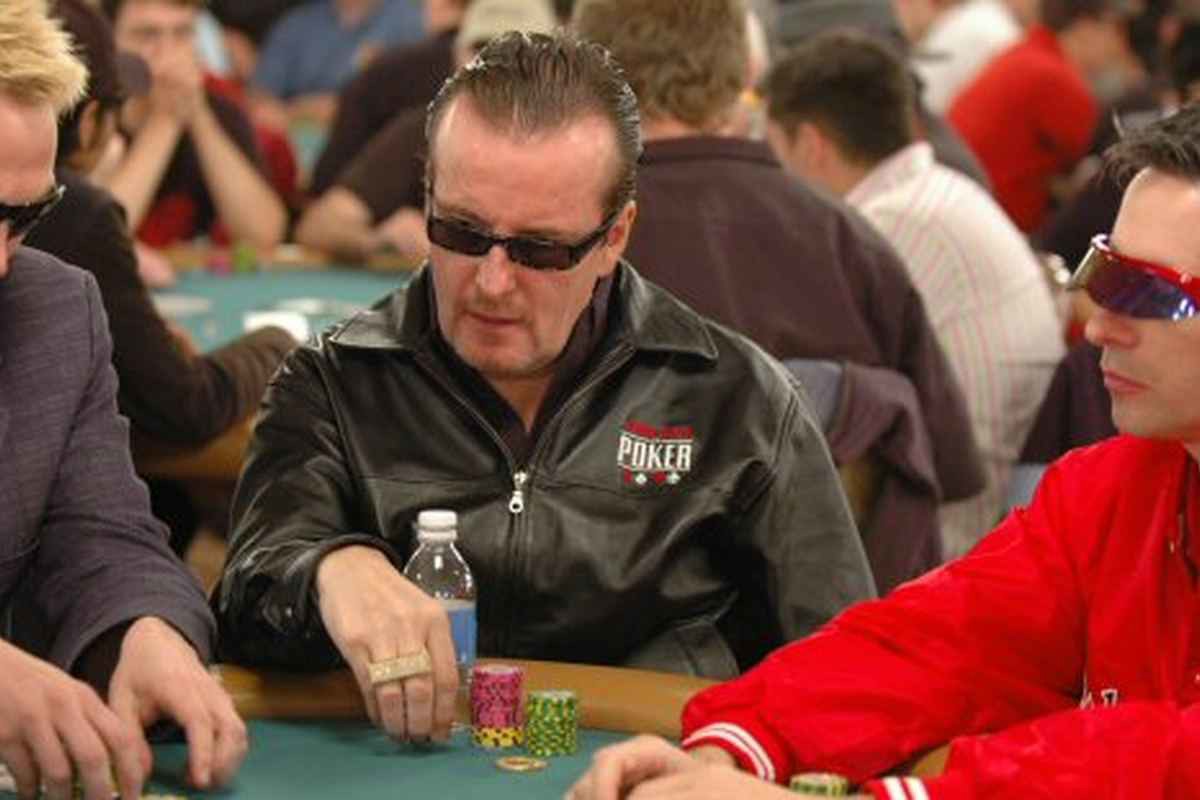
The rings, sunglasses and running commentary made him easy to remember. The results gave opponents a reason to take him seriously. His career connected private British cash games, Las Vegas tournaments and the hole-card cameras that changed how the public watched the game.
Record check, 11 November 2026: the WSOP’s 1997 results, the WPT’s World Poker Open archive and the Poker Hall of Fame’s 2017 announcement support the central tournament and Hall of Fame record below. Where historical payout databases differ, this profile identifies the difference rather than presenting a false single figure.
Who Was Dave “Devilfish” Ulliott?
David Alan Ulliott was born on 1 April 1954 in Hull, England. He became a professional gambler and poker player, building his game in live cash sessions long before a tournament database could tell the whole story.
His early life included crime and time in prison, subjects he later addressed in his autobiography. Poker offered a different direction, although the private games he described were a long way from today’s regulated tournament rooms and televised final tables.
From Private Games to Las Vegas
Ulliott travelled to games around Britain, playing against experienced gamblers rather than learning through online volume. In a 2010 Bluff Europe interview, he recalled dealer’s-choice sessions with ten or twelve possible variants. Hold’em was only part of the job.
That background matters when judging his record. The television audience mostly saw a Hold’em player, but his tournament results also included repeated deep runs in Pot-Limit Omaha. He had learned to change games, read opponents and protect a bankroll before poker became a mainstream broadcast product.
How He Became Devilfish
The nickname took hold around his 1997 victory over Men “The Master” Nguyen at the Four Queens in Las Vegas. Accounts credit Birmingham poker host Stephen Au-Yeung with suggesting the name before Ulliott’s supporters used it during that heads-up match.
It fitted the player and became his public identity. The “Devil” and “Fish” rings helped turn a nickname into something viewers could recognise immediately, even if they had never watched poker before.
The 1997 WSOP Bracelet
Ulliott won the $2,000 Pot-Limit Hold’em event at the 1997 World Series of Poker, collecting $180,310. He beat Chris Truby heads-up in a field of 247 entries, securing the only bracelet of his career.
One bracelet understates how often he got close. The Hendon Mob records runner-up finishes in 1998 and 2000, followed by two more in 2001, across Pot-Limit Hold’em and Pot-Limit Omaha. Those results show sustained contention rather than one summer when everything went right.
Late Night Poker and the British Poker Boom
In 1999, Ulliott won the first series of Channel 4’s Late Night Poker for £40,000. Its under-table cameras let viewers follow the concealed cards, making a bluff or a difficult call understandable from the sofa.
Ulliott gave that format a player audiences could follow. The talk and confidence were part of the attraction, but seeing what he actually held let viewers understand the gap between a strong-looking performance and a strong hand.
He had reservations about showing his cards. As he put it in the Bluff Europe interview: “Why should I show my cards to everyone?” He agreed to play and became one of the programme’s defining faces.
This was four years before Chris Moneymaker’s 2003 WSOP victory. Britain already had a television poker audience, and Devilfish was central to it. His place in the game cannot be measured by comparing his prize money with modern high-roller totals.
Beating Phil Ivey for a WPT Title
In 2003, Ulliott won the Jack Binion World Poker Open in Tunica, defeating Phil Ivey heads-up. It gave him a title during the World Poker Tour’s first season and a payout of approximately $589,000.
The records differ slightly: The Hendon Mob lists $589,175, while the WPT’s current event archive shows $589,990. Both agree on the winner and runner-up. His biggest individual cash came later, when third place at the 2007 WPT Doyle Brunson Five Diamond World Poker Classic paid $674,500.
Devilfish’s Major Tournament Results
| Year | Event | Finish | Prize |
|---|---|---|---|
| 1997 | WSOP $2,000 Pot-Limit Hold’em | 1st | $180,310 |
| 1999 | Late Night Poker, series one | 1st | £40,000 |
| 2003 | WPT Jack Binion World Poker Open | 1st | Approx. $589,000* |
| 2007 | WPT Doyle Brunson Five Diamond World Poker Classic | 3rd | $674,500 |
| 2010 | WSOP $5,000 Pot-Limit Omaha Hi-Lo | 3rd | $150,925 |
*The 2003 payout differs between the two records, as explained above. Prizes are shown in their original currencies.
How Much Did Devilfish Win?
The Hendon Mob lists $6,235,084 in recorded live tournament cashes, checked in November 2026. His $674,500 Bellagio result remains the largest recorded individual prize.
That total is not his profit or net worth. It does not deduct tournament entries, travel or other expenses, and it cannot settle what he won or lost in private cash games. There is no reliable public balance sheet for his entire gambling career.
Playing Style and Life Beyond the Table
Ulliott’s public game was built around aggression, conversation and making opponents uncomfortable. Watching him is a reminder that live poker includes the person across the table, although copying the talk without understanding the decisions is unlikely to achieve much.
He also helped introduce Liv Boeree to poker as one of the professionals involved in the 2005 television training show that started her career. That gives his influence a direct connection to another generation of British tournament players.
Away from poker, he enjoyed performing music and playing guitar. His autobiography, Devilfish: The Life and Times of a Poker Legend, was published in 2010, recounting the criminal past, private games and tournament career in his own voice.
Death, Hall of Fame and Legacy
Ulliott died on 6 April 2015, aged 61, following a short battle with cancer. In 2017, he was inducted posthumously into the Poker Hall of Fame alongside Ivey, the player he had beaten for his WPT title.
His lasting contribution was helping people discover poker through a recognisable personality backed by results. For a generation of British viewers, Devilfish made a late-night card game worth watching, then gave them enough poker to want to learn it.
Quick Facts About Dave Ulliott
- Full name: David Alan Ulliott
- Nickname: Devilfish
- Born: 1 April 1954, Hull, England
- Died: 6 April 2015, aged 61
- WSOP bracelets: One
- WPT Main Tour titles: One
- Late Night Poker: First-series champion, 1999
- Poker Hall of Fame: Inducted in 2017
Dave “Devilfish” Ulliott FAQ
Why was Dave Ulliott called Devilfish?
The name became associated with him after his 1997 Four Queens win over Men “The Master” Nguyen. Birmingham poker host Stephen Au-Yeung is credited with suggesting it beforehand.
How many WSOP bracelets did Devilfish win?
He won one, in the 1997 $2,000 Pot-Limit Hold’em event. He also finished runner-up in four WSOP events between 1998 and 2001.
Did Devilfish beat Phil Ivey for a WPT title?
Yes. Ulliott beat Ivey heads-up at the 2003 Jack Binion World Poker Open in Tunica, winning approximately $589,000.
What was Devilfish’s biggest tournament cash?
His largest recorded cash was $674,500 for third place in the 2007 WPT Doyle Brunson Five Diamond World Poker Classic. His career total of more than $6.2 million represents gross cashes, not profit.
When did Dave Ulliott die?
Ulliott died on 6 April 2015, aged 61, following cancer. He was inducted into the Poker Hall of Fame in 2017.