Poker spent October 2 remembering Doyle Brunson in a way that would probably have suited him better than a solemn memorial. Players sat down at tables, deliberately got involved with a starting hand they would normally throw away and shared stories about one of the most important figures poker has ever produced.
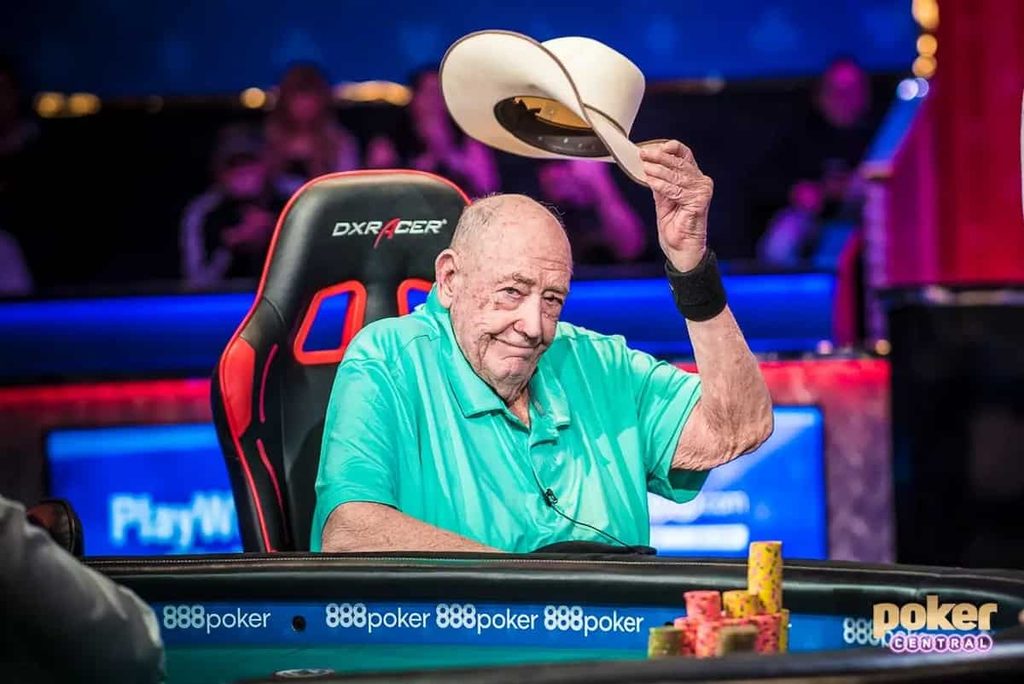
October 2, written 10/2 in the United States, has become Doyle Brunson Day. The 2026 celebration was the fourth annual edition, and the reason those two numbers matter goes back half a century to two World Series of Poker Main Events and perhaps the strangest repeated final hand in poker history.
What Is Doyle Brunson Day?
Doyle Brunson Day was created after Brunson died in May 2023 aged 89. During his Celebration of Life at Horseshoe Las Vegas that summer, longtime friend and agent Brian Balsbaugh proposed making October 2 an annual day for poker to remember the man known as the Godfather of Poker.
It was less a formal declaration than one of those ideas that immediately made too much sense to reject. Balsbaugh put the suggestion to a room containing figures including Daniel Negreanu, Phil Hellmuth, Phil Ivey, Johnny Chan, Jack Binion, Dewey Tomko and numerous other friends and poker legends.
“On Doyle Brunson Day, I think we celebrate poker,” Balsbaugh explained. “I think we play poker, celebrate the man and just honor his life every year on October 2.”
Even the commemorative decks handed out at Brunson’s memorial embraced the joke. Instead of 52 normal cards, the decks contained 26 tens and 26 deuces, each carrying a different piece of Brunson wisdom.
Why Is 10-2 Called the Doyle Brunson Hand?
Ten-deuce is not famous because poker theory eventually discovered some hidden power buried inside it. In Texas Hold’em, 10-2 is normally the sort of starting hand a player is perfectly happy to throw into the muck.
It became the Doyle Brunson hand because Brunson won the WSOP Main Event in consecutive years, 1976 and 1977, while holding 10-2 in the final hand both times. More remarkably, he made a full house on both occasions.
The similarities do not stop there. Both championship boards finished with a deuce on the turn followed by a ten on the river.
That is the part of the story that sounds invented. It happened twice!
The First 10-2: Doyle Brunson vs Jesse Alto in 1976
The 1976 WSOP Main Event was very different from the enormous tournament poker players know today. Just 22 players entered the $10,000 winner-take-all championship at Binion’s Horseshoe in Las Vegas, creating a $220,000 prize for first place and nothing for everybody else.
Brunson eventually reached heads-up play against Jesse Alto, a successful amateur player and Las Vegas car dealer who had already made a deep Main Event run two years earlier. On what became the final hand, Alto held A-J while Brunson looked down at 10♠ 2♠.
The flop came A-J-10.
Alto had top two pair, aces and jacks. Brunson had only a pair of tens and was in serious trouble.
Exactly how all of the betting unfolded has been retold differently over the decades. Brunson’s own later recollection was that Alto raised before the flop, Brunson called, then called again after Alto bet the A-J-10 flop.
Then the 2 arrived on the turn.
Brunson had improved to two pair, tens and deuces, but Alto still held the stronger two pair with aces and jacks. Brunson recalled moving all-in at that point and receiving the call from Alto.
Alto was one card away from surviving.
The river was another 10.
Brunson suddenly held tens full of deuces, a full house that beat Alto’s aces and tens. The pot, the championship and $220,000 belonged to Brunson.
Had that been the end of the story, 10-2 would probably still have become a memorable piece of WSOP trivia.
What happened the following year turned it into poker folklore.
Doyle Brunson Gets 10-2 Again in 1977
The 1977 WSOP Main Event grew to 34 players, putting $340,000 into another winner-take-all prize pool. Brunson survived the field again and this time reached heads-up play against Gary “Bones” Berland.
Berland would eventually become a five-time WSOP bracelet winner and one of the outstanding stud players of his era. Unfortunately for him, the final hand of the 1977 Main Event was about to belong permanently to somebody else.
Brunson had 10♠ 2♥.
Again.
Berland held 8♥ 5♣.
The flop came 10-8-5, giving Brunson top pair but Berland two pair. Brunson later recalled that both players checked.
Then came the turn.
A 2.
Again.
Brunson now held tens and deuces, moving ahead of Berland’s eights and fives. Brunson bet, Berland moved all-in and Brunson called.
There was one card to come.
A 10.
Again.
Brunson had made tens full of deuces for the second consecutive year. Berland was eliminated and Doyle Brunson had successfully defended the WSOP Main Event title with exactly the same starting ranks he had held in the previous year’s final hand.
The turn had been a deuce in both.
The river had been a ten in both.
Poker had its newest immortal hand.
How Unlikely Was the Repeated 2-10 Runout?
There is a fun piece of mathematics buried inside Brunson’s two victories. Once each flop had been dealt, with Brunson holding one ten and one deuce and another ten already visible on the board, there were three remaining deuces among 45 unseen cards followed by two remaining tens among 44 cards.
The chance of specifically seeing a deuce on the turn and then a ten on the river from that position is therefore 3/45 multiplied by 2/44. That works out at exactly 1 in 330.
For that same rank sequence to occur in two specified hands is around 1 in 108,900.
That does not mean Brunson’s two victories were literally a 108,900-to-1 event. There were other possible runouts with which he could have won either hand, so using that figure as the odds of winning both championships would be misleading.
It does illustrate how bizarre the repeated finish was.
Two consecutive Main Event final hands.
The same starting ranks.
A deuce on the turn.
A ten on the river.
Two full houses.
Two world championships.
Famous Players Still Cannot Resist 10-2
Once a poker hand becomes associated with somebody this strongly, players inevitably start doing things with it that good strategy would normally discourage. Even elite professionals have been unable to resist trying to manufacture another Doyle moment.
Daniel Negreanu demonstrated that during the first Doyle Brunson Day in 2023 when he moved all-in with 10-2 offsuit during a WSOP Online tournament. The move did not work, but Negreanu said afterwards: “I did not win the pot, but I don’t regret shipping it all in one bit.”
Negreanu’s connection with Brunson went considerably deeper than one commemorative shove. The pair played together for years, and Brunson appears throughout Poker Type’s Daniel Negreanu profile as part of the generation of established legends Negreanu encountered during his rise through high-stakes poker.
Phil Galfond also learned that paying tribute to Doyle can become expensive. After playing 10-2 during an appearance on High Stakes Poker and losing a sizeable pot, Galfond laughed: “I was trying to impress Doyle.”
Phil Hellmuth has had more success with it. During a televised heads-up match against Negreanu, Hellmuth three-bet 10♦ 2♦ before the flop and continued applying pressure through the hand until Negreanu eventually folded the better holding on the river.
That is part of what separates 10-2 from almost every other named poker hand.
Players do not merely know the nickname, they actually want to win with it.
Doyle Brunson Day in 2026
Three years after the first celebration, Doyle Brunson Day has become an established date on poker’s calendar. Brunson’s legacy account spent the days around October 2, 2026 sharing photographs, quotes and memories, while players, journalists and personalities added stories of their own.
Joe “Stapes” Stapleton joined the annual 10-2 fun with a decidedly less poker-related interpretation, posting a photograph accompanied by the message: “In honor of Doyle Brunson Day, here’s a 10 with a 2.”
Daniel Negreanu also used the 2026 celebration to remember a less obvious side of Brunson.
“He was the original solver,” Negreanu said while discussing the way Brunson studied poker long before modern analysis software existed. According to Negreanu, Brunson would take a pencil and paper, repeatedly deal hands such as ace-king against pocket fives and manually record how often each one won.
It sounds almost primitive compared with modern poker software, but the objective was exactly the same.
Find the answer. Test assumptions. Understand the game better than the people sitting across the table.
The contrast with modern poker is enormous. Poker Type recently explored how solvers, training platforms and enormous databases have transformed learning in our feature asking whether poker has become too difficult for beginners.
Brunson was attempting to answer many of those same questions decades earlier. He just had to deal the cards himself.
Poker Rooms Turned 10-2 Into a Promotion
The first Doyle Brunson Day in 2023 quickly moved beyond social-media tributes. Poker rooms realised the date offered a perfect opportunity to turn Brunson’s famous cards into promotions.
The Lodge Card Club in Texas offered a chance at $10,200 for players dealt 10-2 who satisfied its promotional conditions. Peppermill Reno ran a promotion from 10:02 a.m. until 10:02 p.m., while World Poker Tour activities in Madrid also incorporated the famous hand.
That helped establish what Doyle Brunson Day would become. It is not supposed to be a day of mourning. It is supposed to involve poker – Find a game, play some hands. And if somebody slides a ten and a deuce towards you, perhaps think twice before automatically folding.
10-2 Is Only a Tiny Part of the Doyle Brunson Story
It would be easy for a new poker player to discover Doyle Brunson Day and assume the whole thing celebrates a man who became famous for getting lucky with a bad hand. Nothing could be further from the truth.
Brunson won 10 WSOP bracelets and was inducted into the Poker Hall of Fame in 1988. He competed at the first WSOP in 1970 and remained capable of playing against elite professionals across several generations.
His career stretched from dangerous Texas road games to the largest Las Vegas cash games and eventually televised poker. He played against gamblers whose careers began before the modern WSOP existed and later shared tables with professionals who had grown up reading about him.
That longevity is difficult to appreciate. Poker strategy did not stand still during Brunson’s life, the game changed around him repeatedly. He kept playing.
Then There Was Super/System
Brunson’s influence was not restricted to what happened at the table. His strategy book Super/System, originally published as How I Made Over $1,000,000 Playing Poker, did something that many elite professionals of the period considered almost unthinkable.
It gave away the secrets.
The book brought together Brunson and leading players including Chip Reese, Bobby Baldwin, Mike Caro, David Sklansky and Joey Hawthorne. They explained ideas that had previously been passed around privately among professionals, effectively allowing ordinary players to purchase access to knowledge that had taken some of the game’s strongest competitors years to acquire.
The original book famously sold for $100, an extraordinary price for a poker book at the time.
Gabe Kaplan later joked about the cost in a very different sense. Remembering Brunson giving him a copy, Kaplan told his Celebration of Life audience: “That $100 book, in the last 40 years, has cost me $35 million.”
Super/System became one of poker’s foundational texts.
The methods have changed enormously since then. Modern players have calculators, enormous hand databases, solvers, video libraries and artificial intelligence to help examine situations that Brunson and his contemporaries worked through manually.
But the principle remains familiar; study the game more deeply than your opponents, then sit down and play.
Why Doyle Brunson Day Still Works
There are more obvious ways poker could remember Doyle Brunson. It could celebrate one of his 10 bracelets, his Poker Hall of Fame induction, Super/System or the decades he spent competing in some of the biggest cash games in the world.
Instead, poker chose 10-2. That somehow feels more appropriate.