There are easier places in the world to explain as poker destinations. Las Vegas has the Strip, Monte Carlo has the money and Macau spent years building a mythology around private cash games played at stakes most people preferred not to ask too many questions about.
Then there is Jeju.
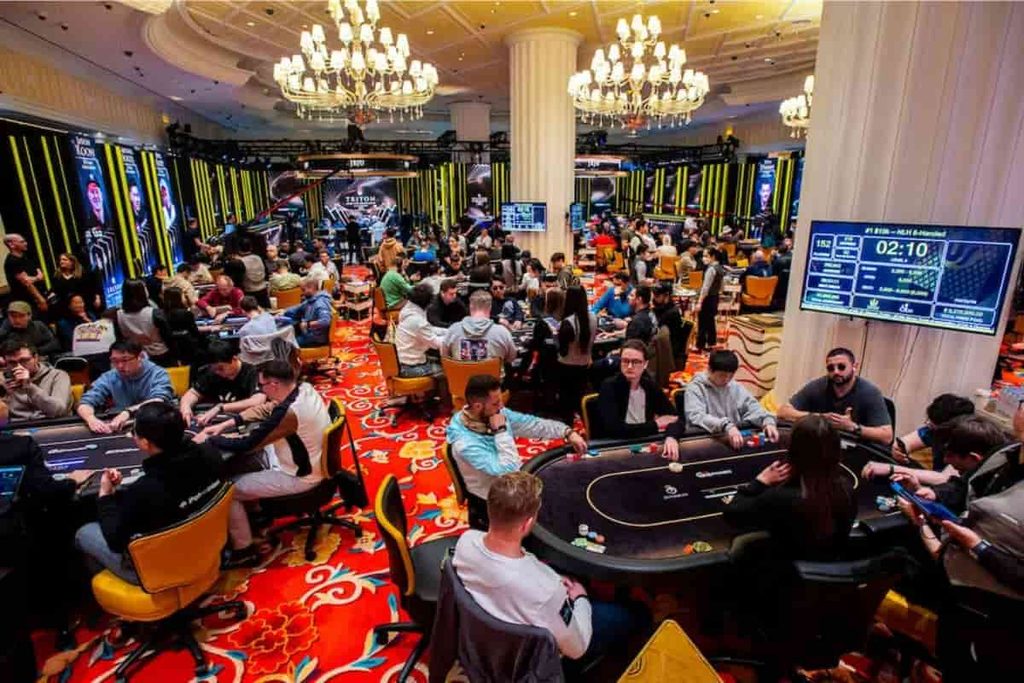
The volcanic South Korean island is better known outside poker for mountains, beaches, lava tubes and honeymooners, yet over the past decade it has quietly become one of the most important stops in the high-stakes game. Triton Poker keeps coming back. The Asian Poker Tour keeps breaking Korean records there. Six-figure tournaments fill with players who have flown in from Europe, North America and across Asia, while some of the biggest televised cash pots ever recorded have been played within the same resort complex.
Jeju is no longer simply somewhere that happens to host poker tournaments. For a certain part of the game, particularly the international high-roller circuit, it has become one of poker’s genuine homes.
Poker Was in Jeju Before the Current Boom
The modern poker story on Jeju did not begin with Triton. The Asian Poker Tour was already taking tournaments to the island in 2013, when APT Korea was staged at the Ramada Plaza Casino with a $2,700 Main Event.
Other international festivals followed. The Asia Tournament of Poker used Jeju in 2015, while South Korea was simultaneously developing another important tournament base around Incheon. The APT first went to Incheon in 2017 and has continued returning, giving the country two very different poker destinations.
Jeju, though, eventually found its specialist subject.
Triton Poker first brought its Super High Roller Series to the island in 2018. Mikita Badziakouski won the HK$2 million Main Event that year for more than $5.2 million, defeating a field of 55 at a time when Triton itself was still developing the identity it has today.
The series returned in 2019, when Timothy Adams won another enormous Main Event. Jeju also became a stage for the short-deck and televised cash games that helped turn Triton from a collection of expensive tournaments into one of poker’s most recognizable brands.
There was then a long interruption. Triton’s planned 2020 Jeju festival fell victim to the pandemic, and the tour did not return to South Korea until 2024.
It came back to a very different poker world.
Triton’s Return Changed the Scale
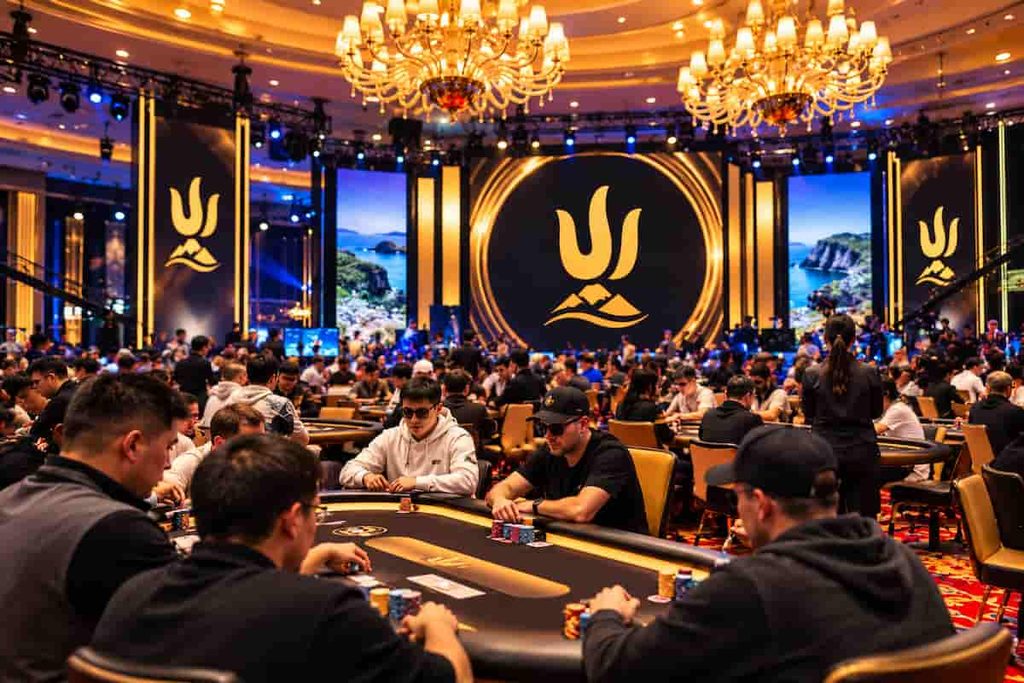
The March 2024 Triton Jeju festival brought Phil Ivey, Tom Dwan, Patrik Antonius, Jason Koon, Stephen Chidwick, Adrian Mateos and many more of the game’s established high-stakes names back to South Korea.
A year later, the numbers went somewhere else entirely.
Triton’s February and March 2025 Jeju festival repeatedly broke the tour’s attendance records. Its $100,000 Main Event attracted 285 entries and created a $28.5 million prize pool, becoming the largest six-figure buy-in tournament ever played at the time.
Triton eventually described Jeju as its “de facto capital of operations.” That was not simply promotional enthusiasm. By March 2025, the 12 largest tournaments in Triton history by field size had all been held on the island.
The relationship has only deepened since.
Poker Type followed the latest chapter when Triton Jeju II began in September 2026. Once again, the familiar collection of elite professionals and wealthy recreational players descended on LES A Casino at Jeju Shinhwa World.
The stakes quickly became absurd even by modern high-roller standards. A $200,000 Invitational attracted 173 entries and built a $34.6 million prize pool, while Ossi Ketola and Patrik Antonius subsequently played a heads-up match with $20 million on the table.
That match ended with a $15.925 million straight-flush pot, the type of hand that would sound fictional in almost any other poker setting.
In Jeju, it somehow fitted.
So Is Jeju Now the Go-To Destination for High-Stakes Poker?
For international high-stakes tournament poker in Asia, there is a strong case.
That does not make Jeju the undisputed poker capital of the continent. Macau still carries decades of high-stakes cash-game history. Taipei has become hugely important to the APT and regularly produces enormous tournament fields. Manila has a long relationship with Asian poker, while Las Vegas remains the place where the global game converges every summer.
Jeju occupies a slightly different position.
Triton has made it a recurring meeting point for some of the richest recreational players in poker and many of the professionals who build their schedules around playing against them. That matters because a successful super high roller needs more than famous professionals. Put 50 elite pros in a room without enough wealthy non-professionals and you have created an exceptionally difficult tournament that very few people have a reason to play.
Jeju repeatedly produces the complete ecosystem.
Asian businesspeople and high-stakes regulars are already relatively close. European and North American professionals know the fields will justify the journey. Once enough of both groups commit, the next festival becomes easier to sell than the previous one.
That network effect may be Jeju’s biggest advantage.
The APT Has Built a Different Kind of Jeju Poker Boom
Triton explains Jeju’s appeal at the top of the market, but it is only half the story.
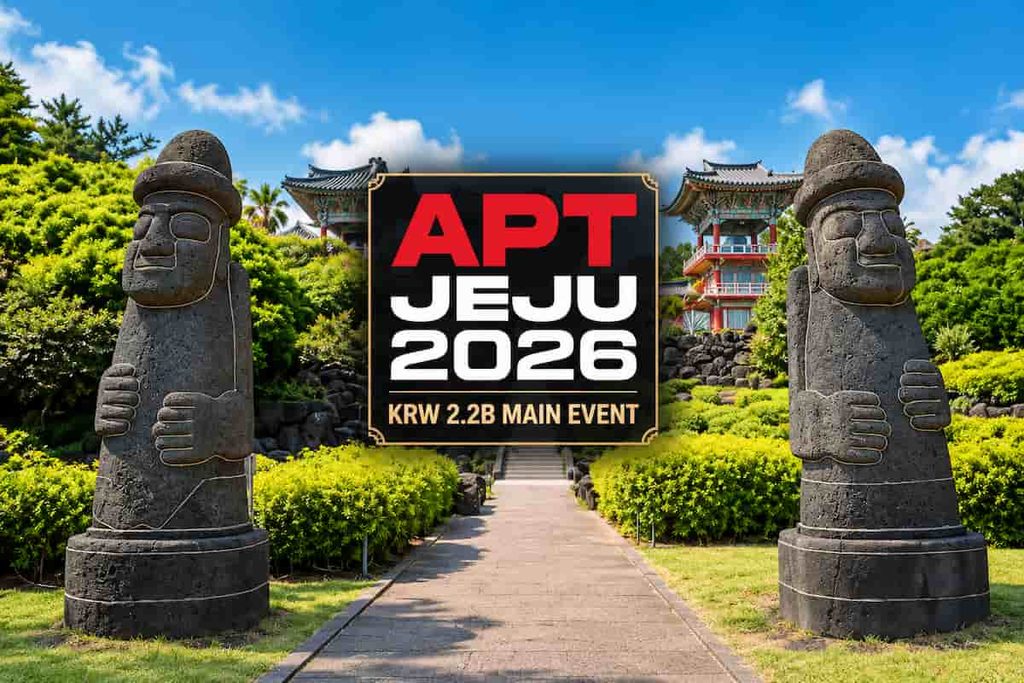
The Asian Poker Tour has demonstrated that Jeju can support much larger fields at considerably more accessible buy-ins. Its Jeju Classic Main Event in February 2026 attracted 1,718 entries, making it the largest international poker tournament ever staged in South Korea.
The APT returned again in September with 135 events spread across 13 days at LES A Casino. The KRW 2.2 billion guaranteed Main Event sits at the center of the festival, but the schedule ranges from mainstream No-Limit Hold’em to Omaha, stud, draw games and a substantial high-roller program.
That variety gives Jeju something many high-stakes destinations never develop.
A player does not need $100,000 to participate in the poker culture surrounding the island. Triton can fill a room with the wealthiest end of the game and then, days later, the same destination can host a festival containing buy-ins aimed at ordinary tournament players.
That makes Jeju a poker destination rather than merely a super high roller venue.
South Korea Has an Unusual Relationship With Casinos
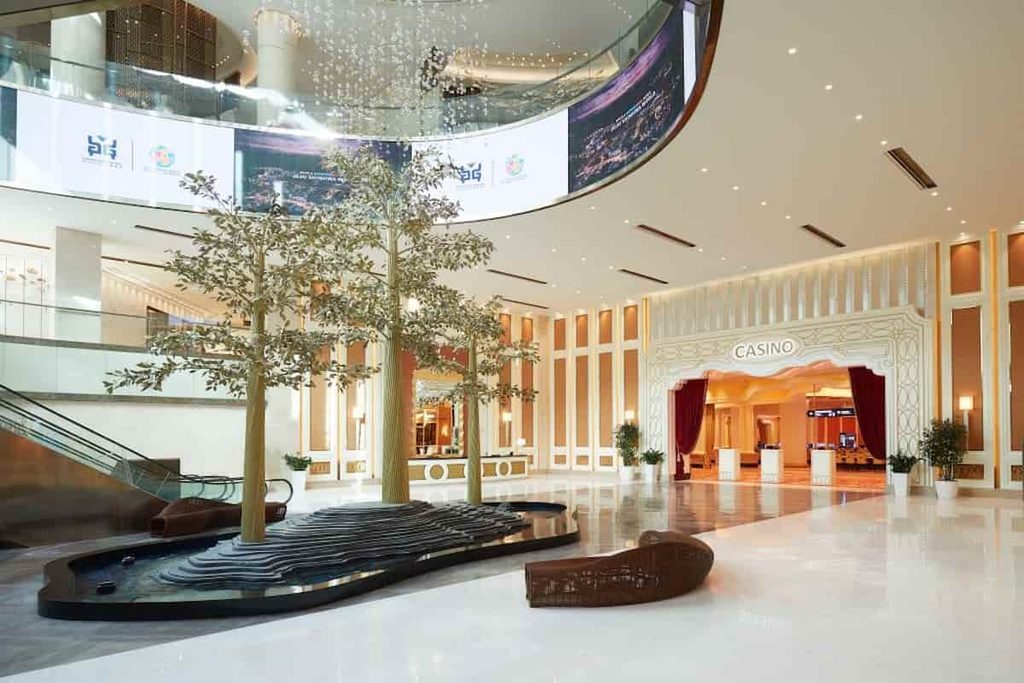
There is an important wrinkle in all of this.
South Korean casino law has historically been built heavily around international tourism. Casinos such as those on Jeju generally operate for foreign visitors, with Korean nationals prohibited from entering under the country’s Tourism Promotion Act.
Kangwon Land in Gangwon Province is the famous exception. It operates under separate legislation and is the only South Korean casino that admits ordinary Korean citizens.
That creates an unusual situation for poker. South Korea can host enormous international tournaments filled with players from China, Japan, Taiwan, Hong Kong, Singapore, Europe and the United States while most Korean citizens cannot simply walk into the same casino and sit down.
Jeju’s poker economy is therefore international almost by design.
Incheon provides the other major piece of the country’s live tournament market, and the APT has built increasingly large festivals there as well. Together, Jeju and Incheon have made South Korea a significant stop on the Asian tournament circuit despite a domestic casino system far more restrictive than the size of its poker festivals might suggest.
Why Jeju Works So Well
Poker tours could put tables almost anywhere. Getting players to keep returning is harder.
Jeju Shinhwa World helps solve that problem because it is an integrated resort rather than a standalone cardroom. LES A Casino sits inside a much larger complex containing hotels, restaurants, entertainment and other resort facilities, allowing someone playing
a two-week festival to remain on site without feeling as though they have been sentenced to live above a poker room.
Location helps too.
Jeju sits off the southern coast of the Korean Peninsula, within the broader East Asian travel market. That gives international poker access to several major player populations while still providing the sort of luxury resort infrastructure expected by somebody considering a $100,000 or $200,000 tournament.
Most importantly, the formula has now been proven repeatedly. Players know Jeju. Backers know Jeju. High rollers know other high rollers are going to Jeju.
Once a poker destination reaches that point, habit becomes a very powerful marketing department.
There Is an Entire Island Outside the Poker Room
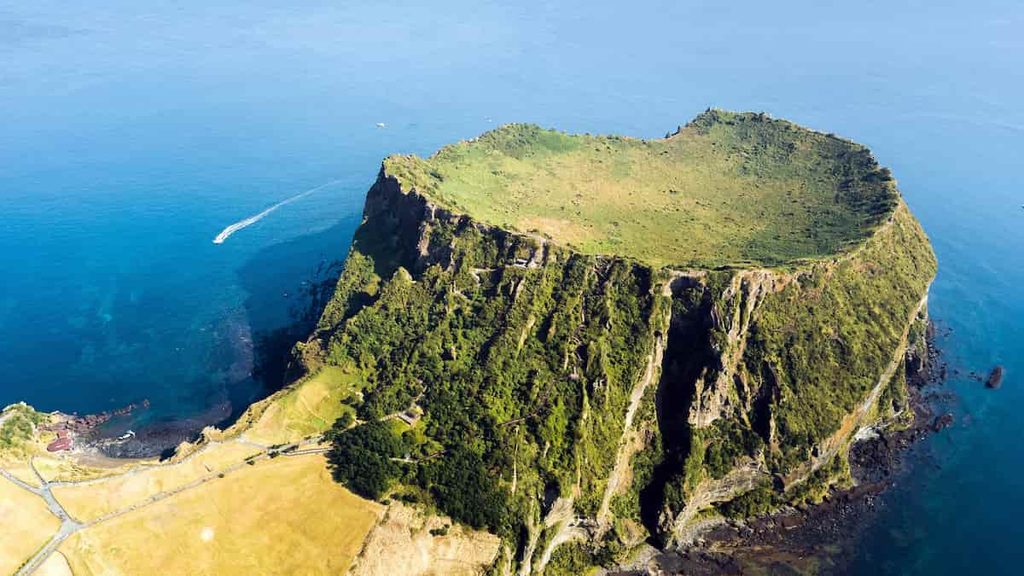
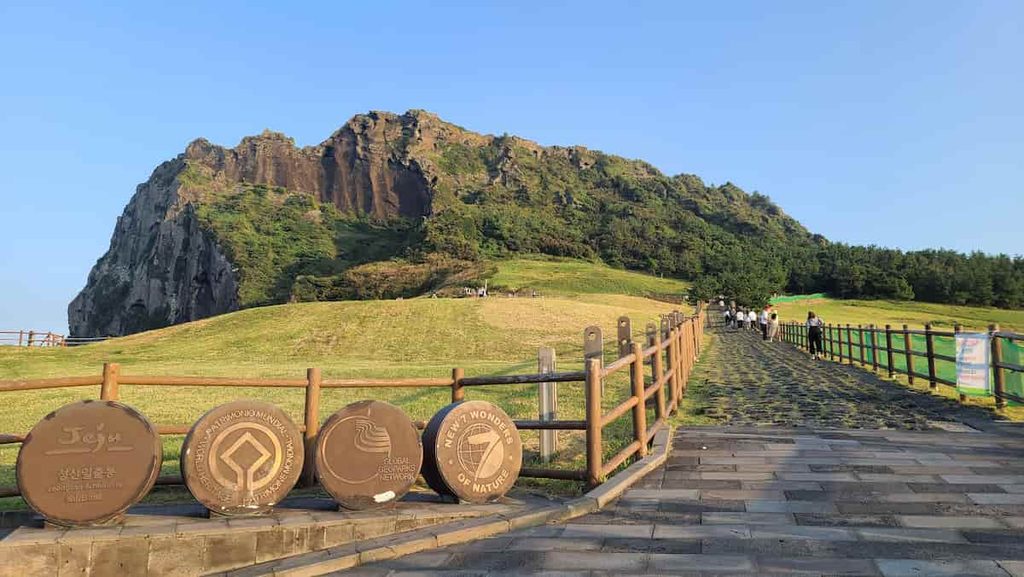
The strange thing about spending two weeks inside a Jeju casino is that one of South Korea’s most distinctive landscapes is sitting outside.
Jeju is a volcanic island dominated by Hallasan, South Korea’s highest mountain. Hallasan, the Geomunoreum lava tube system and Seongsan Ilchulbong form the Jeju Volcanic Island and Lava Tubes UNESCO World Heritage property.
That volcanic past is visible almost everywhere. The island contains hundreds of smaller volcanic cones known locally as oreum, black basalt walls run through towns and countryside, and lava formations appear along stretches of coastline that look very little like mainland South Korea.
Seongsan Ilchulbong, often called Sunrise Peak, rises dramatically beside the sea on the eastern side of Jeju. The summit looks into a huge volcanic crater, while the surrounding coast provides one of the island’s most recognizable views.
For something slower, the Jeju Olle network runs around the island through villages, farms, forests and coastline. There are 26 routes rather than one continuous march around the shore, which means even someone escaping a tournament for half a day can find a manageable section.
Jeju Has Its Own Culture, Not Just Korean Resort Culture
The food alone gives poker players considerably better options than another room-service club sandwich.
Jeju is famous throughout Korea for black pork, usually grilled and eaten with mel-jeot, a fermented anchovy sauce that provides considerably more punch than its appearance suggests. Abalone is another island staple, closely associated with the sea and Jeju’s centuries-old diving culture.
That culture is represented most famously by the haenyeo, the island’s women divers, who traditionally harvested shellfish and other seafood without breathing equipment. Their culture has been recognized by UNESCO as Intangible Cultural Heritage.
Jeju therefore works surprisingly well as a destination for someone traveling with a partner who has no interest in watching a 60-minute poker level.
There are beaches, waterfalls, hiking routes, volcanic landscapes, markets, seafood, cafés and enough geography to make staying entirely inside the resort feel like a poor use of the airfare.
Poker Has Given Jeju a Second International Identity
Nobody designed Jeju to become one of the centers of modern high-stakes poker.
It happened because the island offered the right casino, the right resort infrastructure and the right position inside a rapidly growing Asian poker market. Triton then supplied the enormous buy-ins and players, while the APT demonstrated that the same destination could attract fields measured in the thousands rather than dozens.
Jeju now occupies an unusual position on the poker calendar. It can host a $1,500 Main Event attracting well over 1,000 entries and a $200,000 tournament producing more than $30 million in prize money within the same year.
The professionals have noticed. Stephen Chidwick passed $80 million in recorded tournament earnings while playing in Jeju during September 2026, another reminder of how much of poker’s all-time money list is now being shaped by Triton’s enormous prize pools.
Las Vegas is not going anywhere. Neither are Macau, Monte Carlo or the other established stops on the high-roller circuit.
Jeju no longer needs to replace them.
It has built something distinctive enough to stand alongside them.
Jeju FAQ
What currency is used in Jeju?
South Korea uses the Korean won, written as KRW or ₩. Credit and debit cards are widely accepted throughout Korea, although carrying some won is useful for smaller businesses and markets.
Is tipping expected in Jeju?
No. Tipping is not a normal part of Korean service culture and is generally not expected in restaurants, taxis or other everyday situations. Some international hotels may add a service charge to the bill instead.
What type of electrical plugs are used in South Korea?
South Korea uses 220-volt electricity at 60Hz with two round-pin sockets. Travelers arriving with UK, US or other plug types will normally need an adapter.
Can you get around Jeju without hiring a car?
Yes. Public buses run from Jeju International Airport to Jeju City, Seogwipo and several major tourist areas, and transportation cards can be used on Jeju buses. A rental car can be more convenient for visitors planning to explore remote coastal or inland areas.
Can visitors buy a SIM card or eSIM when they arrive?
Yes. Jeju International Airport has mobile carrier facilities where visitors can arrange roaming services and buy SIM cards, with eSIM options also available for compatible phones.
What is the weather like in Jeju?
Jeju has four distinct seasons and a temperate, humid climate. Summers are hot and rainy, spring and autumn are generally milder, and winters are cooler with snow much more common around Hallasan than in the island’s main cities.
What time zone is Jeju in?
Jeju uses Korea Standard Time, which is UTC+9. South Korea does not currently observe daylight saving time, so players traveling from Europe or North America should allow for a substantial time difference.
Do you need to book before hiking to the top of Hallasan?
For the summit sections of Hallasan’s designated summit routes, advance reservations can be required under the national park’s trail reservation system. Restrictions and route closures can change, so hikers should check the Hallasan National Park information before setting out.
Can you visit another island while staying in Jeju?
Yes. Udo is one of the easiest options and can be reached by a short ferry journey from Seongsan Port. It is small enough to work as a half-day excursion if a poker schedule suddenly produces a welcome day off.
What do international poker players need to enter LES A Casino?
The casino admits eligible patrons aged 19 or older, and foreign citizens are required to present a valid foreign passport. Tournament players should still check the specific festival’s registration requirements before travelling.