Phil Hellmuth has spent almost four decades giving poker fans reasons to argue about him. One number is considerably harder to argue with. Seventeen World Series of Poker bracelets.
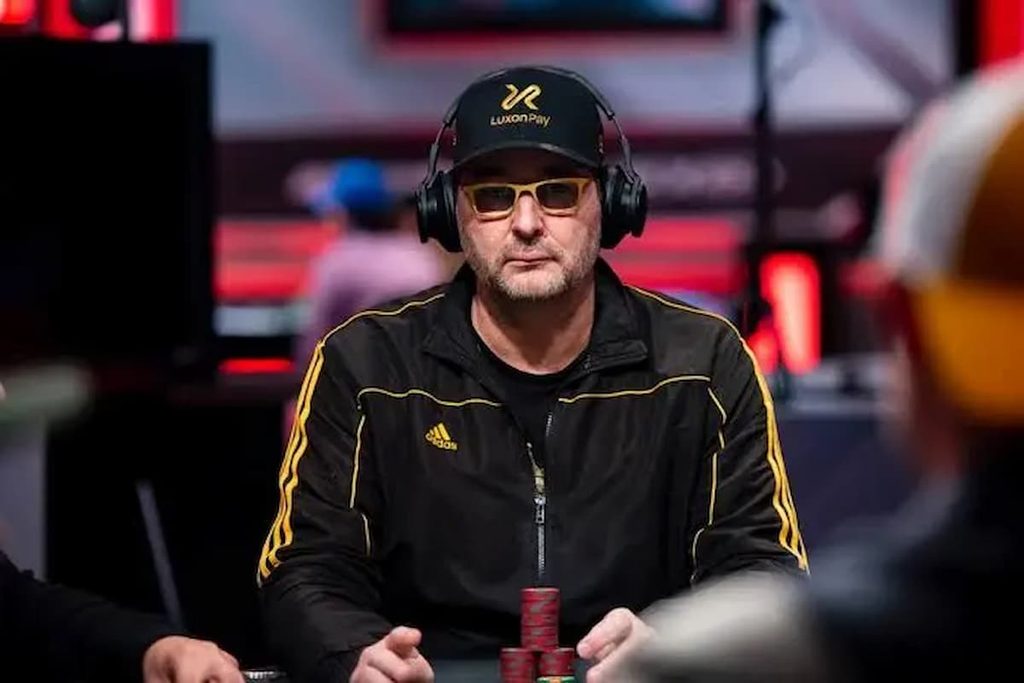
The American known as “The Poker Brat” won the 1989 WSOP Main Event at 24, built the largest bracelet collection in poker history and then continued winning them across five different decades. His career has survived the poker boom, online poker, televised cash games, high rollers, livestreams and a dramatic transformation in how elite poker is played.
Hellmuth has also made sure nobody quietly overlooks any of it. The explosions, complaints, extravagant WSOP entrances, arguments and relentless declarations about his own ability have made him one of the most polarizing personalities poker has ever produced.
Yet the character can sometimes obscure the player. Behind the Poker Brat is a tournament career that has lasted since the 1980s and produced a WSOP record nobody has seriously threatened.
At 62, Hellmuth is still trying to make it bigger.
Who Is Phil Hellmuth?
Phil Hellmuth is an American professional poker player born in Madison, Wisconsin, on July 16, 1964. He grew up in Wisconsin and attended the University of Wisconsin before leaving college to pursue poker professionally.
That decision was hardly an obvious route to success. Hellmuth was entering a poker world considerably smaller and less glamorous than the international industry that exists today, and his father was reportedly far from convinced that professional poker represented a sensible career.
Hellmuth kept playing.
Early tournament results eventually gave him enough momentum to reach the World Series of Poker, where he cashed in the Main Event in 1988. One year later, he returned and changed his life.
Waiting for him was Johnny Chan.
Phil Hellmuth Wins the 1989 WSOP Main Event
Johnny Chan arrived at the 1989 World Series of Poker attempting something extraordinary.
He had won the WSOP Main Event in 1987 and 1988. A third consecutive victory would have placed Chan in a category of his own in the modern history of poker’s world championship.
Hellmuth stopped him.
The 24-year-old from Wisconsin defeated the two-time defending champion heads-up to win the Main Event and $755,000. At the time, Hellmuth became the youngest player ever to win poker’s world championship, a record that stood until Peter Eastgate won the 2008 Main Event at 22.
The victory immediately gave Hellmuth a place in poker history, but its significance grew considerably over the decades that followed. What initially looked like the arrival of a young Main Event champion became the first bracelet in the most successful WSOP tournament career ever assembled.
Hellmuth wasn’t finished with Chan either.
As the years passed, every additional bracelet pushed him further beyond the players he had once been chasing.
How Phil Hellmuth Built the WSOP Bracelet Record
Hellmuth’s second bracelet arrived in 1992 when he won the $5,000 Limit Hold’em event.
Then came 1993.
Hellmuth won three bracelets during the same WSOP, taking down two No-Limit Hold’em tournaments and a $5,000 Limit Hold’em event. He became only the second player in WSOP history at the time to win three bracelets during a single series.
More victories followed in 1997, 2001 and 2003. By the middle of the poker boom, Hellmuth was no longer simply a former Main Event champion.
He was chasing the all-time record.
Bracelets in 2006 and 2007 took his total to 11 and moved him beyond the ten won by Doyle Brunson and Johnny Chan. Instead of stopping once he had the record, Hellmuth spent the next two decades extending it.
His 17 bracelets now put clear distance between him and every other player in WSOP history.
Phil Hellmuth’s WSOP Bracelets
- 1989 $10,000 WSOP Main Event
- 1992 $5,000 Limit Hold’em
- 1993 $2,500 No-Limit Hold’em
- 1993 $1,500 No-Limit Hold’em
- 1993 $5,000 Limit Hold’em
- 1997 $3,000 Pot-Limit Hold’em
- 2001 $2,000 No-Limit Hold’em
- 2003 $2,500 Limit Hold’em
- 2003 $3,000 No-Limit Hold’em
- 2006 $1,000 No-Limit Hold’em Rebuy
- 2007 $1,500 No-Limit Hold’em
- 2012 $2,500 Seven-Card Razz
- 2012 WSOP Europe €10,450 Main Event
- 2015 $10,000 Razz Championship
- 2018 $5,000 No-Limit Hold’em
- 2021 $1,500 No-Limit 2-7 Lowball Draw
- 2023 $10,000 Super Turbo Bounty No-Limit Hold’em
The list also answers one of the criticisms that followed Hellmuth during the earlier part of his career. His first 11 bracelets all came in forms of Hold’em, encouraging critics to question whether his WSOP dominance extended far enough beyond his strongest game.
Hellmuth eventually answered that at the tables. He won Razz bracelets in 2012 and 2015 before taking down a No-Limit 2-7 Lowball Draw event in 2021.
Hellmuth Wins the WSOP Europe Main Event
One of the most significant victories of Hellmuth’s career came outside Las Vegas.
He travelled to Cannes for the 2012 WSOP Europe and entered the €10,450 Main Event. The tournament attracted 420 entries and a field containing many of the strongest players in poker.
Hellmuth won it.
He defeated Sergii Baranov heads-up to collect €1,022,376 and his 13th bracelet. More importantly, Hellmuth became the first player to win both the traditional WSOP Main Event and the WSOP Europe Main Event.
It was another unusual addition to a career increasingly built around longevity.
Twenty-three years separated his two Main Event victories.
Why Is Phil Hellmuth Called the Poker Brat?
Hellmuth’s nickname requires considerably less statistical analysis than his bracelet record.
He hates losing.
More specifically, Hellmuth has spent much of his career being remarkably willing to show everyone exactly how much he hates losing.
Bad beats can produce complaints. Unusual plays from opponents can generate lectures, disbelief or accusations that somebody has played a hand terribly.
Sometimes the target is the dealer. Sometimes it is another world-class professional, and sometimes it is an amateur who has just had the misfortune of beating Hellmuth in a pot.
The behavior produced “The Poker Brat.”
It also produced a strange contradiction. The same outbursts that have repeatedly attracted criticism helped turn Hellmuth into one of the most watchable players of the televised poker era.
Audiences knew a Hellmuth table could produce something memorable even if the cards didn’t.
He might win.
He might lose.
He might explain exactly why the person who beat him had no business doing so.
Phil Hellmuth and Televised Poker
Television was almost perfectly designed for Phil Hellmuth.
Poker’s expansion during the 2000s created demand for players who were recognizable beyond tournament results. Hellmuth already had the Main Event title, bracelets and a personality almost impossible to edit out of a broadcast.
He appeared across WSOP coverage, Poker After Dark, High Stakes Poker and numerous other poker productions. His arguments, table talk and reactions gave producers something that technically brilliant but quiet players could not always provide.
Then there were the entrances.
Hellmuth has arrived at the WSOP Main Event dressed as Julius Caesar and General Patton, among other elaborate characters. The performances had very little to do with optimal tournament strategy and almost everything to do with understanding that poker had become entertainment.
That instinct has served him remarkably well.
Traditional poker television eventually lost some of its dominance, but Hellmuth simply moved into newer formats. In 2026, Phil Hellmuth’s televised Home Game continued putting him at the center of a cash-game show built heavily around conversation, personalities and table chemistry.
The technology changed.
Hellmuth remained extremely difficult to ignore.
Phil Hellmuth and Heads-Up Poker
Hellmuth’s tournament reputation was primarily built around navigating large WSOP fields, but his heads-up record has produced another important part of his career.
He won the inaugural National Heads-Up Poker Championship in 2005, defeating Chris Ferguson in the final. The made-for-television competition became one of the defining poker broadcasts of the boom era.
More than two decades later, he returned.
The 2026 National Heads-Up Poker Championship brought Hellmuth back alongside Daniel Negreanu, Tom Dwan and another field of recognizable poker names.
His heads-up reputation also benefited enormously from High Stakes Duel.
Hellmuth defeated Antonio Esfandiari in three consecutive matches before facing another opponent who had spent years questioning his poker.
Daniel Negreanu.
Phil Hellmuth vs Daniel Negreanu
Few poker relationships have generated more entertainment than Phil Hellmuth and Daniel Negreanu.
They are friends, rivals and two enormous personalities who have spent decades disagreeing about poker. Both emerged before the modern solver era, both became television stars and both remained relevant long after many of their contemporaries disappeared from the biggest games.
Their styles and reputations are very different.
Hellmuth became synonymous with No-Limit Hold’em tournament success and the pursuit of WSOP bracelets. Negreanu developed a reputation across multiple formats while becoming famous for table talk, live reads and his ability to verbalize opponents’ possible holdings.
The debate became considerably more interesting in 2021.
Negreanu challenged Hellmuth through High Stakes Duel, providing an opportunity to settle at least part of the argument directly. Hellmuth won all three matches.
That didn’t settle the wider debate, of course.
It simply gave Hellmuth three more results to mention whenever it returned.
The rivalry remains a major part of both careers, and the full Daniel Negreanu poker profile tells the story from the other side of the table.
Is Phil Hellmuth Actually One of the Best Poker Players Ever?
This question has followed Hellmuth for years.
Seventeen bracelets should make the answer straightforward. Poker rarely is.
Critics have argued that Hellmuth’s tournament record does not automatically make him one of the strongest all-round players in the world. His limited success in some elite high-roller environments and his unconventional strategic decisions have regularly been compared with technically sophisticated players competing at poker’s highest stakes.
Hellmuth himself has never appeared particularly troubled by the criticism. His argument is essentially written on his wrist.
Seventeen bracelets.
There are legitimate distinctions to make between being the greatest WSOP tournament player, the strongest cash-game player and the most technically advanced poker player at a particular moment. Poker has many formats, and success in one does not automatically establish superiority in every other version of the game.
But dismissing Hellmuth’s record requires dismissing an extraordinary amount of evidence.
He has won bracelets in Hold’em, Razz and 2-7 Lowball. He has won the WSOP Main Event and WSOP Europe Main Event, succeeded in heads-up poker and continued making deep WSOP runs against generations of players who studied a game very different from the one Hellmuth learned in Wisconsin.
His style can look unusual.
It keeps working.
How Does Phil Hellmuth Play Poker?
Hellmuth has long described his approach in terms of “white magic,” a deliberately vague concept that places significant weight on reading people and situations rather than simply following theoretically optimal strategy.
That can make his decisions difficult to categorize. Hellmuth is capable of making folds, calls and tournament adjustments that look unusual when compared with conventional solver-driven approaches.
Tournament survival has always been particularly important to his game.
Hellmuth’s greatest skill may be his ability to remain alive in tournaments while finding ways to exploit opponents who make mistakes against him. Huge WSOP fields contain players with dramatically different experience levels, tendencies and approaches, and Hellmuth has been navigating them successfully since before many of today’s professionals were born.
That does not mean his strategy is beyond criticism.
It means the discussion cannot end with theory alone.
Results accumulated over almost 40 years require an explanation too.
Phil Hellmuth’s Poker Earnings
Hellmuth has accumulated more than $30 million in recorded live tournament earnings during his career.
His WSOP results alone account for more than $20 million, an extraordinary figure considering his first cashes came when tournament prize pools were considerably smaller than those available today.
As with every poker player, recorded tournament earnings are not the same as profit.
They do not automatically account for tournament buy-ins, unsuccessful events, staking arrangements, travel expenses, cash-game results or other costs accumulated during a professional career.
Hellmuth has nevertheless produced significant tournament scores across several eras.
His largest recorded cash came away from a bracelet event when he finished fourth in the $1 million Big One for One Drop at the 2012 WSOP. That result was worth $2,645,333.
The bracelets matter more to him.
Hellmuth has made that clear for decades.
Phil Hellmuth and the Poker Hall of Fame
Hellmuth entered the Poker Hall of Fame in 2007.
By that point, there was little left to establish about his WSOP credentials. He had already won 11 bracelets, surpassed the previous all-time record and spent almost two decades as one of the most recognizable tournament players in poker.
The remarkable part is what happened afterwards.
Hellmuth has won another six bracelets since entering the Hall of Fame.
That means the version of Hellmuth deemed worthy of poker’s highest institutional honor in 2007 was still nowhere near finished building his final résumé.
Phil Hellmuth in 2026
Hellmuth entered the 2026 WSOP still holding the all-time bracelet record at 17.
He nearly left with 18.
His summer included a seventh-place finish in the $10,000 Omaha Hi-Lo Championship, ninth in the $10,000 No-Limit 2-7 Lowball Championship and 14th in the $50,000 Poker Players Championship. Those results alone demonstrated that his schedule now extends well beyond the Hold’em tournaments on which much of his reputation was originally built.
Then came Event #99.
The $5,000 8-Handed No-Limit Hold’em tournament attracted 884 entries, and Hellmuth reached heads-up play against Darren Rabinowitz. Bracelet number 18 was suddenly one opponent away.
Rabinowitz stopped him.
Hellmuth finished second for $464,286, ending the 2026 WSOP one place short of extending his record again. At 62, he had reached another WSOP heads-up battle 37 years after defeating Johnny Chan to become world champion.
Hellmuth insists the chase is nowhere near finished.
He has spoken for years about reaching 24 bracelets.
Seven more would be an enormous task.
Then again, predicting when Phil Hellmuth will stop winning WSOP tournaments has been a dangerous business for decades.
Phil Hellmuth’s Career Highlights
Poker
- Record 17 WSOP bracelets
- 1989 WSOP Main Event champion
- 2012 WSOP Europe Main Event champion
- First player to win both the WSOP and WSOP Europe Main Events
- WSOP bracelets in five different decades
- Three bracelets at the 1993 WSOP
- Two Razz bracelets
- 2021 No-Limit 2-7 Lowball bracelet
- 2005 National Heads-Up Poker Championship winner
- More than $30 million in recorded tournament earnings
- More than $20 million in WSOP earnings
- Poker Hall of Fame inductee in 2007
- Runner-up in a WSOP bracelet event at 62 in 2026
Beyond Tournament Results
- Known worldwide as “The Poker Brat”
- One of the defining personalities of televised poker
- Long-running Poker After Dark participant
- High Stakes Poker player
- Host of Hellmuth’s Home Game
- Famous for elaborate WSOP Main Event entrances
- Poker author
- Regular participant in charity poker events
- One of poker’s most recognizable personalities across multiple generations
Phil Hellmuth’s Legacy
There are easier poker players to evaluate than Phil Hellmuth.
The personality gets in the way.
Every argument about his greatness seems to encounter another argument about his strategy, another televised blow-up or another claim from Hellmuth himself about where he belongs among the greatest players ever.
Strip all of that away and the timeline becomes remarkable.
Hellmuth won the WSOP Main Event in 1989.
That was before online poker.
It was before hole-card cameras transformed televised poker.
It was before Chris Moneymaker, the poker boom, Twitch, YouTube poker, livestreamed cash games and solvers.
Hellmuth then won bracelets during the 1990s, 2000s, 2010s and 2020s.
He won against fields containing old-school professionals who learned poker through experience and repetition. Decades later, he was still winning against players raised on online poker, databases, training sites and game theory.
The Poker Brat character will always be part of the story.
For some fans, it is the best part.
For others, it is the reason they want him to lose.
Neither reaction changes the bracelets.
Phil Hellmuth has 17 of them.
Nobody else is particularly close.
And 37 years after winning his first, he finished one opponent short of winning another.
Where to Watch Phil Hellmuth Play Poker
Hellmuth remains active at the World Series of Poker and appears regularly across televised and streamed poker productions. His 2026 schedule included major WSOP events, the National Heads-Up Poker Championship and episodes of Hellmuth’s Home Game.
Older appearances across High Stakes Poker, Poker After Dark and WSOP broadcasts also document much of his career. Few players have had as much of their poker life captured on camera.
Where to Follow Phil Hellmuth
Instagram: @philhellmuthpositivity
YouTube: Phil Hellmuth
Phil Hellmuth FAQ
Who is Phil Hellmuth?
Phil Hellmuth is an American professional poker player known as “The Poker Brat” and the holder of the all-time record for World Series of Poker bracelets.
Why is Phil Hellmuth called the Poker Brat?
Hellmuth earned the “Poker Brat” nickname because of his emotional reactions, table outbursts and highly competitive personality during televised and live poker.
How many WSOP bracelets does Phil Hellmuth have?
Phil Hellmuth has won 17 World Series of Poker bracelets, the most of any player.
Did Phil Hellmuth win the WSOP Main Event?
Yes. Hellmuth won the 1989 WSOP Main Event at the age of 24.
Is Phil Hellmuth in the Poker Hall of Fame?
Yes. Phil Hellmuth was inducted into the Poker Hall of Fame in 2007.
How much has Phil Hellmuth won at the WSOP?
Hellmuth has recorded more than $20 million in World Series of Poker earnings across his long career.
Phil Hellmuth News
- Hellmuth and the Foxens Become $2,500 Targets at WPT Bay 101
- WSOP Missed Negreanu and Hellmuth Bracelet Runs, Jeff Platt Admits
- Phil Hellmuth Sr. Obituary Reveals Remarkable Life Beyond Poker
- Poker’s 10 Most Famous High-Stakes Players in 2026 and How They Reached the Top
- Phil Hellmuth
- Poker for Charity: How Texas Hold’em Is Raising Money for Good Causes
- CoinPoker and PokerGO Offer Player $100,000 Shot at High Stakes Poker
- Jennifer Tilly Busts the Competition on Hellmuth’s Home Game
- Phil Hellmuth Plans to Use Solana to Buy Into WSOP Paradise Events
- Five Stories That Defined the 2026 World Series of Poker
Read the full Phil Hellmuth News Archive