Canada has always punched above its weight in poker. For a country with a population far smaller than the United States, it has produced some of the game’s greatest players, hosted huge international tournaments and built poker communities stretching from Montreal and Toronto to Calgary and Vancouver.
In 2026, however, something feels different.
The clearest evidence is currently coming from Quebec. The inaugural WSOP Super Circuit Canada at Playground is offering more than CA$14 million in guaranteed prize pools, including a remarkable CA$10 million guarantee for its Main Event.
Records have already fallen.
The CA$500 Mini Main attracted 3,484 entries and generated a CA$1,289,503 prize pool. The CA$2,300 Canadian Championship followed with 996 entries and more than CA$2 million in prize money.
And the biggest tournament of the festival is still being played.
But this story is about more than one successful series.
Canada has a long, occasionally complicated relationship with poker. Gambling regulation differs between provinces. Online poker can look completely different depending on where a player lives. Major live tournaments are concentrated in only a handful of destinations, while the sheer size of the country creates challenges American and European players do not always appreciate.
For me, that story is personal too.
I was born in Calgary and played poker in Canada before eventually moving to the UK. Canadian poker has always felt different from the American game. There is no Canadian Las Vegas around which everything revolves.
Instead, Canada has developed several distinct poker communities.
And right now, those communities appear to be getting considerably more attention.
Canadian Poker’s 2026 Boom at a Glance
The numbers coming out of Playground illustrate why the current moment deserves attention.
| Number | What it means |
|---|---|
| CA$14m+ | Guaranteed prize pools across WSOP Super Circuit Canada |
| CA$10m | Guarantee for the CA$5,000 Super Circuit Main Event |
| 18 | WSOP Circuit ring events during the festival |
| 3,484 | Entries in the CA$500 Mini Main |
| CA$1.29m | Mini Main prize pool |
| 996 | Entries in the CA$2,300 Canadian Championship |
| CA$2.01m | Canadian Championship prize pool |
| CA$335,000 | First prize won by James Pillon in the Canadian Championship |
| 1,978 | Entries in Playground’s historic 2025 WSOP Circuit Main Event |
| CA$4.45m | Prize pool for that 2025 Main Event |
Poker Type has already covered how the WSOP Super Circuit Canada was breaking records before the CA$10 million Main Event had properly begun.
What is more interesting now is why Canada appears capable of supporting numbers like these.
Playground Has Become the Center of Canadian Tournament Poker
The current boom begins in Kahnawake, Quebec, just outside Montreal.
Playground has steadily established itself as one of North America’s most important poker destinations.
In August 2025, its WSOP Circuit Main Event attracted 1,978 entries and generated a CA$4,450,500 prize pool. It set a record for the largest prize pool in WSOP Circuit history.
Canadian Jacob Hobday had qualified for that tournament through a CA$75 satellite. He eventually won CA$620,000.
That success encouraged the WSOP and Playground to go considerably bigger in 2026.
Three WSOP Circuit festivals were scheduled at Playground this year, including the first WSOP Super Circuit Canada.
The Super Circuit has already justified that confidence.
Daniel Haim won the record-breaking 3,484-entry Mini Main for CA$185,000. James Pillon then defeated a 996-entry Canadian Championship field for CA$335,000, with Canadian players occupying five of the first six positions.
Those are not insignificant regional poker tournaments.
They are serious international fields.
Canada Has Been Here Before
It would be easy to look at the current Playground numbers and describe this as the beginning of Canadian tournament poker.
It isn’t.
Canada was an important part of the poker boom long before the Super Circuit existed.
The World Poker Tour helped establish Montreal as an international poker destination more than a decade ago. The 2012 WPT Montreal Main Event attracted 1,173 entries and created a prize pool of almost $3.4 million.
A year later, another 862 entries arrived for WPT Montreal.
Those enormous fields helped demonstrate something that is being rediscovered in 2026.
Give Canadian poker players a major tournament worth travelling for and they will show up.
Some Landmark Canadian Poker Tournaments
| Tournament | Year | Entries | Prize pool/guarantee | Why it mattered |
|---|---|---|---|---|
| WPT Montreal Main Event | 2012 | 1,173 | $3.39m | Landmark four-figure field during Canada’s post-boom growth |
| WPT Montreal Main Event | 2013 | 862 | Multi-million-dollar event | Confirmed Montreal as a major WPT destination |
| WSOP Circuit Playground Main Event | 2025 | 1,978 | CA$4.45m | Set a WSOP Circuit prize-pool record |
| WSOP Super Circuit Mini Main | 2026 | 3,484 | CA$1.29m | Broke Playground’s single-tournament entry record |
| WSOP Super Circuit Canadian Championship | 2026 | 996 | CA$2.01m | Almost 1,000 entries at a CA$2,300 buy-in |
| WSOP Super Circuit Canada Main Event | 2026 | TBD | CA$10m GTD | Biggest live poker guarantee in Canadian history |
Seen in that context, Canada’s current growth looks less like a sudden boom and more like the latest chapter in a poker market that has repeatedly demonstrated its potential.
Why Canadian Poker Matters
There are several reasons Canada occupies such an unusual place in international poker:
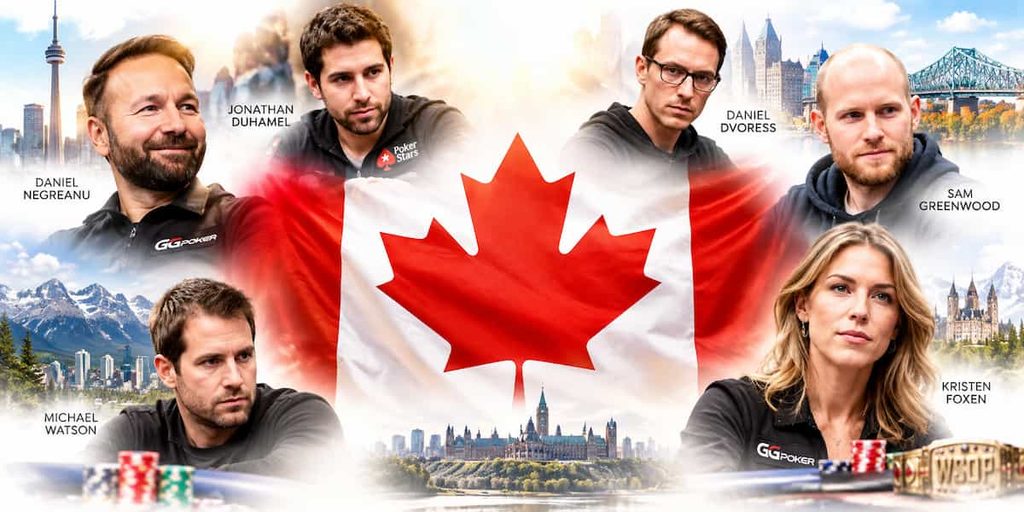
- Canada has produced elite players across several generations, from Daniel Negreanu and Jonathan Duhamel to Daniel Dvoress, Sam Greenwood, Michael Watson and Kristen Foxen.
- Negreanu sits first on the WSOP’s all-time tournament money list with more than $27 million in WSOP cashes.
- Duhamel became the first Canadian to win the WSOP Main Event when he captured poker’s world championship in 2010.
- Canadians remain prominent at the highest stakes. Daniel Dvoress entered September seventh on the global 2026 tournament money list with more than $7.2 million in earnings this year alone.
- Playground’s 2025 WSOP Circuit Main Event set a Circuit prize-pool record before the venue went even bigger in 2026.
- Canada has historically offered many players broader practical access to international online poker than the United States, although Ontario has complicated that picture.
- Major live poker is not confined to Quebec. Calgary hosts another WSOP Circuit festival later this month.
For a poker market without its own Las Vegas, that’s an impressive footprint.
Daniel Negreanu Coming Home Matters
Every major poker country has players who become bigger than the game itself.
For Canada, Daniel Negreanu is the obvious example.
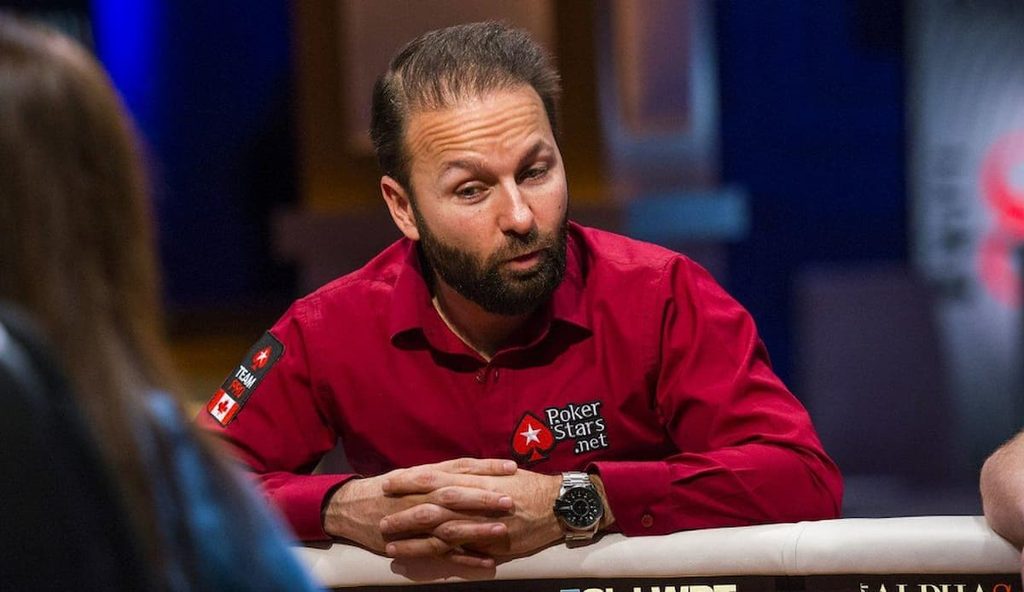
Born in Toronto, Negreanu became one of poker’s defining personalities during the television boom of the 2000s and has remained there for more than two decades.
He also currently leads the WSOP all-time money list.
Negreanu’s presence at the Super Circuit therefore carries more significance than simply adding another famous player to the field.
He performed the ceremonial “Shuffle Up and Deal” for the Main Event at Playground, where the festival has also attracted major names including Michael Mizrachi, Jonathan Little and Dan “Jungleman” Cates.
Poker Type recently looked at Daniel Negreanu returning to Canada for the country’s first WSOP Super Circuit.
There is an interesting contradiction in Negreanu’s career.
Canada produced him.
The United States gave him the biggest stage.
Like generations of ambitious Canadian players, Negreanu eventually went where the biggest poker opportunities were.
The growth of tournaments such as the Super Circuit does not suddenly reverse that relationship.
But it does give Canadian players more opportunities to play genuinely major poker without crossing the border.
Canada’s Biggest Tournament Poker Names
Canada’s contribution to professional poker becomes particularly obvious when you look at the players it has produced.
Tournament earnings are not a measure of profit, and modern super high rollers make comparisons between generations difficult. But the figures demonstrate the extraordinary amount of Canadian talent at poker’s highest level.
| Player | Canadian connection | Tracked live tournament earnings* | Notable achievement |
|---|---|---|---|
| Daniel Negreanu | Toronto, Ontario | $60.7m+ | Multiple WSOP bracelets and Canada’s best-known poker player |
| Daniel Dvoress | Ontario | $54.0m+ | Elite international high roller |
| Sam Greenwood | Toronto, Ontario | $39.4m+ | Long-time high-stakes tournament regular |
| Michael Watson | St. John’s, Newfoundland | $38.5m+ | Multiple major international titles |
| Kristen Foxen | Ontario | $19.2m+ | One of Canada’s leading modern tournament players |
| Jonathan Duhamel | Quebec | $18m+ career | 2010 WSOP Main Event champion |
*Tracked tournament earnings vary according to database methodology and do not represent player profit. Figures change as players continue to cash.
The very top of the list is striking.
As of early September, Hendon Mob’s all-time list including recurring events puts Negreanu at more than $60.6 million, Dvoress above $54 million, Sam Greenwood above $39.4 million and Michael Watson above $38.5 million.
Canada has not simply produced one superstar.
It has produced an entire generation capable of competing in the biggest tournaments in the world.
Calgary Shows Why There Is More to Canadian Poker Than Montreal
Montreal may be producing the biggest numbers right now, but Canadian poker is much larger than Quebec.
Calgary is a good example.
It is where I was born and where I experienced Canadian poker before moving to the UK.
Poker has long had a presence in Alberta through casino cash games, tournament series and communities of regular players. But playing poker there also teaches you something important about Canada.
Distance matters.
A poker player living in Calgary who wants to play a major festival in Montreal is not making a quick trip to another nearby poker room. Canada is enormous, and its poker centers are separated by thousands of kilometers.
That makes local events important.
When a major series comes to your province, it genuinely changes the opportunities available.
That is why one of the most interesting dates remaining on the Canadian calendar this year is September 30.
The WSOP Circuit is coming to Calgary.
WSOP Circuit Returns to Calgary This Month
Deerfoot Inn & Casino hosts the next Canadian WSOP Circuit stop from September 30 through October 12.
For someone from Calgary, seeing the WSOP schedule include both a record-breaking Super Circuit in Quebec and another Circuit festival in Alberta within weeks of each other feels significant.
It also illustrates the real opportunity for Canadian poker.
Montreal does not have to carry the entire country.
Strong regional poker markets can coexist.
Calgary and Edmonton can serve Alberta. Vancouver can support British Columbia’s poker community. Ontario has the country’s largest provincial population. Quebec has established Montreal as an international tournament destination.
Canada’s geography makes one centralized poker capital unlikely.
A network of strong regional markets makes much more sense.
Upcoming Major Canadian Poker Events in 2026
And the current Super Circuit is not the end of Canada’s year.
| Dates | Series | Location | Why it matters |
|---|---|---|---|
| Aug. 26-Sept. 12 | WSOP Super Circuit Canada | Playground, Kahnawake, Quebec | CA$14m+ in guarantees and CA$10m Main Event |
| Sept. 30-Oct. 12 | WSOP Circuit Deerfoot Inn & Casino | Calgary, Alberta | Major WSOP Circuit stop in Western Canada |
| Nov. 2-17 | WSOP Circuit Playground | Kahnawake, Quebec | Playground’s third WSOP Circuit festival of 2026 |
That schedule is particularly encouraging because it extends meaningful tournament poker beyond a single summer festival.
Players need consistency.
A poker market is much healthier when players know another major series is coming rather than treating one huge event as an anomaly.
Online Poker in Canada Is More Complicated Than It Looks
The live poker story is only half of it. Canada has also occupied an unusual position in the history of online poker.
Canadian players continued to have access to major online poker platforms during periods when American players were effectively shut out following Black Friday in 2011.
That helped Canada develop a strong online poker community.
But saying “online poker is legal in Canada” misses a great deal of nuance.
Gambling is regulated primarily at provincial level. That means a poker player’s options depend partly on where they live.
British Columbia operates PlayNow through the British Columbia Lottery Corporation.
Alberta has its provincially regulated Play Alberta platform.
Quebec operates its own government-controlled online gambling environment through Loto-Québec.
Then there is Ontario. Ontario changed the Canadian online gambling landscape dramatically in 2022.
Ontario Created a Different Kind of Poker Market
Ontario launched its competitive regulated iGaming market in April 2022, allowing approved private operators to enter the provincial market.
It was a major change.
Instead of relying solely on a provincial lottery-style operator, Ontario created a framework through which private gambling companies could legally operate under provincial regulation.
For poker, however, there was a catch.
Players had to be physically located in Ontario to use Ontario-regulated sites.
That meant poker liquidity became ring-fenced.
This matters much more in poker than in most casino games.
A slot machine does not need another customer to play against. Poker does.
A healthy online poker ecosystem needs players at different stakes and at different times of day. Larger player pools support more cash games, bigger tournament guarantees and a wider selection of formats.
Ontario gained a clearer regulated market and formal consumer protections.
Poker players lost access to some of the broader international liquidity they had previously enjoyed on participating sites.
That remains one of the most important tensions in Canadian poker regulation.
Canada Is Really Several Poker Markets
This is perhaps the biggest misconception about poker in Canada.
There isn’t really one Canadian poker market.
There are several.
A player in Calgary does not necessarily have the same regulated online options as someone in Toronto.
A Vancouver player operates under a different provincial system.
Quebec has another.
The live game is fragmented geographically as well.
Montreal has become Canada’s leading major-tournament destination because Playground has built the infrastructure and appetite to host huge festivals.
Alberta has established poker communities in Calgary and Edmonton.
British Columbia has casino poker around Vancouver.
Ontario has the country’s largest population and significant casino infrastructure.
But moving between those markets can require serious travel.
That is one area where Canada is at a structural disadvantage to the United States.
Canada vs USA: Where Is It Better to Be a Poker Player?
The comparison is more complicated than it first appears.
| Canada | United States | |
|---|---|---|
| Live poker scale | Strong but geographically dispersed | Significantly larger |
| Dominant poker destination | No single national hub | Las Vegas |
| Gambling regulation | Primarily provincial | Primarily state-by-state |
| Regulated online poker | Depends heavily on province | Available only in certain states |
| Online liquidity | Ontario ring-fenced; other arrangements vary | Shared between some regulated states |
| Major live festivals | Growing WSOP Circuit/Super Circuit and regional scene | WSOP, WPT, Circuit and extensive regional calendar |
| Travel | Huge distances between major poker centers | Major markets more numerous |
| International online access | Historically broader for many Canadians | Much more restricted after Black Friday |
For live poker, the United States remains comfortably ahead.
Las Vegas alone creates an ecosystem Canada cannot replicate. Add California, Florida, Texas and major East Coast casino markets and the difference becomes even larger.
Online, the comparison has historically been almost reversed.
After Black Friday, Americans could find themselves unable to legally play on the world’s largest poker sites simply because of where they lived.
Canadian players generally retained much broader access.
Ontario has since moved closer to the American model by creating its own fenced regulated environment.
That leaves Canada with an unusual mixture of approaches.
Regulation Could Decide What Happens Next
The future of Canadian online poker may ultimately depend on what happens outside Ontario.
Other provinces have watched Ontario’s regulated market develop.
If more eventually open their markets to private operators, poker will face an important question.
Does every province become its own island?
Or could provinces eventually share poker liquidity?
For poker, the difference would be enormous.
Separate provincial player pools could leave Canada with several relatively small regulated poker markets.
Shared liquidity could create a much healthier national ecosystem.
Canada has the players.
The challenge is connecting them.
Regulators considering poker alongside casino games need to recognize that distinction.
Poker is not simply another casino product.
Its players are part of the product.
Canadian Poker Has Already Survived Several Eras
There is another reason to be optimistic.
Canadian poker has proved remarkably durable.
The Moneymaker boom brought a new generation into poker rooms and onto online sites.
The World Poker Tour helped turn Montreal into an international destination.
Black Friday transformed the North American online industry.
Poker television declined.
Streaming rebuilt an audience.
Operators entered and exited markets.
Regulation changed.
Yet Canada continued producing players.
That happened partly because Canadian poker never depended on one thing.
Live casinos mattered.
Online poker mattered.
Home games mattered.
Local communities mattered.
Travelling to the United States and Europe mattered.
The game survived because Canadian players were willing to find it.
The WSOP Super Circuit Could Be a Turning Point
One tournament series does not create a poker boom – it can reveal one.
That is what makes the current Super Circuit so interesting. The Mini Main attracted 3,484 entries. Almost 1,000 players entered a CA$2,300 Canadian Championship. The Main Event carries a CA$10 million guarantee.
Playground has three WSOP Circuit festivals on its 2026 calendar.
Calgary gets another Circuit series later this month.
Those decisions only make commercial sense if players keep filling seats. So far, they are.
Success tends to produce more competition. Competition creates more tournaments. More tournaments give Canadian players more opportunities to play serious poker without leaving the country.
That cycle could become far more important than any individual tournament result.
Canada Doesn’t Need Its Own Las Vegas
Whenever a new poker destination grows, there is a temptation to ask if it could become “the next Las Vegas.” Canada doesn’t need one. Its geography probably makes the idea unrealistic anyway.
Instead, Canadian poker can develop differently.
Montreal can remain an international tournament destination.
Calgary and Edmonton can build Western Canadian schedules.
Ontario can use its enormous population to support live and online poker.
Vancouver can maintain another significant regional scene.
Players can still travel internationally while finding increasingly worthwhile tournaments at home.
That is a much more realistic Canadian poker boom. It may also be a more sustainable one.
Canadian Poker Feels Bigger Than It Did
Watching what is happening at Playground from the UK brings back something familiar for me.
Canadian poker has always existed. It just hasn’t always looked particularly important from the outside.
When you experience poker in Calgary, the game feels local long before it feels global.
You know there are serious players. You know there are good games. You know people are willing to travel huge distances for the right tournament.
But the world’s attention tends to be elsewhere.
What is changing now is the scale and visibility. A CA$10 million Main Event gets noticed. A 3,484-entry tournament gets noticed. Daniel Negreanu returning to play in Canada gets noticed. A WSOP Circuit festival returning to Calgary a few weeks later gets noticed.
And a venue hosting three WSOP Circuit festivals in a single year certainly gets noticed.
Canada has already proved it can produce world-class poker players. The question now is whether it can consistently give those players world-class poker events at home.
The evidence from 2026 suggests the answer is increasingly yes.