Brent Carter, a two-time WSOP bracelet winner and one of the familiar faces of American tournament poker during the 1990s, has died at the age of 77.
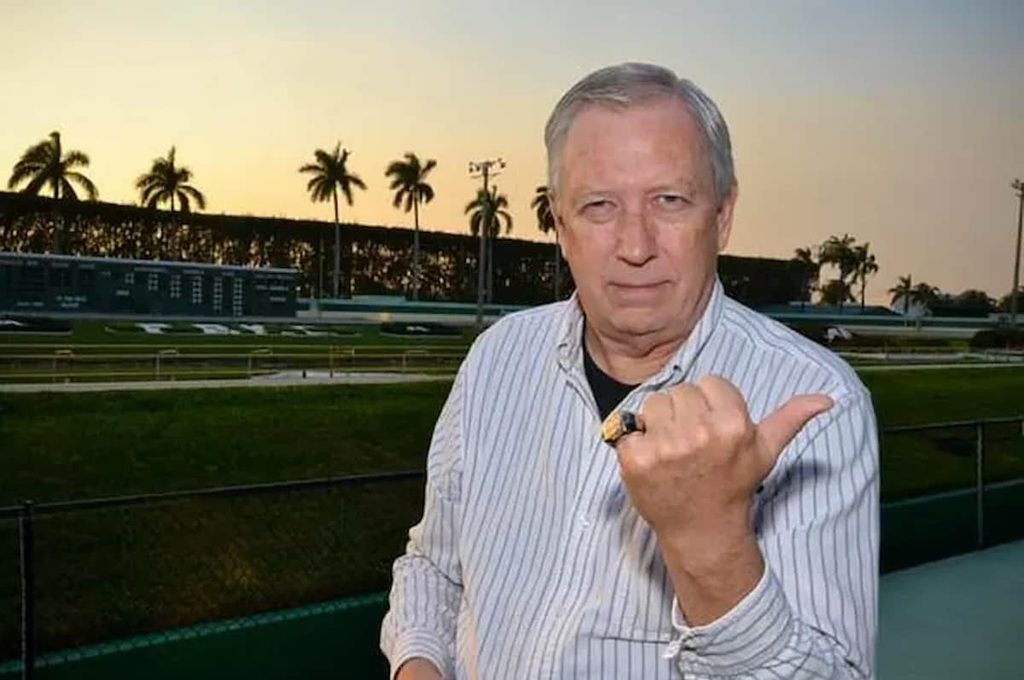
The poker world is mourning another of its recognizable characters following the death of two-time World Series of Poker bracelet winner Brent Carter.
Carter died aged 77 following a poker career that stretched across almost three decades and included more than $3 million in recorded live tournament winnings.
No exact cause of death has been announced. Carter had experienced serious health problems in previous years, including heart attacks and strokes.
His longtime partner Jane Paquette, who was with Carter for 32 years, remembered a man whose generosity away from the poker table was every bit as important as his results on it.
Brent Carter Was a Familiar Face of 1990s Poker
Long before enormous tournament fields and online qualifiers transformed the WSOP, Carter was a fixture on the American tournament circuit.
His recorded live results date back to 1986, but it was during the early 1990s that he established himself among the leading tournament players of the era.
Carter won his first WSOP bracelet in 1991, defeating a 271-player field in the $1,500 No-Limit Hold’em event at Binion’s Horseshoe. The official WSOP result records Carter as the winner for $156,800.
The victory earned him $156,800.
Three years later, he became a two-time champion by winning the $1,500 Limit Omaha event at the 1994 WSOP.
Those bracelets only tell part of his story.
Carter accumulated more than $3 million in recorded live tournament earnings during his career and regularly competed against the biggest names of his generation.
His greatest Main Event run came in 1995.
Third in the 1995 WSOP Main Event
Carter came remarkably close to adding poker’s world championship to his résumé when he reached the final stages of the 1995 WSOP Main Event.
The tournament attracted 273 players, a field that looks tiny compared with the thousands who enter the modern Main Event but contained many of the game’s strongest players.
Carter eventually finished third for $302,750, the largest recorded live tournament cash of his career. The official 1995 WSOP Main Event results list 273 entries, Dan Harrington as champion and Carter in third place.
Dan Harrington went on to win the championship for $1 million, with Howard Goldfarb finishing second.
Carter also recorded numerous other deep WSOP runs during his career, including three runner-up finishes and several additional third places.
He later added two WSOP Circuit rings to a résumé built across numerous poker variants rather than one specialist game.
A Poker Player Who Played Everything
Although Carter became particularly associated with Omaha, he belonged to a generation of professionals expected to be capable of competing across the complete tournament schedule.
No-Limit Hold’em, Omaha, Stud and mixed games were all part of his career.
His major victories outside the WSOP included the 1990 Amarillo Slim’s Super Bowl of Poker and a Pot-Limit Omaha title at the 1991 Hall of Fame Poker Classic.
Paquette recalled that Carter would even examine tournament schedules and point out clashes that prevented players interested in particular variants from competing in both events.
It reflected a player who had spent enough time on the circuit to understand poker from more than his own seat at the table.
Remembered for More Than His Results
The numbers establish Carter’s place in poker history, but the memories shared following his death paint a different picture.
Paquette described him as one of the kindest people she had known.
She recalled Carter taking food to homeless people several times a week and helping other poker players without expecting anything in return.
One particularly poignant story involved Stu Ungar.
According to Paquette, Carter gave Ungar $20 for cab fare the day before the three-time WSOP Main Event champion died in November 1998.
“When Brent won something, everyone got something,” she said while remembering his generosity.
Carter was also instantly recognizable around poker rooms, frequently appearing in a blue jacket and carrying a Big Gulp.
Those small details can become as much a part of poker history as bracelets and prize money. For players who spent decades travelling the same tournament circuit, familiar characters helped give the game its identity.
Poker Mourns Another Familiar Face in 2026
Carter’s death comes during a year in which the poker community has already had to say goodbye to other much-loved figures from the game.
In June, former EPT champion Andreas Høivold died at just 53 following years of health problems.
The Norwegian was from a different generation and a different part of the poker world, but there are similarities in how both men are being remembered.
Høivold won EPT Dortmund, appeared on High Stakes Poker and became one of Norway’s best-known players. Yet following his death, friends and family also spoke about the person behind the tournament results, remembering his generosity and willingness to help others.
The same theme now runs through the tributes to Carter.
Poker records preserve winnings, bracelets and final tables. They cannot easily record the meals bought for somebody who needed one, money quietly handed to another player or decades of friendships built travelling between tournaments.
For those who knew Carter personally, those stories appear to matter just as much.
From Harness Racing to Professional Poker
Poker was not Carter’s first competitive obsession.
Before becoming a full-time poker player, he was involved in harness racing, an interest that began when he attended the races while still at high school.
Carter later explained that he saw similarities between racing and poker.
Both involve competitors attempting to construct a strategy around uncertain outcomes. Having the strongest horse does not guarantee victory, just as having the strongest starting hand does not guarantee winning a poker pot.
That understanding of uncertainty served him well during a career lasting from poker’s pre-boom years through to the online era.
His final recorded live tournament cash came in 2015.
Carter’s Career Was Not Without Controversy
Carter’s later life also included a serious incident away from the poker table.
In 2021, he faced a federal charge after repeatedly sending letters to the New York State Gaming Commission, including several containing white powder.
He subsequently pleaded guilty to conveying a hoax and false information and was sentenced to time served.
It is an uncomfortable but relevant part of Carter’s later history and stands in sharp contrast to many of the personal stories now being shared about him.
Remembering a Two-Time WSOP Champion
Carter played tournament poker during an era that looks increasingly distant from the modern game.
When he began competing, tournament fields were smaller, mixed-game expertise mattered enormously and many of the players sitting across from each other had already been battling for years.
He survived that era and continued playing as poker changed around him.
Two WSOP bracelets, two Circuit rings, a third-place Main Event finish and more than $3 million in tournament earnings leave a substantial poker résumé.
But following his death at 77, the stories being told about Brent Carter extend well beyond what appears in the results database.
For a player who spent so much of his life competing for chips, perhaps the most meaningful tribute is that so many people remember what he gave away.