Watching a poker vlog can make the lifestyle look almost perfect.
A trip to Las Vegas. A packed poker room. Huge pots. Celebrations after winning a tournament. Flights to the World Series of Poker, Triton Poker festivals or European Poker Tour stops.
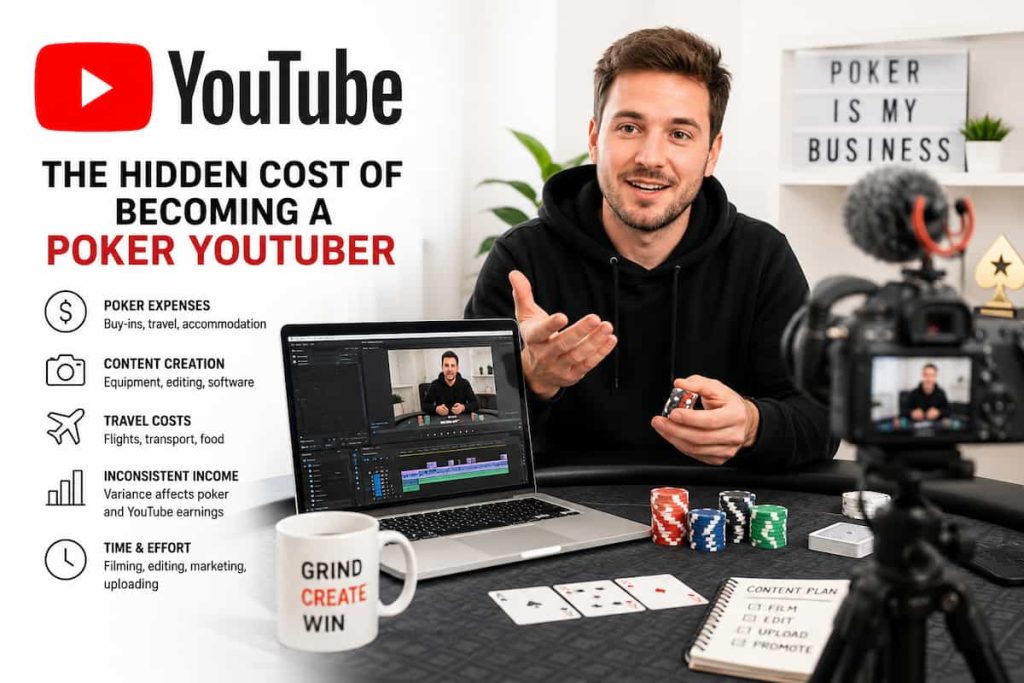
It’s easy to assume poker YouTubers are making a fortune simply by filming themselves playing cards.
The reality is very different.
Behind every successful poker channel are thousands of hours of editing, significant travel costs, inconsistent poker results and the constant pressure to create entertaining content regardless of whether they’re winning or losing.
So, how much do poker YouTubers really earn, and is becoming one actually a good career?
The Biggest Expense Isn’t the Camera
Most people assume expensive cameras, microphones and laptops are the biggest investment.
They’re not.
The largest cost is playing poker itself.
Unlike gaming creators or lifestyle vloggers, poker creators must regularly risk their own money to create content.
A losing month doesn’t just reduce their bankroll.
It can also reduce their income.
Imagine travelling across the United States to film cash games and tournaments for two weeks.
Accommodation, flights, food, transport and buy-ins can easily cost several thousand pounds before a single hand is played.
If the poker goes badly, that entire trip becomes an expensive business expense.
Winning at Poker Doesn’t Guarantee a Successful Channel
Some of the world’s strongest professionals barely have a YouTube presence.
Meanwhile, some of the biggest poker creators aren’t necessarily the highest earners at the tables.
Success on YouTube depends on very different skills.
Viewers want personality.
Storytelling.
Honest reactions.
Suspense.
Good editing.
Consistency.
A technically perfect player who rarely speaks may struggle to attract subscribers, while a charismatic player documenting the ups and downs of a $2/$5 cash game can build an audience of hundreds of thousands.
That’s why creators like Brad Owen and Andrew Neeme transformed poker content.
Rather than focusing only on huge tournament victories, they invited viewers inside every session, explaining their thought process, celebrating wins and openly discussing mistakes.
The Pressure Never Stops
Professional poker players can take a week off.
Content creators often can’t.
YouTube rewards consistency.
Uploading every week helps channels remain visible in search results and subscriber feeds.
That means creators face constant pressure to find games worth filming, edit hours of footage and maintain engagement across multiple social media platforms.
Many now spend as much time editing videos as they do actually playing poker.
The Hidden Cost of Variance
Every poker player experiences variance.
For YouTubers, variance affects two businesses at once.
Lose consistently at poker and your bankroll suffers.
Stop uploading because you’re losing and your YouTube income may also decline.
Ironically, some losing sessions perform better than winning ones because viewers enjoy dramatic stories and honest reactions.
Creators therefore face an unusual balancing act.
They need to win often enough to sustain their poker career while producing entertaining content regardless of the outcome.
How Poker YouTubers Actually Make Money
Poker is rarely the only income source.
Most established creators earn money from several different streams.
YouTube Advertising
Advertising revenue is the most obvious source, but it’s often smaller than viewers expect.
Poker content generally attracts a niche audience, meaning even channels with hundreds of thousands of subscribers usually cannot rely solely on YouTube advertising.
Views fluctuate throughout the year, making monthly income unpredictable.
Sponsorships
For many creators, sponsorship agreements provide far more reliable income than YouTube adverts.
Online poker rooms, training sites, poker software companies and poker festivals regularly partner with established creators to reach engaged audiences.
These partnerships can become a major part of a creator’s overall income.
Affiliate Revenue
Affiliate links are another important source.
When viewers sign up to a poker site, training platform or other service through a creator’s link, the creator may receive a commission.
For successful channels, affiliate income can eventually exceed YouTube advertising revenue.
Merchandise
Some creators sell branded clothing, playing cards or accessories.
Although merchandise rarely becomes the largest income source, it strengthens their brand while generating additional revenue.
Coaching
Many experienced players also offer private coaching, group sessions or training courses.
Their YouTube audience effectively becomes a marketing platform for those services.
Live Events
Meet-up games have become increasingly popular.
Creators attract hundreds of viewers to casinos around the world, generating additional opportunities through appearances, partnerships and promotional events.
Not Every Creator Wants to Be a Professional
An interesting trend has emerged over the past few years.
Many creators no longer describe themselves as professional poker players.
Instead, they’re professional content creators who happen to play poker.
That distinction matters.
The priority shifts from maximising expected value at every table to creating videos viewers genuinely enjoy watching.
Sometimes that means entering unusual tournaments.
Trying entertaining challenges.
Playing against subscribers.
Or taking calculated risks that create memorable content, even if they aren’t always the highest-EV poker decisions.
Who Has Built the Strongest Brand?
Several poker creators have successfully transformed poker into much more than simply playing cards.
Doug Polk has expanded into podcasts, business ventures, online training and poker commentary, creating one of the most recognisable brands in the industry.
Brad Owen helped redefine poker vlogging by making live cash games accessible to everyday players, while Andrew Neeme combined thoughtful analysis with cinematic storytelling that inspired countless creators to follow.
Mariano Grandoli has rapidly become one of YouTube’s biggest poker personalities by documenting his journey into some of the highest-stakes streamed cash games in Las Vegas.
Meanwhile, Charlie Carrel has diversified into psychology, coaching and personal development alongside his poker content, while Abby Merk and Corey Eyring represent a newer generation of creators growing their audiences through honesty, consistency and regular tournament coverage.
Each has taken a slightly different route, but all have recognised that building an audience can create opportunities far beyond the poker table.
Is It Still Possible to Start a Poker YouTube Channel?
Yes, but it’s harder than ever.
When Brad Owen and Andrew Neeme began uploading regularly, there were relatively few high-quality poker vloggers.
Today, new creators compete with hundreds of established channels, livestreams and short-form videos every day.
Standing out requires more than good poker.
Creators need a unique personality, consistent uploads, strong editing skills and the willingness to share both success and failure.
Viewers quickly recognise authenticity.
They’re just as interested in bankroll swings, difficult decisions and honest reflections as they are in spectacular bluffs.
The Real Cost Isn’t Financial
The biggest hidden cost of becoming a poker YouTuber isn’t buying cameras or paying tournament buy-ins.
It’s committing your life to two careers at once.
You must become a winning poker player while simultaneously acting as presenter, producer, editor, marketer and business owner.
Few people succeed at either profession individually.
Doing both at the same time is even more demanding.
Yet for creators like Doug Polk, Brad Owen, Andrew Neeme, Mariano Grandoli, Charlie Carrel, Corey Eyring and Abby Merk, that challenge has produced something unique.
They haven’t just built poker careers.
They’ve built personal brands followed by millions of fans worldwide, proving that in modern poker, the biggest pot isn’t always won at the table.