Poker rooms spend plenty of time trying to keep bots away from their tables. Now OpenAI, Sequoia Capital and Citadel Securities are putting up serious prize money for people who can build one capable of beating the competition.
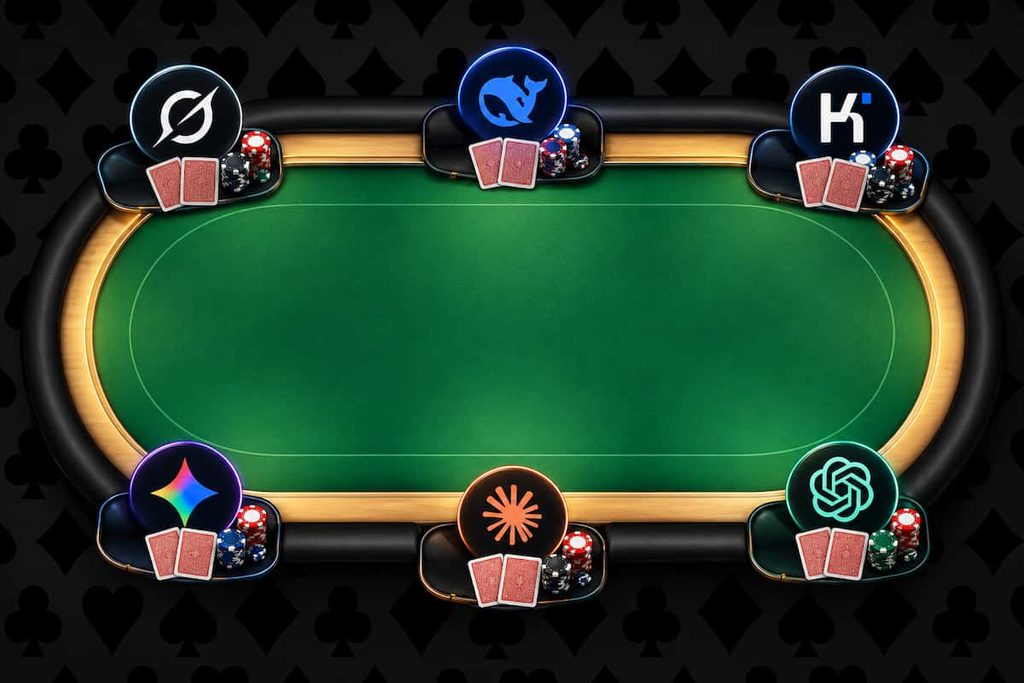
The event is called No Limit: A Bot Building Tournament, and the rules are simple enough to grab any poker player’s attention. Build a poker bot in 60 minutes, send it into battle against thousands of computer-controlled opponents, and potentially walk away with $100,000.
There is a catch. Your bot must be able to make poker decisions in one millisecond, cannot access external AI services while playing, and will face thousands of simulated sit-and-gos. A couple of preflop charts and a random bluff generator probably won’t get the job done.
$250,000 in Poker Bot Prizes Up for Grabs
Sequoia Capital is organising the competition, with OpenAI and Citadel Securities acting as hosts. Regional events take place in November before the best programmers travel to San Francisco for the November 15 final.
The $100,000 headline prize is only part of the money on offer. According to the official rules, the three regional events and final carry at least $250,000 in combined prizes.
| Result | Prize |
|---|---|
| Regional qualification, 15 teams | $5,000 per team |
| Final winner | $100,000 |
| Final runner-up | $50,000 |
| Final third place | $25,000 |
| Total listed prizes | $250,000 |
The top five teams at each regional receive $5,000 and advance. Organisers can also select up to five wildcard teams, potentially taking the final field to 20.
Participants can enter individually or in pairs, with team prizes split equally between teammates. Entry is free, and finalists have their travel covered.
This is a programming competition with cash prizes, not a real-money poker tournament. No money is wagered during the simulated games, and participants are prohibited from betting on the results.
How Does the OpenAI Poker Bot Tournament Work?
Competitors receive a starter kit containing a Python agent template, a poker simulator, an Independent Chip Model (ICM) calculator, a blind structure and a payout schedule. They then have 60 minutes to build their opening bot. The precise poker variant is only revealed when the event begins, so nobody can turn up knowing every detail of the game they’re about to play.
Once the first hour is over, the real test begins.
Each event features six scored tournaments, with 10,000 eight-player sit-and-gos in every round. That’s 60,000 simulated tournaments per event, with bots repeatedly facing randomly assigned opponents.
The rules include several details that should interest any tournament grinder:
- Every bot starts with 2,000 chips, with blinds beginning at 10/20 and increasing every 25 hands.
- Tables run until one bot has all the chips or 200 hands have been played.
- When the 200-hand limit is reached, ICM determines how remaining finishing-position points are distributed.
- Competitors can continue improving their bots between rounds and submit updated versions every five minutes.
- Later rounds carry more weight, with the sixth round worth six times as much as the first.
That final rule matters. A bot that starts slowly can still make a comeback if its programmer identifies a leak and fixes it before the later rounds.
However, an aggressive strategy that crushes the early levels might struggle when the blinds increase and ICM pressure kicks in. Anyone familiar with final-table poker knows that accumulating chips and maximising tournament equity aren’t always the same thing.
Can ChatGPT Actually Play the Poker Hands?
Not during the competition itself.
Teams are permitted to use AI coding tools, including OpenAI’s Codex, to help build, debug and improve their bots. But once a bot enters a simulated tournament, it must operate independently.
There are no API calls, no internet access and no asking an AI model whether to check-raise the river. Submitted bots must make decisions using their own code, and any decision taking longer than one millisecond triggers an automatic check or fold, depending on the available action. That changes the strategy considerably.
A programmer might use AI to help create decision trees, evaluate ranges or improve an ICM calculation. However, the finished product must be efficient enough to run thousands of decisions without human intervention.
The bot must also play without identifying opposing teams, because opponents are anonymised and its state resets at the start of each table. In other words, forget about keeping detailed notes on the guy who hasn’t played a hand in six hours.
Poker players routinely use equity calculators and training software away from the tables, including resources available through our free poker tools. Having software calculate your equity during a study session is very different from allowing a programme to make decisions for you during a real-money hand.
PokerStars Bans the Very Technology Being Celebrated
This is where the story gets interesting for online poker players. PokerStars explicitly prohibits software that plays without human intervention or provides real-time advice based on the current game. Its published third-party tools policy also restricts other assistance that can create an unfair advantage.
There is a clear reason for that distinction. When someone sits down at a real-money table, they expect to compete against other people making their own decisions. A bot doesn’t get tired, tilt after a bad beat or decide to punt off a stack because somebody questioned its river call.
Software capable of following a carefully calculated strategy indefinitely could give its operator an advantage that ordinary players never agreed to face.
The Sequoia competition is different because everyone knows they’re facing bots. There are no unsuspecting players, no real-money games and no concealed assistance.
Building a poker bot for a controlled competition is not the same as secretly running one against paying customers. Nevertheless, the tournament highlights just how accessible the technology has become. A competition that gives students one hour to build functioning poker agents provides an interesting comparison with the security challenges faced by real-money operators.
The threat isn’t theoretical. Earlier this month, we covered the QQPK cheating scandal, where 893 accounts were permanently banned following a coordinated cheating operation. An independent researcher subsequently flagged 11,469 suspicious usernames, although those additional accounts have not been confirmed as cheats.
Online poker has also been rocked by a different type of cheating. Our investigation into the poker superuser hack and alleged losses of up to $4 million revealed how attackers reportedly accessed opponents’ hole cards through compromised software. That wasn’t conventional botting, but it shows how technology can turn a fair game into one where honest players are drawing almost dead.
AI Was Beating Poker Professionals Years Ago
Poker bots aren’t new, and this isn’t the first time programmers have used poker to test artificial intelligence.
In January 2017, Carnegie Mellon University’s Libratus defeated four specialist heads-up poker professionals over 120,000 hands of no-limit Texas Hold’em. The human opponents included Jason Les, Dong Kim, Daniel McAulay and Jimmy Chou. The machine finished ahead by more than $1.7 million in simulated chips.
Two years later, another system called Pluribus took things further.
Developed by Carnegie Mellon researchers alongside Facebook AI, Pluribus defeated elite professional players in six-handed no-limit hold’em. Its opponents included Darren Elias and Chris Ferguson.
Those projects took substantial research and development. This November’s competition is testing something different: how much poker-playing capability a small team can put together under extreme time pressure.
The bots aren’t necessarily expected to rival Libratus or Pluribus. They simply need to outperform the other entrants under the published scoring system.
Tournament Dates and How to Enter
Applications opened on October 27, with three American regional events leading to the final.
| Event | Date | Application deadline |
|---|---|---|
| Menlo Park, California | November 6 | November 3 |
| Cambridge, Massachusetts | November 9 | November 6 |
| Pittsburgh, Pennsylvania | November 12 | November 9 |
| San Francisco final | November 15 | Invitation only |
Applications are open to current students and 2025 or 2026 graduates of universities in the United States and Canada. Participants under 18 require parental or guardian consent.
The organisers are accepting applications on a rolling basis with limited places available. Applicants can also complete optional strategy puzzles involving allocating resources across competing objectives, with high scorers receiving priority registration.
Every regional requires in-person attendance, and applicants must be available for the San Francisco final if they qualify.
What Does This Mean for Online Poker?
For ordinary poker players, nothing in this competition changes the rules at their regular tables. Bots and prohibited real-time assistance remain against PokerStars’ published rules, and players should check the specific policies of any other site they use.
What the competition does demonstrate is the changing relationship between poker and technology.
Poker has always been attractive to AI researchers because players must make decisions with incomplete information. You don’t know your opponent’s hole cards, can’t calculate every outcome with certainty and sometimes have to represent a hand you don’t hold.
Those are precisely the problems poker players deal with every session, although most of us aren’t required to make a river decision in one millisecond.
The November final will reward the programmers who create the strongest bot within the competition’s restrictions. It won’t tell us whether these systems could beat top professionals, or whether they would succeed in real-money games. Still, there’s a certain irony in watching one part of the technology industry offer $100,000 for a winning poker bot while online poker operators work to stop bots from sitting down.
The crucial difference is consent.
At Sequoia’s tournament, everybody knows the opposition is a machine. At a real-money poker table, players deserve to know they’re playing a fair game. And whatever happens in San Francisco, at least nobody can blame the dealer for getting rivered.
Poker operators also face the problem of detecting cheating after it has happened. Poker Type recently examined open-source software designed to identify poker superusers, which analyses hand histories for suspicious decisions that might indicate access to information an opponent shouldn’t possess.
The Jurojin software attack demonstrated another vulnerability when malicious updates were distributed through compromised third-party software. It wasn’t an ordinary poker bot operation, but the incident underlines why players are increasingly concerned about the software running alongside their poker clients.
Quick Questions About the Poker Bot Competition
Is OpenAI offering $100,000 to build a poker bot?
OpenAI is co-hosting the competition, but Sequoia Capital is the official organiser responsible for administering and paying the prizes. First place receives $100,000, with another $75,000 available to second and third place.
Can the public enter the competition?
Not everyone can enter. Eligibility is restricted to current students and qualifying recent graduates of US and Canadian universities, with competitors required to attend regional events in person.
Are poker bots legal in online poker?
Poker bots are prohibited under the rules of major real-money poker sites such as PokerStars. Whether a particular bot is legal also depends on the software, its intended use and the laws governing the activity.
Do competitors need to know how to play poker?
Poker knowledge could be useful, particularly when designing hand ranges, betting strategies and tournament decisions. However, this is primarily a coding competition, and the strongest poker player won’t necessarily build the strongest bot.