A defendant in the multi-million-dollar poker cheating scandal involving NBA figures and organised crime has pleaded guilty in federal court, admitting that he participated in poker games rigged against unsuspecting players.
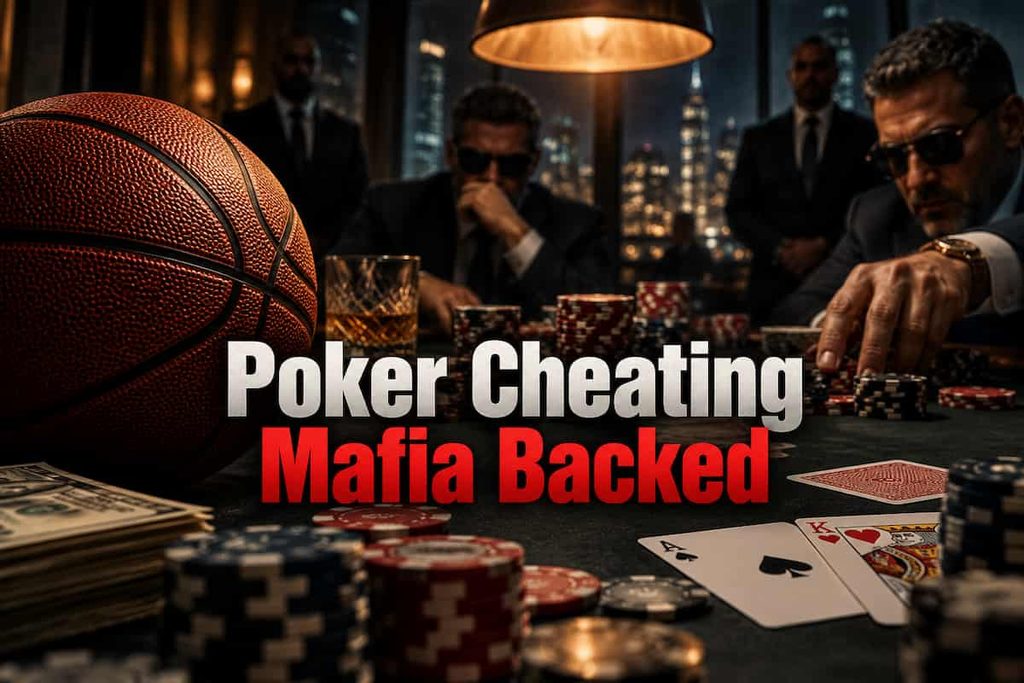
Eric Earnest, 54, entered his plea in Brooklyn on October 22, 2026. His admission marks another significant development in the investigation that has implicated former NBA players, an NBA head coach and members of three notorious New York crime families.
The case is particularly significant because federal prosecutors previously identified Earnest alongside basketball Hall of Famer Chauncey Billups in an alleged rigged poker game dating back to April 2019.
Earnest and Billups Named in $50,000 Las Vegas Game
According to the original federal indictment, Earnest and Billups were among five people accused of organising and participating in rigged poker games in Las Vegas in April 2019.
The indictment specifically names Earnest, Billups, Jamie Gilet, Robert Stroud and Sophia Wei. Prosecutors alleged that the games used a modified shuffling machine supplied by Stroud and resulted in victims losing at least $50,000.
This allegation provides an important connection between Earnest’s guilty plea and the wider case against Billups. However, Earnest’s admission does not establish Billups’ guilt, and the former Portland Trail Blazers coach has pleaded not guilty to the charges against him.
How the Poker Games Were Rigged
The alleged operation extended far beyond traditional collusion or marked cards. Prosecutors described a coordinated cheating system involving modified casino equipment, information relays and multiple players working together.
According to the indictment, the process worked as follows:
- A modified shuffling machine secretly read the cards and their order in the deck.
- Information about the likely winning hands was transmitted to an operator outside the poker game.
- The operator communicated with a player at the table, known as the “Quarterback” or “Driver”.
- That player discreetly signalled information to other members of the cheating team, allowing them to exploit unsuspecting opponents.
The alleged technology also included electronic chip trays, concealed card-reading devices and specially marked cards visible through modified eyewear. For a legitimate player, this would be a devastating disadvantage. Opponents could possess information about hidden cards that no amount of hand reading, experience or sound poker strategy could overcome.
These allegations concern equipment that prosecutors say was deliberately modified. They do not establish that ordinary commercial shuffling machines are compromised.
The $7.15 Million Poker Fraud Allegations
The October 2025 indictment alleged that victims lost at least $7,150,000 across the scheme. Some individual losses were substantial.
One victim allegedly lost approximately $1.8 million at the Lexington Avenue games in Manhattan during June and July 2023. Prosecutors also identified losses of at least $46,500 and $105,000 involving two victims at games in East Hampton.
The investigation went beyond cheating at the tables. Members and associates of the Bonanno, Gambino and Genovese crime families allegedly received portions of the proceeds, while other defendants faced allegations involving extortion, money laundering and violence.
In one particularly unusual allegation, several defendants arranged a gunpoint robbery in September 2023 to steal a modified shuffling machine from another person involved in the operation.
Another NBA Figure Has Already Pleaded Guilty
Earnest is not the first defendant to admit wrongdoing in the investigation.
Former NBA player and assistant coach Damon Jones pleaded guilty to two wire fraud conspiracy counts in April 2026. The charges concerned separate schemes involving rigged poker games and the misuse of confidential NBA information for sports betting.
Jones admitted acting as a celebrity attraction, described by prosecutors as a “Face Card”, to encourage wealthy players to attend the games. He also acknowledged participating in cheating teams.
Following Jones’ plea, US Attorney Joseph Nocella Jr. said the former player had “lured unsuspecting victims to high-stakes rigged poker games.”
The Justice Department’s announcement confirmed that Jones had admitted roles in both schemes.
Earnest Also Pleads Guilty in Separate NBA Betting Case
On the same day as his poker plea, Earnest admitted conspiring to place a fraudulent NBA wager involving a March 24, 2023, Portland Trail Blazers game against the Chicago Bulls. Prosecutors alleged that confidential information about Portland’s player availability had been passed to bettors before it became public. The original indictment claimed that associates subsequently wagered more than $100,000 against Portland.
There is a significant disagreement about the source of that information.
Following the hearing, Earnest’s attorney, Peter Brill, maintained that Billups had not supplied his client with inside information used for betting. He described the issue as a “fundamental disagreement” with prosecutors.
ESPN’s October 22 court report confirmed that Billups has not been charged in this separate insider-betting prosecution. Although the poker and sports-betting investigations overlap, they involve different allegations and should not be treated as a single case.
What Happens Next?
Earnest faces sentencing in the poker case on March 4, 2027, followed by sentencing in the NBA betting case on April 15, 2027.
Each wire fraud conspiracy count carries a maximum potential sentence of 20 years. Prosecutors estimated a sentencing-guideline range of 63 to 78 months for the poker case and 30 to 37 months for the betting case, although neither estimate represents an imposed sentence.
Other defendants, including Billups, continue to contest the charges against them.
For poker players, the investigation illustrates how technology-based cheating can operate alongside traditional collusion. It also raises important questions about equipment security and trust at privately organised high-stakes games.
Poker Type has previously examined related security concerns, including The Venetian’s decision to introduce slide dealing and the Jurojin poker superuser scandal, although neither incident is alleged to be connected to this prosecution.
The Justice Department has also advised anyone who believes they were defrauded in the specific poker scheme to contact the FBI at 1-800-CALL-FBI. Victims may be eligible for restitution under federal law, although recovery has not been guaranteed.