
Online poker room reviews need to explain more than a brand name and a game menu.
Poker Type examines site security, rules, game formats, software features and withdrawal conditions, while identifying potential concerns to give you impartial views to help you choose your next online poker room. Read how we assess poker rooms for our evidence standards.
Our online poker review hub brings room summaries together in one place, with the full assessments just a click away.
WPT Global

WPT Global has cash games, tournaments and live WPT qualifiers. Its game menu includes player favorites like Hold’em, Omaha and Short Deck.
Pros
- Win your way to live WPT events
- Hold’em, Omaha and Short Deck action
- Cash games and bounty tournaments
- Multitable on mobile
- Play on desktop, iOS and Android
Cons
- Limited mobile table controls
- No external HUDs
GGPoker

GGPoker delivers a deep tournament schedule with distinctive game formats. Smart HUD and PokerCraft offer built-in stats and hand reviews.
Pros
- Extensive tournaments across buy-in levels
- Fast-fold action with Rush & Cash
- Free Smart HUD stats at the table
- Review your hands with PokerCraft
- Online routes to live WSOP events
Cons
- Higher rake caps at some cash-game stakes
- No external HUDs
ACR Poker
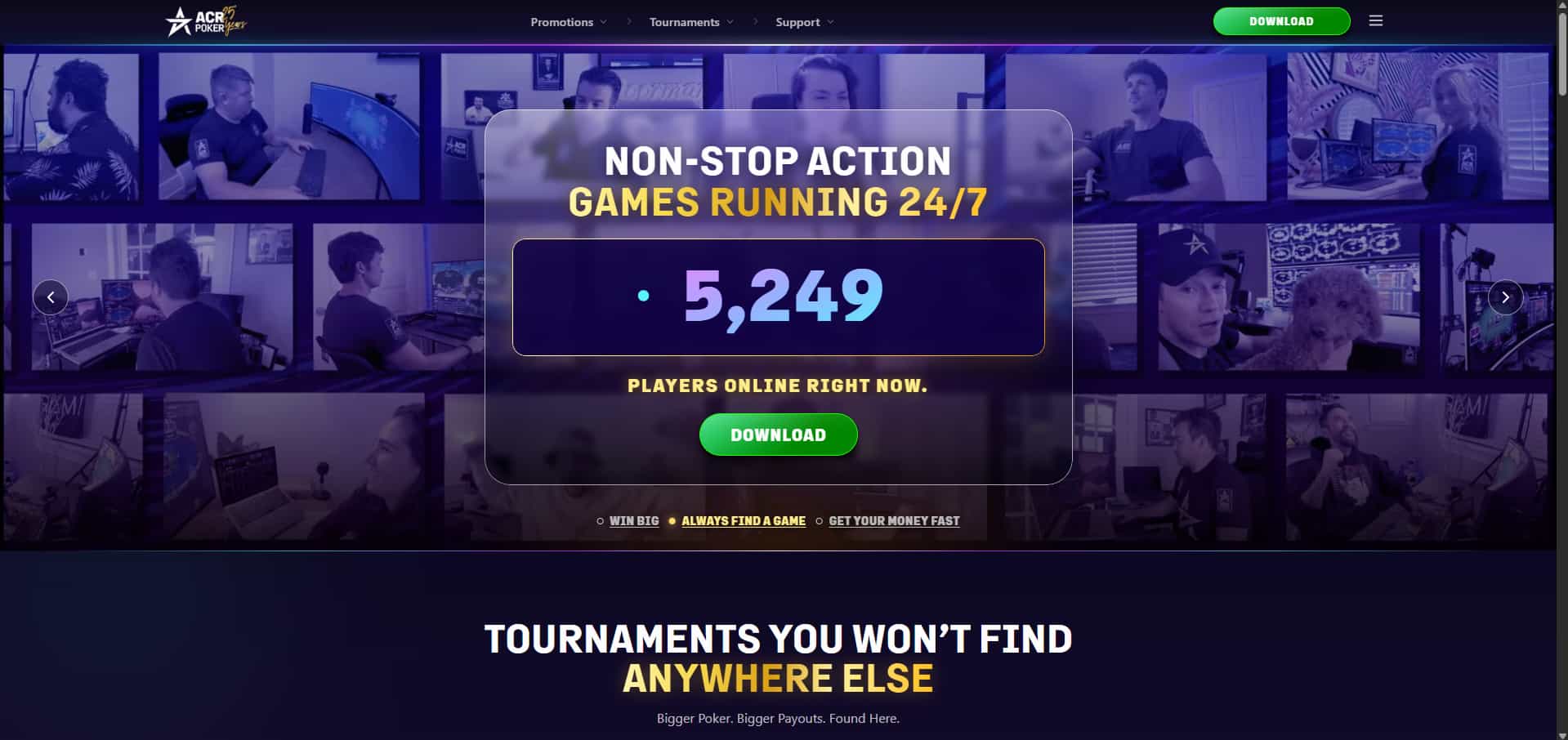
ACR Poker combines major Venom tournaments with Hold’em, Omaha and Blitz cash games. Chris Moneymaker is part of its Team Pro roster.
Pros
- Major Venom tournaments and satellites
- Fast-fold cash games with Blitz Poker
- 100% welcome match up to $2,000
- Weekly cash-game leaderboard rewards
- Permitted HUDs using your own hands
Cons
- Bonus expires after 60 days
- Mobile game availability varies by device
What you will find in each full review
Our full reviews take a closer look at the games, software and account rules, with lobby and table screenshots so you can see how each room looks. We explain the useful features, flag drawbacks and make clear when a claim comes from the poker room itself.
We also explain what we have not checked firsthand, including deposits, withdrawals, support response times and how busy the tables are. You get a clear picture of what to expect and what still needs checking, without star ratings that suggest we have tested more than we have.
Poker Type has affiliate relationships with the rooms reviewed here. Read our affiliate relationship disclosure for details.
Real-money poker involves financial risk. Our responsible gambling information explains limits and where to find support.
Understanding online poker room rules
Game availability, fees and account conditions can differ between formats and regions. A global policy should not be assumed to establish the rules, licensing or payment options for every reader’s location.
Our guide to poker terminology explains unfamiliar review language.
Online Poker FAQ
What is the difference between online poker cash games and tournaments?
Cash-game chips represent money at the table, and the blinds usually stay fixed. Tournament entry buys a starting stack, with blinds rising at scheduled intervals and prizes awarded according to the event’s payout structure. Cash games generally allow more flexible departure, subject to house rules. A tournament can continue for hours, and leaving does not normally refund your entry.
Can you cash out chips during an online poker tournament?
Ordinary tournament chips have no direct cash value, so you cannot exchange a remaining stack for money by leaving. Your prize normally depends on your finishing position, with separate rules for bounties or other special awards. Cash-game chips work differently because their displayed value represents money. Check whether an event awards cash, tournament credit or tickets before entering.
What is rake in online poker, and how do tournament fees work?
Rake is the operator’s charge for running a cash game, commonly calculated as a percentage of qualifying pots with a maximum cap. Tournament fees are usually charged as part of the entry price instead. For example, a $10 + $1 entry commonly allocates $10 to the prize pool and $1 to the fee. Check the lobby breakdown because presentation and additional charges vary.
What do online poker blinds and buy-in amounts mean?
Blinds are compulsory bets that help define a game’s stakes. A $0.05/$0.10 cash table has a five-cent small blind and a ten-cent big blind; its minimum and maximum buy-ins are separate limits on the money you bring to the table. Tournament buy-ins are entry costs, while tournament blinds are paid from your chip stack and rise during the event.
How does late registration work in online poker tournaments?
Late registration lets players enter after a tournament has started, up to a stated closing time or blind level. A fixed starting stack will represent fewer big blinds as the levels increase, which changes the decisions available to a late entrant. Check the registration deadline, starting stack, current blinds and any entry restrictions in the lobby. Late entry does not guarantee better value.
What is the difference between a rebuy, re-entry and freezeout tournament?
A rebuy usually adds chips to an existing entry during a defined period, subject to stack limits. Re-entry allows an eliminated player to pay for a new entry and starting stack, often with a new seat. A freezeout normally ends your participation when you lose all your chips. An add-on is a separate chip purchase offered at a specified point, if the event permits it.
What happens if your internet disconnects during online poker?
The table normally continues while you are disconnected. After the available decision time expires, the software may check or fold your hand under the room’s rules; tournament blinds can continue reducing your stack. A personal connection failure does not automatically qualify for a refund. If the operator suffers an outage, its interruption policy determines how affected games are settled, so retain the hand or tournament ID.
Can you pause an online poker tournament or leave a cash table?
You cannot normally pause a multiplayer tournament for yourself. Sitting out leaves your entry active, and compulsory blinds and antes continue until you return or your stack is exhausted. Scheduled breaks are different because play pauses for the event. Cash tables generally allow you to sit out or leave, although missed-blind charges, seat-reservation limits and minimum-hand rules can apply.
Is online poker a game of skill or luck?
Poker involves both decision-making and chance. Position, bet sizing, hand selection and recognising opponents’ tendencies can affect results, but the cards create variance, including losses after sound decisions. A short winning streak does not prove a strategy works, and a losing hand does not necessarily mean it was misplayed. Skill never removes financial risk or guarantees a profit.
How can beginners learn online poker without risking money?
Start with the rules, hand rankings and betting order, then practise decisions using play-money games where available or free exercises. Poker Type’s poker hand rankings guide provides a reference, while poker videos and commentary can show how hands develop. Pause before a decision and explain your reasoning. Play-money opponents may behave differently from real-money players, so results are not evidence of likely earnings.