Abby Merk has found herself in the middle of one of poker’s stranger social-media storms after a $1/$2 cash-game hand at The Lodge Card Club turned a routine piece of table talk into a debate about friendship, soft play and what players actually owe each other once the chips are in the middle.
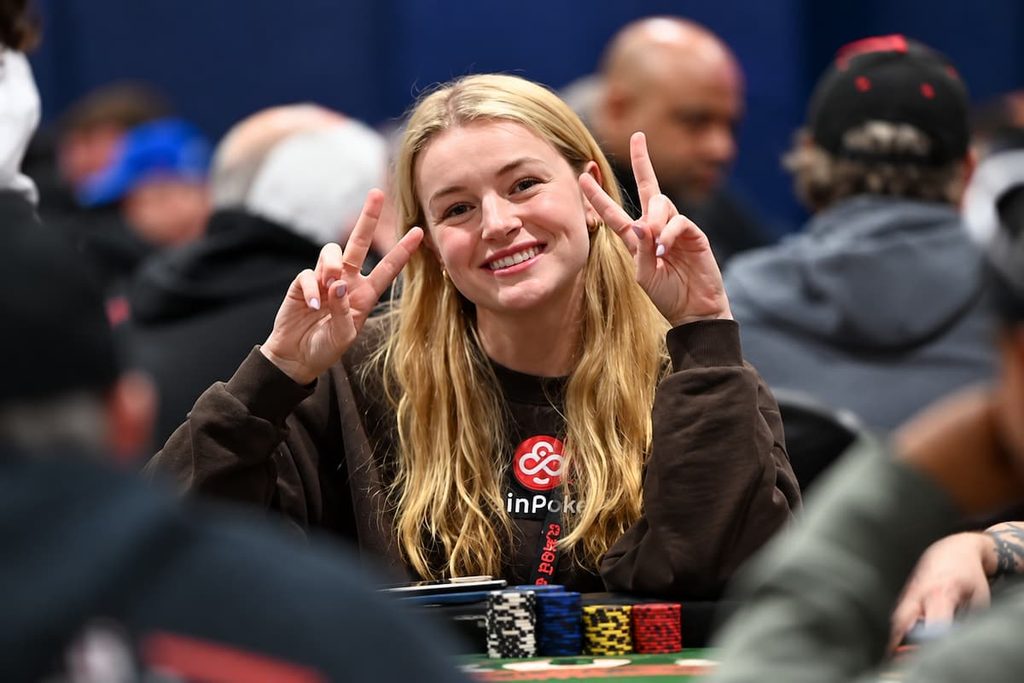
The hand itself was not particularly complicated. The reaction certainly was. Merk, playing on a livestream, four-bet shoved for $821 before telling an opponent she did not really want a call. The opponent, Susan, called anyway, won both runouts and was then caught in the fallout when Merk’s visibly frustrated response spread across social media.
How an $821 Shove Became the Hand Everyone Was Discussing
Merk raised to $50 from the hijack in the $1/$2 game before the cutoff made it $150. Susan had limped under the gun and called the three-bet, after which Merk moved all-in for $821. The cutoff folded, leaving Susan with the decision and turning what had begun as a multi-way pot into heads-up action.
Before calling, Susan asked Merk if she wanted action. Merk replied that she did not really want it, an unusually candid answer at a poker table but not one that placed any obligation on Susan to fold. Susan made the call, the players agreed to run the board twice and Merk failed to win either runout.
What followed drove the clip far beyond the usual livestream audience. Merk questioned the call in the moment, said she did not really want to continue playing and asked for the minimum buy-in after losing the pot. Clips of the exchange then attracted millions of views and a much larger argument than the $1/$2 stakes would normally produce.
PokerFlops covered the hand on X, with Merk later posting she’ll explain the hand on Instagram.
Merk Says She Thought Friendship Changed the Conversation
Merk has since provided more context. She said she and Susan had played together regularly and had many friendly conversations, and that she regarded their relationship as closer than Susan apparently did. When Susan asked if she wanted action, Merk said she answered in what she described as “friend mode” rather than treating the question as another piece of poker-table speech play.
That distinction matters to understanding Merk’s reaction, but it does not change the basic poker decision. Once the other player had folded, Susan was entitled to make whatever legal decision she believed was best for her own hand. Merk has also acknowledged that Susan did nothing technically wrong and described herself as tilted immediately after losing the pot.
Susan’s own response cut directly to the awkward part of the debate. She said that although the pair had been friendly, game integrity mattered more. Folding simply because a friend wanted her to would potentially disadvantage the player who had already put money into the pot before folding to Merk’s four-bet.
Friendly Poker Still Needs a Line
Anyone who has played enough live poker has seen friends check hands down, avoid marginal value bets or quietly decide not to make life miserable for each other. In a private home game, the table may shrug. In a streamed public cash game involving other players, that becomes much harder to defend because every decision can affect money already contributed by somebody else.
The rules of heads-up table talk also leave plenty of room for gamesmanship. Players can discuss their hands once only two players remain in the pot, and neither player is required to tell the truth. Asking an opponent if they want a call is not a contract, and saying no does not buy a fold.
That is what makes the hand more interesting than the pile-on that followed it. Merk made an aggressive poker decision, answered a question more honestly than she later wished she had, lost the pot and reacted while tilted. Susan treated the hand as poker rather than a favour between friends. Those facts can all be true without turning either player into a villain.
The Problem With Playing Poker in Front of the Internet
Merk’s career increasingly sits at the intersection of poker and content creation. Her recent Texas cash-game content has already shown how ordinary sessions can become entertainment when there is a camera running, while fellow creator Corey Eyring’s poker career has followed a similar route through livestream games, bankroll swings and highly visible decisions.
The downside is that a few seconds of frustration can travel much further than the full session. Merk’s reaction drew criticism from players including Matt Berkey, while others focused less on the hand and more on the scale and tone of the online response. Merk said the two players spoke privately after the stream and resolved the issue with no hard feelings.
That should probably be the least dramatic part of the story, but it is also the most useful. Poker friends can disagree about where friendship ends and competition begins, especially in a cash game designed partly as entertainment. Once somebody else’s money has entered the pot, though, expecting a friendly fold becomes a much murkier proposition.
One Bad Hand, One Useful Poker Lesson
Merk has built much of her audience by showing the less polished side of playing poker, including mistakes, losses and emotional swings rather than presenting every session as a highlight reel. This episode supplied all three at once.
The hand will disappear down the social-media timeline soon enough. The underlying question is older than livestream poker: how much consideration does a friend deserve when you are competing for the same money? Susan’s answer was to play the hand on its merits. Merk’s later response accepts that she was entitled to do exactly that.