Global Poker is facing an increasingly difficult regulatory landscape in the United States as more states restrict sweepstakes gaming and regulators turn their attention to the model behind the online poker site.
The pressure intensified on September 9 when New York Attorney General Letitia James announced an $8 million settlement with Global Poker owner VGW and its affiliates. The settlement followed an investigation into VGW platforms Global Poker, Chumba Casino and LuckyLand Slots over the use of redeemable virtual Sweepstakes Coins.
Global Poker remains active across much of the US, but its potential market has become noticeably smaller.
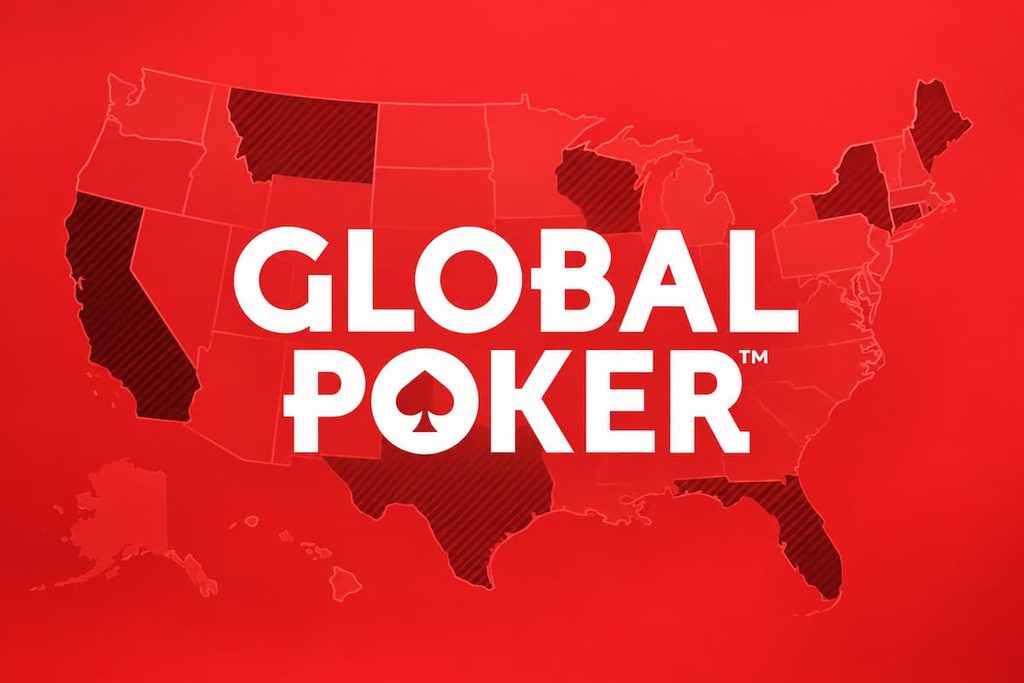
Global Poker Restricted Across 16 US States
Global Poker currently separates its games into Gold Coin play and promotional Sweepstakes Coin play, with eligible Sweepstakes Coins capable of being redeemed for prizes.
According to Global Poker’s current location restrictions, the platform is completely unavailable in Connecticut, Delaware, Michigan, Montana, Nevada and Washington. Players in another ten states can access Gold Coin games but cannot participate in Sweepstakes play.
Those states are California, Idaho, Indiana, Louisiana, Maine, Mississippi, New Jersey, New York, Tennessee and West Virginia.
That leaves Global Poker facing restrictions of some form across 16 US states. Several of those restrictions have arrived as lawmakers and regulators take an increasingly aggressive approach towards sweepstakes gambling.
It creates a very different environment from the regulated US online poker market, where licensed operators such as PokerStars operate under state gambling regulations and within approved player pools.
New York Settlement Costs VGW $8 Million
New York represents one of the clearest examples of the pressure facing VGW.
The New York Attorney General said Global Poker, Chumba Casino and LuckyLand Slots had offered games using virtual Sweepstakes Coins that could be exchanged for cash or prizes. Authorities argued that this constituted unlawful gambling under state law.
The Attorney General’s office had already sent VGW a cease-and-desist letter in June 2025. VGW subsequently stopped offering Sweepstakes Coin gambling in New York, before the state formally enacted legislation prohibiting sweepstakes casinos later that year.
That did not end the matter financially.
Under the settlement announced on September 9, 2026, VGW agreed to pay $8 million in disgorgement, penalties and costs. The action does not mean Global Poker is shutting down nationally, but it demonstrates the potential cost when regulators decide the sweepstakes model breaches local gambling laws.
The regulatory questions facing Global Poker also form part of a much wider debate about how poker fits within different gambling laws. Recent uncertainty surrounding poker regulation in Japan has shown how quickly legal interpretation can affect operators, events and players.
LuckyLand Slots Closes as VGW Reshapes Its Business
The New York settlement arrives as VGW closes another of its established US-facing brands.
LuckyLand Slots completes its shutdown on September 14 after eight years of operation. Gold Coin purchases stopped on August 3, gameplay ended on August 24 and the final deadline for Sweepstakes Coin redemption requests was set for September 14.
VGW has said the closure does not affect Global Poker, Chumba Casino or the newer LuckyLand Casino platform. There is therefore no indication that Global Poker itself is preparing to close.
However, the timing is difficult to ignore.
VGW is closing one established sweepstakes brand while simultaneously dealing with state withdrawals, new legislation and an $8 million regulatory settlement. Global Poker may remain an important part of the company’s business, but the environment in which it operates is becoming increasingly restrictive.
Why Sweepstakes Poker Faces a Different Problem
Global Poker occupies an unusual position in American online poker.
Instead of operating as a conventional licensed real-money poker room, it uses a sweepstakes structure built around two virtual currencies. Gold Coins are intended for social play, while eligible Sweepstakes Coins can ultimately be redeemed for prizes.
That distinction allowed Global Poker to reach players across a far larger portion of the country than traditional regulated online poker operators.
Now it is also the source of its biggest regulatory challenge.
State lawmakers and enforcement agencies have increasingly questioned sweepstakes gaming systems that combine purchasable virtual currency with another currency capable of generating redeemable prizes. As individual states introduce bans, issue cease-and-desist orders or apply existing gambling laws, operators can be forced either to withdraw Sweepstakes play or leave completely.
For players, the result is a fragmented US market in which the availability of online poker can depend heavily on where they live. Anyone playing online should check the rules applicable in their own jurisdiction and use operators only where participation is permitted, alongside normal responsible gambling precautions.
How Much Further Can Global Poker’s Market Shrink?
There is currently no evidence that Global Poker is about to disappear from the United States.
What is clear is that its addressable Sweepstakes market is smaller than it once was. Six states currently block the platform entirely, another ten prevent Sweepstakes play, and legislation or regulatory scrutiny continues elsewhere.
That makes the next stage important for both Global Poker and the wider sweepstakes industry.
If more states follow New York and others in challenging redeemable Sweepstakes Coin models, Global Poker could face further withdrawals from markets that have helped distinguish it from conventional regulated poker rooms. If the remaining states continue to permit the model, VGW could still retain a substantial US poker audience.
For now, Global Poker remains open.
The number of places where its full sweepstakes model can operate is heading in the opposite direction.