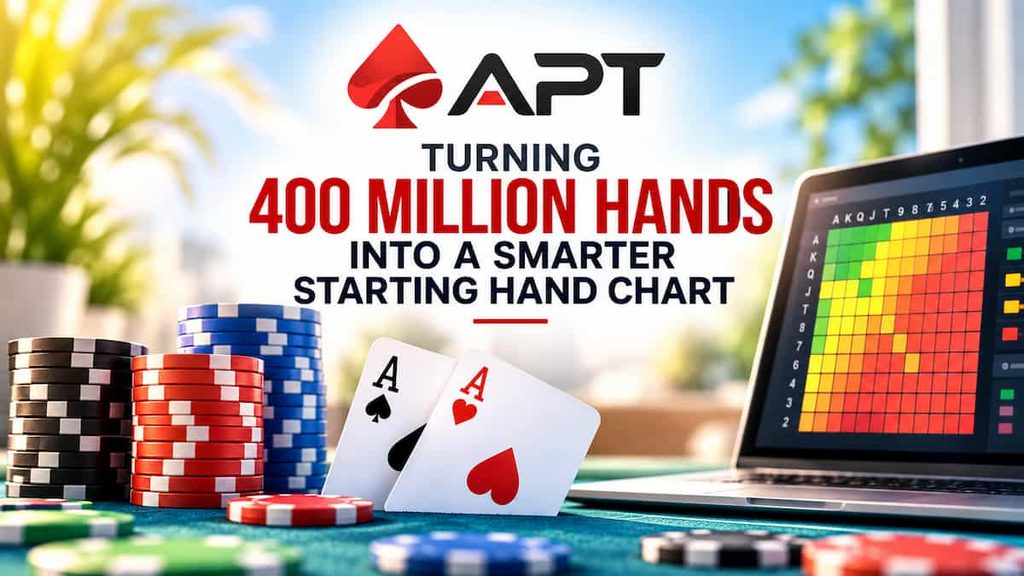
Advanced Poker Training is using results from more than 400 million simulated poker hands to show which starting hands have performed best for its players, offering a different perspective from conventional preflop charts.
Poker players looking for preflop ranges are hardly short of options. Starting hand charts have existed for decades, while modern solvers can now produce highly detailed ranges for almost any situation imaginable.
Advanced Poker Training (APT) is taking a different approach.
The poker training platform is using its database of more than 400 million hands to help players see which starting hands have actually produced results within its training environment.
Rather than presenting a range based solely on poker theory, APT’s reporting system allows players to examine their own results and compare them with those achieved by other players using the platform.
More Than 400 Million Hands of Poker Data
APT was founded in 2009 by brothers Steve and Allen Blay and allows players to practice poker against computer-controlled opponents without risking money at the tables.
The company announced that its users had passed 400 million hands played against its AI opponents in 2023. APT now says its community has grown to more than 100,000 members from 175 countries.
That enormous collection of hands has also become a training resource in its own right.
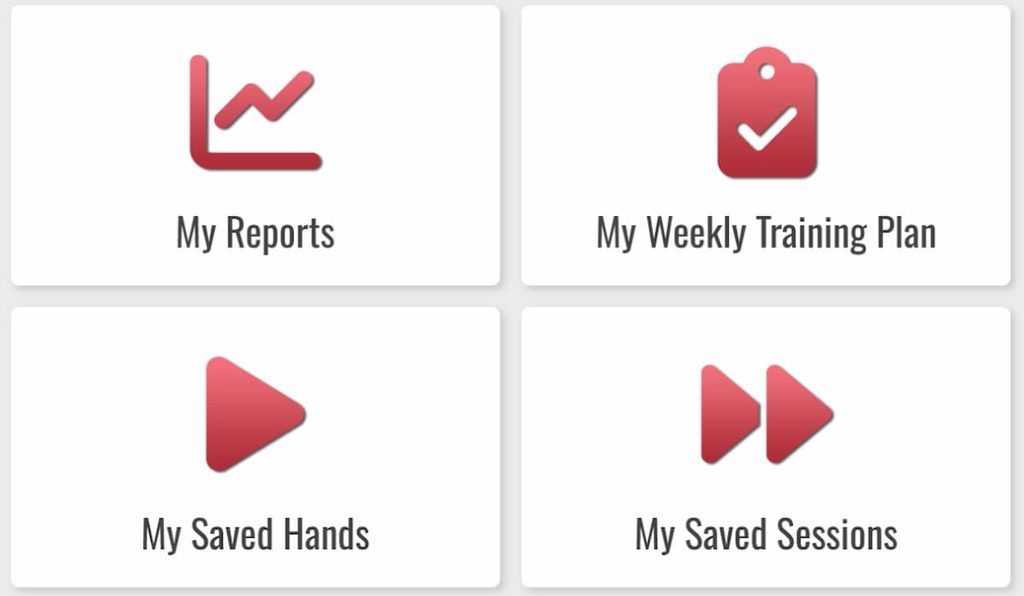
APT’s Performance reports break results down by factors including starting hand, table position, game type and difficulty level. Players can see their own win rates and compare aspects of their performance against the average APT player and the platform’s strongest-performing players.
Its Hand Chart report goes further by displaying which of the 169 possible Hold’em starting hands have been playable from different positions within the APT environment.
The idea is straightforward. Instead of only asking which hands a player theoretically should play, APT can also show what has happened when players have actually played those hands during training.
A Different Approach to Solver Charts
That distinction matters.
Solver-generated preflop ranges are built around mathematical game theory and particular assumptions about stack sizes, bet sizes and how opponents respond. They are an enormously valuable study tool, but poker games against real people do not always resemble those assumptions.
APT founder Steve Blay describes the company’s alternative as an “exploitative” starting hand chart, with the data showing how different hands have performed during actual sessions on the training platform.
There is an important qualification.
Those hundreds of millions of hands were not collected from real-money online poker tables. They were played by human APT users against the site’s virtual opponents, including its Human-Like and GTO-Style bots.
The results therefore shouldn’t be interpreted as proof that a particular hand will be profitable in every poker game.
Even APT’s own traditional starting-hand guidance warns that no chart can account for every factor at the table. Stack sizes, opponent tendencies, position and table dynamics can all change a decision.
What the database does provide is another source of information for players trying to understand their preflop game.
Compare Yourself With APT’s Best Players
Perhaps the more interesting application isn’t discovering whether ace-king wins more than seven-deuce. It is finding out how efficiently an individual player is using the same starting hands.
APT’s reporting tools allow members to examine win rates by starting hand and position, while its wider Performance reports compare results with the average player and some of the best performers on the platform.
That can expose considerably more useful problems.
A player may discover that a hand they assumed was profitable is consistently costing them chips from a particular position. Another might find that their overall starting range is reasonable but that they are struggling from the blinds.
APT can then turn those results into training recommendations. Its Training Plan analyzes a player’s reports and highlights areas that may deserve additional practice, including individual trouble hands.
Players can also use APT’s Advisors while practising. The virtual advisor can be configured to intervene when it disagrees with the player’s chosen action, giving immediate feedback rather than requiring the player to discover the mistake during a later study session.
Poker Training Based on Your Own Decisions
That is ultimately what makes APT’s huge hand database more interesting than another static poker chart.
Knowing a theoretically sound opening range is one thing. Knowing which parts of your own game are repeatedly falling short is another.
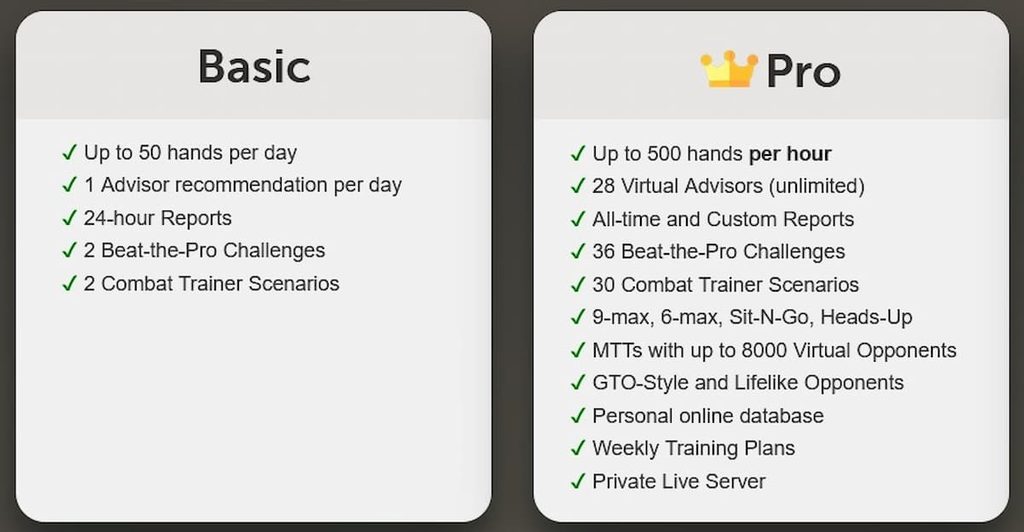
APT gives players a controlled environment in which they can play large numbers of hands, examine the resulting data and work specifically on the decisions that appear to be holding them back. The platform says players can practice as many as 500 hands per hour, making it possible to accumulate meaningful training volume without putting a bankroll at risk.
For players wondering how their own preflop decisions compare, that may be the most useful part of the approach. Rather than simply memorizing somebody else’s starting ranges, they can put their decisions to the test, identify where they are losing ground and see how their performance compares with stronger players.
Poker Type readers can train with Advanced Poker Training, play through realistic poker scenarios and start discovering the leaks that could be costing them when real money is on the line.
Poker Type is an affiliate partner of Advanced Poker Training and may receive a commission when readers join through links in this article.