Live poker in Wales has just become harder to reach.
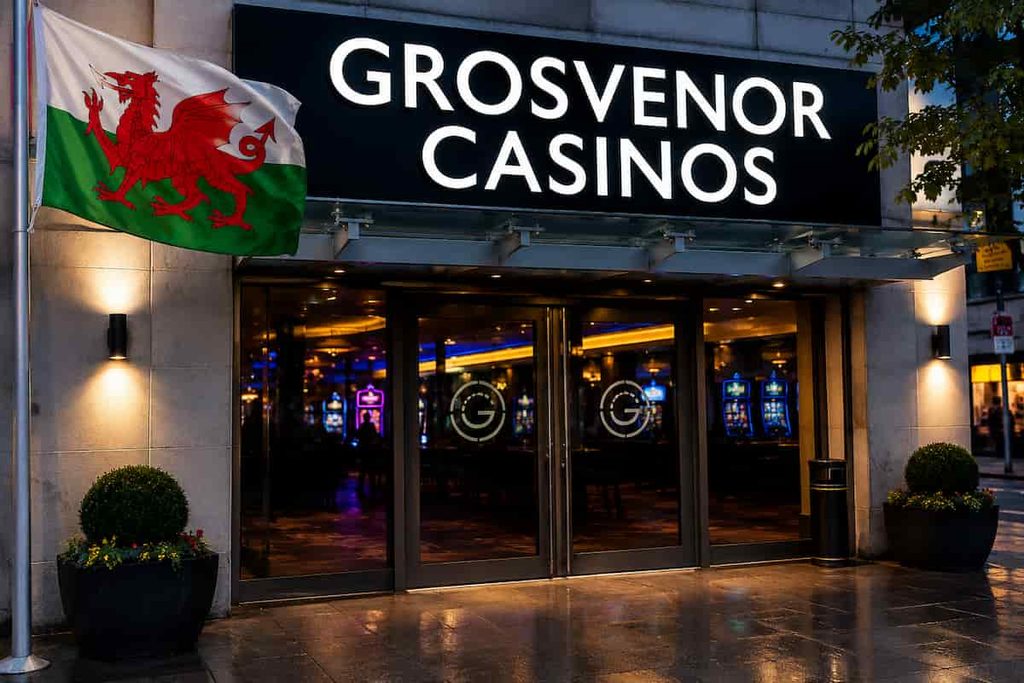
Grosvenor Casino Swansea closed permanently on August 30, removing a casino and former poker venue from Wales’ second-largest city. For players elsewhere in South and West Wales, however, the bigger issue is not simply the loss of another Grosvenor property.
It is where the remaining live poker is located.
Cardiff continues to support an active poker scene, including Les Croupiers and Grosvenor Casino Cardiff. Travel west from the Welsh capital, though, and the options rapidly disappear.
For players in Swansea and communities further west, playing live poker can now mean travelling considerable distances before the first hand has even been dealt.
Grosvenor Swansea Closes After Financial Struggles
Grosvenor Swansea stopped trading on Sunday, August 30 after owner Rank Group concluded that the High Street casino was facing significant and sustained financial challenges.
The problems were substantial.
The casino recorded an operating loss of £73,000 during the financial year ending June 28 and finished £635,000 below its revenue budget. Operating costs had increased by 11% over three years, while the venue’s profitability had declined by 107% over a decade.
The poker room was no longer the destination it had once been.
Swansea previously hosted events including the Grosvenor Deepstack Series alongside regular local tournaments. Major festivals gradually disappeared from the schedule, and Swansea was already absent from the 2026 Grosvenor UK Poker Tour.
That means the closure does not remove a stop from the current GUKPT schedule. Grosvenor’s flagship tour remains active elsewhere, with the GUKPT Luton Main Event offering a £150,000 guarantee this week.
For Welsh poker, however, measuring the impact by major tournament schedules misses the point.
Live Poker in Wales Is Increasingly Centred on Cardiff
Wales still has live poker.
The problem is its geographical concentration.
Cardiff remains the clear centre of the Welsh live poker scene. Les Croupiers operates one of the country’s most established cardrooms, with tournaments running throughout the week alongside regular cash games. Grosvenor also continues to operate its Cardiff casino at the Red Dragon Centre with live poker among its offerings.
There is genuine tournament history there too.
Les Croupiers has hosted the Welsh Poker Series, Cardiff Cup, Midweek Monster and numerous recurring tournaments. Its 2026 schedule has included buy-ins ranging from relatively accessible local events through to larger tournaments and high rollers.
That is good news for players who live in or around Cardiff.
The picture looks considerably different from Swansea.
A player travelling from Swansea to Cardiff is looking at roughly 40 to 50 miles each way depending on the destination and route. Move further west into Carmarthenshire or Pembrokeshire and the practical barrier becomes greater still.
Live poker therefore becomes something that has to be planned rather than something a player can simply decide to play that evening.
Distance Matters More to Recreational Poker Players
Poker’s largest events naturally attract people willing to travel.
Someone entering a £500 or £1,000 tournament may already expect to pay for fuel, trains, hotels and several days away from home. Travelling for poker is part of the experience.
Local poker works differently.
Imagine a recreational player considering a £40 or £60 tournament after work. Adding a substantial journey in both directions changes the cost and commitment considerably.
If the tournament finishes at 1am, the problem becomes even clearer.
A nearby £50 tournament is an evening out. A £50 tournament requiring hours of travelling, additional transport costs and a very late return home is a different proposition entirely.
That distinction matters because these are precisely the players regional poker needs.
Wales’ Geography Makes Poker Access Different
The Swansea closure also highlights something easily overlooked when discussing British poker.
Not everybody lives within easy reach of London, Birmingham, Manchester or another major poker centre.
Wales has a population spread across cities, towns and large rural areas. Transport links and geography mean that distances which look manageable on a map can represent a considerable commitment, particularly late at night when poker tournaments typically finish.
For someone in Cardiff, there are established live poker choices nearby.
For someone in Swansea, those choices have moved further away.
For someone living considerably further west, Cardiff can represent a serious round trip.
The disappearance of a poker room therefore has a different impact depending on where it happens. Losing one venue in an area with several alternatives is inconvenient. Losing one of very few venues serving an entire part of a country can effectively remove regular live poker from some players’ lives.
Local Poker Rooms Are Where Players Start
There is another reason regional poker rooms matter.
Most people do not begin their live poker journey by flying to Las Vegas for the World Series of Poker or buying directly into a four-figure Main Event.
They start locally.
It might be a £30 tournament on a Tuesday night, a small cash game with friends or a first casino tournament after years of playing online.
That local environment gives new players somewhere to learn how live poker works. They become comfortable handling chips, following casino procedures, interacting with dealers and playing against unfamiliar opponents.
Some eventually progress to larger tournaments.
Britain’s regional poker circuit has traditionally provided that next step. The Grosvenor UK Poker Tour is celebrating its 20th season in 2026 and has spent two decades taking substantial tournaments around the country.
But a national tour ultimately depends on people having somewhere to discover live poker in the first place.
Remove enough local rooms and that pathway becomes narrower.
Online Poker Helps, But It Cannot Replace a Local Cardroom
Welsh players are not being cut off from poker altogether.
Online poker means somebody in Swansea, Aberystwyth, Pembrokeshire or a remote Welsh community can potentially find a game without travelling anywhere. The continued expansion of UK online poker, including the developing PokerStars Network, gives players access to games that geography once made impossible.
In that respect, poker has never been more accessible.
But online access and live access are different things.
Online poker cannot recreate walking into a cardroom, recognising the same players each week, talking between hands and gradually becoming part of a local poker community.
Nor does an online table employ a local dealer or create a physical venue capable of hosting a larger tournament when demand grows.
For isolated players, online poker solves the problem of finding a game.
It does not solve the problem of finding a poker room.
Grosvenor Swansea Is Part of a Wider Regional Problem
Swansea was not the only Grosvenor casino to disappear during August.
The operator also closed venues in Sunderland and Reading Central, putting another spotlight on the economics of maintaining smaller regional casinos while Britain’s biggest poker destinations continue attracting substantial fields.
That creates an unusual divide within UK poker.
At the top end, live poker can look exceptionally healthy. Grosvenor’s Goliath remains capable of attracting enormous fields, the GUKPT continues into its third decade and major British poker festivals can bring thousands of entries together.
At local level, the picture can be much more fragile.
Rank itself reported that average weekly net gaming revenue across Grosvenor increased by 5% during 2025/26, while visitor numbers increased by 2%. The wider casino business can therefore grow even while individual venues are judged commercially unviable.
That distinction matters.
A successful national casino business does not guarantee that every town or city retains its casino.
And a booming poker festival does not guarantee that players across the country have convenient access to live poker.
What Happens to Poker Outside the Biggest UK Cities?
The closure of Grosvenor Swansea should therefore concern players who have never played there.
This is ultimately a question about what the map of British live poker looks like in another five or ten years.
If poker becomes increasingly concentrated around a relatively small number of successful casinos and festival destinations, players living near those venues may barely notice the change. They could actually receive better tournaments as operators concentrate players and investment into their strongest locations.
Those living elsewhere experience the opposite.
Every closure makes the journey longer. Every extra hour of travelling makes a small tournament less attractive. Fewer recreational players make smaller games harder to run, which can make the remaining poker offering less commercially attractive.
It is a cycle that can gradually turn live poker from a local activity into a destination activity.
Wales demonstrates the problem particularly clearly.
Cardiff still has a genuine poker scene and should remain an important home for Welsh poker. What Wales increasingly lacks is geographical depth beyond the capital.
Grosvenor Swansea may have been only one casino.
For poker players west of Cardiff, it represented something much bigger: another place where live poker could potentially exist close to home.
Once venues like that disappear, rebuilding the tables, dealers and community behind them is considerably harder than closing the doors.